Shamonda Did What Its 2011 Twin Never Did: Infect a Human
Europe faced the same fear in 2011 with a twin virus — and the playbook from that scare is the only guide to what comes next.

In 2012, epidemiologists drew blood from sheep farmers and veterinarians working among flocks infected with Schmallenberg virus. It had ripped through European ruminants in a single year; the question was whether the people handling it were catching it too. The answer came back negative — no evidence of infection in people with close contact to infected animals, especially sheep. The scare was filed away.
Schmallenberg had arrived in Germany and the Netherlands in 2011 as a novel orthobunyavirus of the Simbu serogroup, identified by metagenomic analysis of sick cows. Within about a year, acute infections or malformed offspring had been detected on more than 5,000 farms across 17 countries. Then it settled into an endemic pattern, flaring every two to three years. The pattern held: in 2023, adult seroprevalence in Germany jumped from 4.92 percent to 40.15 percent. A vaccine was eventually developed, and immunity accumulated in the herds that lived through the waves.
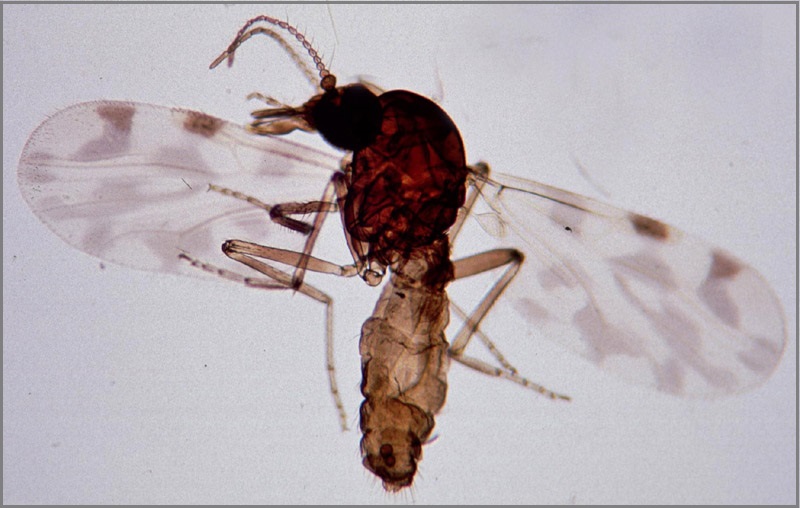
What the 2011 twin never did, its cousin has now done. One patient, in Lyon, in October. On October 22, France‘s health and agriculture ministries announced the first documented human infection with Shamonda virus: a severely immunocompromised patient who was being treated for a serious illness at the Hospices Civils de Lyon and died in early October. The leading hypothesis is that the patient was bitten by a Culicoides midge in eastern France, where the virus had circulated among livestock through the spring and summer. The ministries said the patient’s neurological complications were very likely linked to the infection, and that investigations were continuing. They noted the case shared characteristics with human infections caused by other orthobunyaviruses, including Oropouche.


Prof. Ben Brennan, a virologist at the MRC–University of Glasgow Centre for Virus Research, called the case “an important scientific finding” in remarks to the Science Media Centre (UK), then reached for perspective. “The patient had a serious underlying illness that made him especially vulnerable to infections, and we still do not know if the Shamonda virus contributed to his death,” he said. “The detection of a virus in a patient with a severely compromised immune system does not necessarily mean that it poses a significant risk to people who are otherwise healthy.” His bottom line: “currently, there is no evidence that the Shamonda virus causes widespread disease in humans, although more research is needed to understand its ability to infect people.”
The virus was first detected in Nigerian cattle in 1965. Sixty-one years to reach a human. Sporadic circulation in Africa and Japan produced no documented case in all that time. Europe’s outbreak was confirmed only in late July — genomic tests on sick cattle in southern Germany, Switzerland and eastern France — though France says the virus was likely circulating since spring. By October 20 it had been detected in more than a dozen countries, and in France alone it now spans 51 departments. Researchers have identified two European variants, designated SHAV-EU1 and SHAV-EU2.
Shamonda is not listed by the World Organisation for Animal Health, so countries are not required to notify WOAH of cases. It’s not listed under the European Union’s Animal Health Law either, so there is no EU mandatory surveillance and no required culling. The country count everyone is reading is assembled from voluntary detections. Nobody has to report it. Reuters notes the available data may not provide a complete picture of the spread.
Milk output dropped 15 to 75 percent in the first affected French herds, with some dairy cows down to about four litres a day. The Friedrich-Loeffler-Institut identified the European isolate, Shamonda virus/DE/2026, in cattle in southern Germany in early August. It warned that miscarriages, stillbirths and malformed calves or lambs from potentially affected herds “should be examined with particular care,” since the foetal damage seen with Schmallenberg cannot yet be assessed for this virus. There’s no vaccine and no treatment that eliminates it; the institute says developing one would need “sufficient lead time.” Farmers are being advised to cut midge exposure, and sheep farmers have been urged to consider delaying mating until midge activity falls after October.
If the Schmallenberg history repeats, the virus becomes endemic: waves every two to three years, natural immunity building in the herds between them. The ECDC is monitoring and in contact with French authorities and European partners. France has notified the WHO, which calls this an isolated case unlikely to lead to wider spread at this time. French authorities said clinical, biological and epidemiological investigations into the infection and the death are still ongoing.