
Watchdogs and Meta’s own board slam crowdsourced fact-checking rollout in 16 Latin American countries
Objections rise to Meta's plan to replace professional fact-checking with crowdsourced notes across Latin America
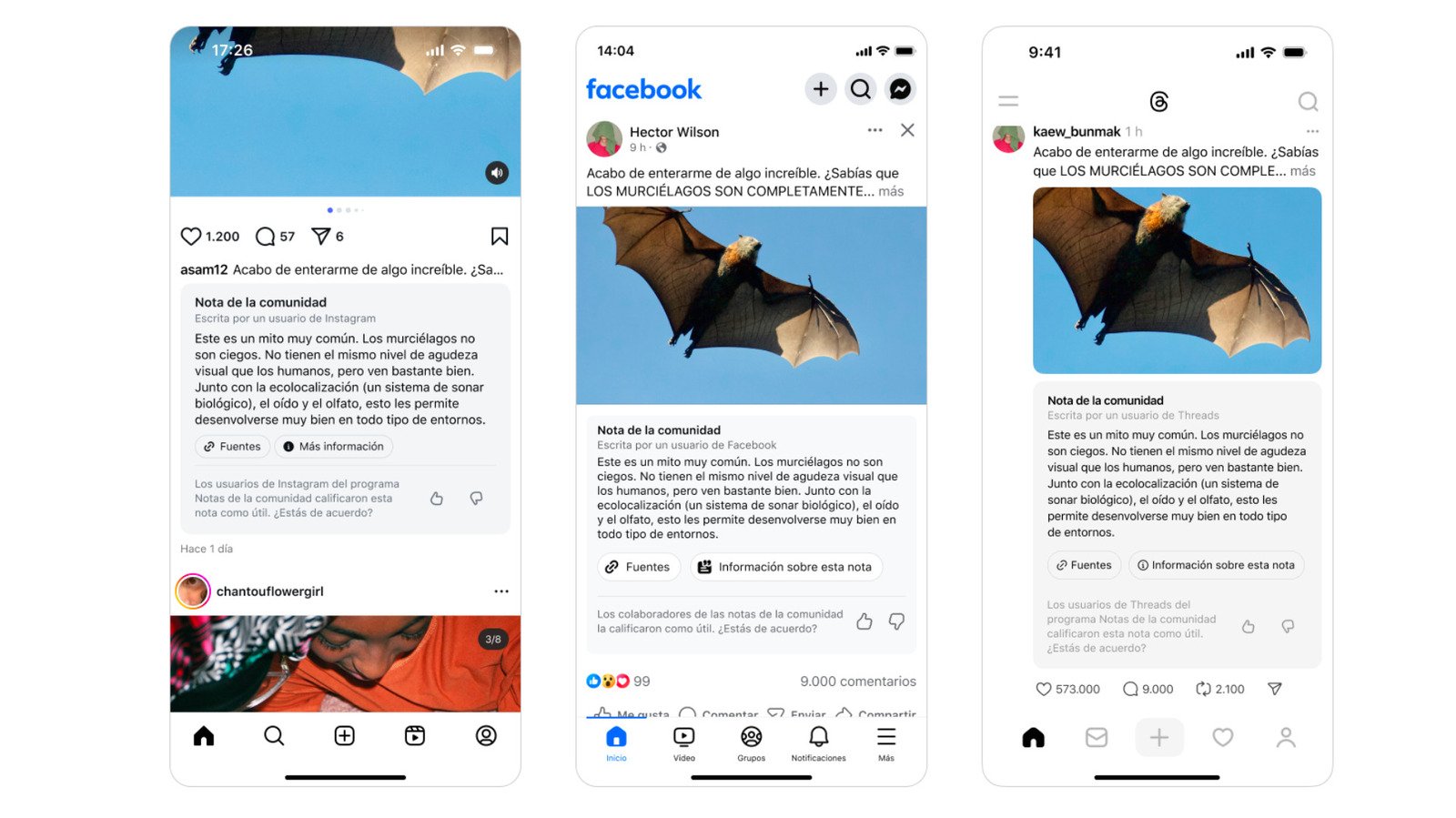
An international coalition of press watchdogs and Meta’s independent content oversight body have raised formal objections to the technology conglomerate’s expansion of crowdsourced fact-checking across 16 Latin American nations. The system, modeled on a similar feature deployed in the United States and popularized by social platform X, allows approved volunteer contributors to draft context notes that can be attached to misleading or false posts on Facebook, Instagram, and Threads. The expansion introduces pilot testing of Meta’s “Community Notes” program across Argentina, Bolivia, Chile, Colombia, Costa Rica, Ecuador, El Salvador, Guatemala, Honduras, Mexico, Nicaragua, Panama, Paraguay, Peru, Uruguay, and Venezuela. Meta confirmed it is currently onboarding contributors across the 16 countries, stating that existing partnerships with professional news organizations will remain untouched during the trial period. While the notes will initially remain hidden from public view during the testing phase, Meta indicated in an official Spanish-language policy post that it intends to eventually replace its established Third-Party Fact-Checking Program in the region once the crowdsourcing mechanism stabilizes. The International Fact-Checking Network (IFCN), an umbrella organization hosted by the Poynter Institute that certifies independent journalism outlets globally, warned that delegating content verification to open user bases is insufficient to protect digital information ecosystems. “The community notes program alone is simply not adequate when it comes to reducing the impact of harmful falsehoods on its platforms,” the IFCN said in a statement, noting that Meta’s rollout targets jurisdictions with documented state-level disinformation operations and severe restrictions on press freedom. The network specifically highlighted conditions in Nicaragua, where the government has dismantled independent media institutions, eliminated competitive elections, and detained political opponents. The organization also pointed to established covert influence networks in El Salvador and Ecuador, alongside protracted political and institutional instability in Venezuela, as environments where crowdsourced moderation is uniquely vulnerable to manipulation. Meta’s Oversight Board, an independently managed body established in 2020 to review content decisions and recommend governance standards for Facebook and Instagram, also urged the platform to halt plans to phase out professional journalistic verification. “We urge Meta not to consider community notes a direct replacement for factchecking, and to use all the tools that best address the challenge of misinformation on its platforms in ways that both protect free expression and address potential harms,” the Oversight Board stated. The board’s warning follows a 15,000-word policy advisory opinion issued earlier this year regarding the global rollout of user-generated verification systems. In that guidance, the panel recommended against introducing crowdsourced fact-checking into regions characterized by extreme partisan polarization, ongoing armed conflict, or state-directed propaganda campaigns. Paolo Carozza, a Notre Dame law professor who serves as co-chair of the Oversight Board, previously emphasized that crowdsourced context should function alongside professional journalism rather than supersede it. “One doesn’t have to replace or substitute for the other, they can coexist,” Carozza said. “And in some situations, there are really important reasons for them to coexist.” When questioned regarding the regional concerns and the Oversight Board’s recommendations, Meta confirmed it is currently onboarding contributors across the 16 countries, stating that existing partnerships with professional news organizations will remain untouched during the trial period.