Walmart China Sales Surge 20% as Sam’s Club Drives Growth
Rapid delivery infrastructure and cross-border tourism from Hong Kong fuel a 20% quarterly sales jump amid a broader Chinese retail slump.

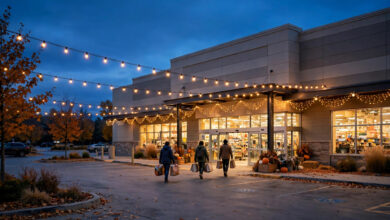
Sam’s Club has become the dominant force in Walmart’s China operations, accounting for an estimated 70% of the retailer’s revenue in the country and fueling a 19.3% annual sales increase to $24.6 billion in its most recent fiscal year. The membership warehouse chain now operates 67 locations across China, up from 15 in 2016, and counts 10.7 million members paying at least 260 yuan ($39) annually for basic access.
The expansion comes during a severe downturn in Chinese consumer spending. Retail sales of consumer goods grew just 1.1% in the first eight months of 2026, down sharply from 4.6% over the same period last year, with August recording a near-flat 0.4% gain. Persistent weakness in the property sector and elevated youth unemployment have constrained household budgets nationwide. Yet Walmart’s China business posted 20.7% growth in its latest quarter, outpacing the company’s global growth rate of 5.9%.
China represents roughly 3% of Walmart’s total global revenue, but the market functions as a strategic laboratory for formats the Bentonville, Arkansas-based company struggles to scale elsewhere. While Walmart U.S. relies heavily on everyday low pricing across sprawling supercenters, the China operation has restructured itself around premium curation and rapid fulfillment.

Much of that transformation traces to Christina Zhu, who became president and CEO of Walmart China in May 2020. A former McKinsey and Honeywell executive born in 1973, Zhu is the first woman and first native Chinese leader to run the division. Under her direction, Walmart accelerated the closure of underperforming traditional hypermarkets—a format that peaked in physical footprint around 2019—and redirected capital toward Sam’s Club expansion and digital infrastructure.
That digital buildout centers on what Walmart calls its cloud warehouse network. Physical stores double as micro-fulfillment centers, enabling delivery windows that compress Western e-commerce standards. While two-day shipping remains common in the United States, 80% of Walmart orders in China arrive within one hour, according to figures cited by former Walmart CEO Doug McMillon. Zhu has noted that Chinese consumers generally tolerate no more than an eight-minute walk to a physical retail location, dictating how densely the company must position its fulfillment nodes.
The strategy has insulated Walmart from the intense domestic price competition known locally as neijuan, or involution. Rather than engaging in margin-destroying discount battles with local platforms like Pinduoduo or Meituan, Sam’s Club targets upper-middle-class urban families seeking imported goods, stringent food-safety protocols, and bulk purchasing power. Staff at the Shenzhen Qianhai location report lines exceeding an hour during peak periods such as Lunar New Year.
This positioning has triggered a reversal of historical cross-border shopping patterns. For decades, mainland Chinese consumers traveled to Hong Kong to buy luxury goods, cosmetics, and trusted infant formula. Now, Hong Kong residents routinely cross into Shenzhen to purchase items unavailable or significantly more expensive at home, including roast chicken, bulk toilet paper, and large-format laundry detergent. By 2023, travel agencies began packaging dedicated Sam’s Club excursions, combining warehouse shopping with dining and karaoke. Charter car services from Hong Kong to the Qianhai store currently cost approximately 540 Hong Kong dollars ($69) through booking platforms like Klook.
Localization extends beyond product selection. Walmart China has reduced portion sizes to align with smaller urban households, diverging from the massive pack sizes typical of American warehouse clubs. The shelves stock seasonal items like mooncakes and abalone gift boxes for the Mid-Autumn Festival while maintaining the cavernous ceilings and pallet-racking aesthetics familiar to U.S. shoppers.
Foreign retailers broadly have lost ground against domestic competitors during China’s economic slowdown. Starbucks faces aggressive expansion from Luckin Coffee, while Nike contends with rising market share from Anta Sports. Walmart has retained its appeal largely by enforcing American service and quality-control standards while fully localizing supply chains and marketing.
Costco Wholesale, which opened its first Chinese store in Shanghai in 2019, remains the primary direct competitor to Sam’s Club in the membership warehouse segment. Both chains are actively expanding their footprints in tier-one and tier-two cities as Chinese consumers increasingly favor curated bulk retail over traditional supermarkets.
Walmart China currently generates more total revenue than it did in 2019, despite operating fewer conventional retail locations.