Viral British Shorthair Willow Spotlights Rare Tortoiseshell Genetics
How a British Shorthair's split-face coat explains X-inactivation, male rarity, and the tortie-calico divide
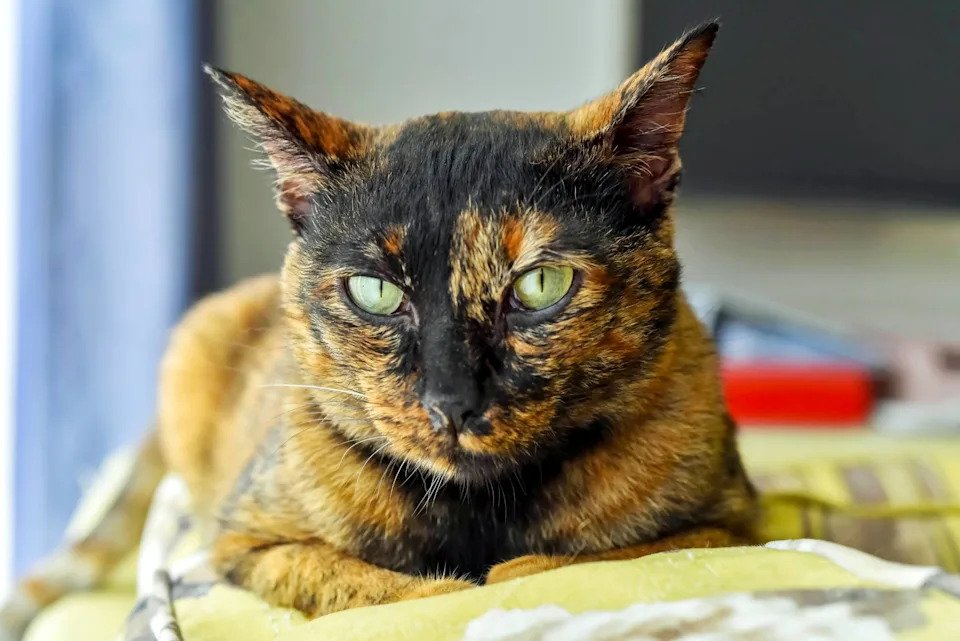
A British Shorthair named Willow has captured millions of views on TikTok with a coat pattern so precisely split it mimics a chimera — two distinct faces merged down the center. The cat, known as @worldofwillowandwinston, displays the classic tortoiseshell mosaic of black and orange pigments swirled like caramel through dark chocolate, but her near-perfect bilateral symmetry has sparked renewed fascination with the genetics behind one of feline biology’s most striking quirks.
Tortoiseshell patterning is not a breed. It is a sex-linked color expression requiring two X chromosomes, which explains why 99.9 percent of tortoiseshell cats are female. The orange and black pigments are coded on the X chromosome; during early embryonic development, one X chromosome randomly inactivates in each cell — a process called Lyonization. This creates the randomized mosaic. When a tabby gene overlays the pattern, the result is a “torbie,” adding striped banding within the colored patches.
Male tortoiseshells occur in roughly one in 3,000 births and almost always carry an extra X chromosome (XXY), a condition analogous to Klinefelter syndrome in humans. These males are typically sterile. The genetic rarity has made tortoiseshell cats the subject of folklore across cultures — Japanese sailors once believed they protected ships from storms, while American shelters still report longer adoption waits for “torties” despite no evidence of temperament differences.


Willow’s breed adds another layer. British Shorthairs are among the oldest recognized U.K. breeds, prized for dense coats and round faces. The breed standard accepts tortoiseshell, but the expression varies wildly. Willow’s cream-colored furniture backdrop in the viral clips amplifies the contrast, turning her coat into a visual case study of X-inactivation in real time.
The line between tortoiseshell and calico comes down to a single gene: the white spotting factor. Calicos carry it; tortoiseshells do not. That absence of white lets the black-orange mosaic dominate uninterrupted, which in Willow’s case creates the illusion of a split face — a phenotypic echo of the cellular coin toss that happened weeks after fertilization.
As of Friday, Willow’s primary TikTok account has surpassed 2.3 million followers, with her most recent post — a slow blink toward the camera — crossing 14 million views in under 48 hours.