Ukraine’s Drone Offensive Sets Moscow Refinery Ablaze During Russia’s Election
A 1,000-drone barrage reaches Moscow as Ukraine targets Russia’s war economy
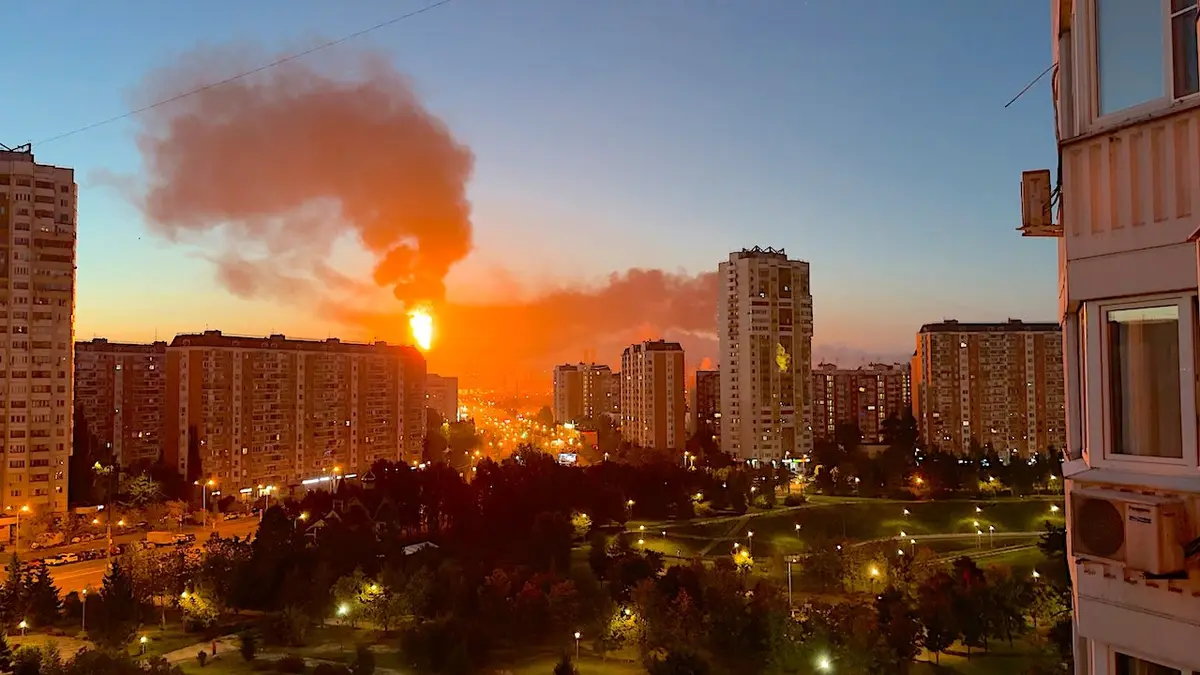
More than 1,000 unmanned aerial vehicles, supported by cruise and ballistic missiles, were directed at targets across western Russia, the Crimean Peninsula, and the Black Sea in what Russian defense officials called the largest coordinated drone offensive of the war.
The overnight barrage came as Russia concluded a tightly controlled, three-day parliamentary election. Voting took place inside Russia’s pre-2014 borders as well as in occupied Crimea and the four partially controlled Ukrainian provinces of Donetsk, Luhansk, Zaporizhzhia, and Kherson. Kyiv and Western governments broadly condemned the balloting as illegal.
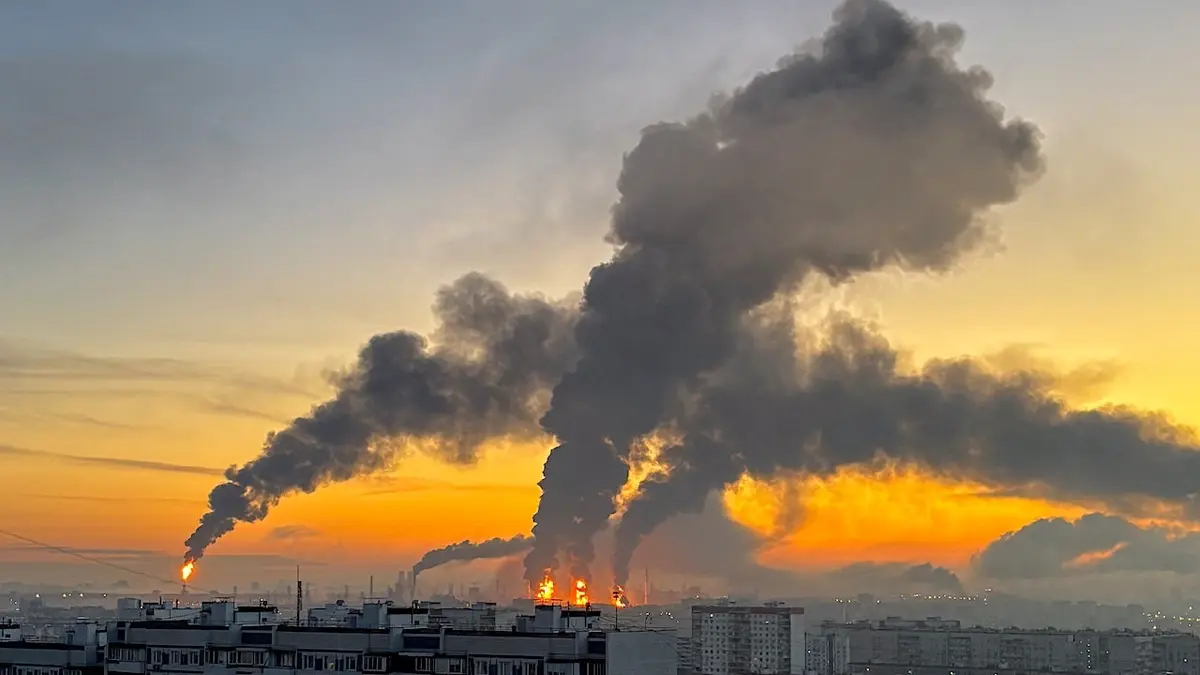

Ukraine’s long-range responses penetrated multi-layered defenses around Moscow and struck the Moscow Oil Refinery in the city’s southeastern district. A nearby logistics facility and a residential structure were also damaged. Moscow regional Governor Andrei Vorobyov said falling debris and direct impacts killed at least two people and injured 20 others across the Moscow region.
Russia’s Ministry of Defense said air defense units intercepted 1,110 Ukrainian drones across multiple administrative regions and occupied territories. Moscow Mayor Sergei Sobyanin reported that municipal and military defenses brought down 450 drones approaching the capital, while maintaining that primary installations remained secure despite visible damage and localized fires.
Ukrainian President Volodymyr Zelenskyy confirmed the operation and described the refinery and supply nodes as deliberate targets in a campaign against the financial and operational lifelines supporting Russia’s military operations. “Tonight in the Moscow region, our long-range responses were felt very acutely,” Zelenskyy said, adding that the installations struck represented billions of dollars in revenue for the Kremlin’s war effort. “Moscow must end its brutal war and choose peace instead of building layered rings of air defense at the expense of other regions.”
He also urged the United States, the European Union, and the Group of Seven nations to impose a new wave of economic sanctions on Russian fossil fuel revenues, transport networks, and industrial supply chains.
The attack unfolded during the final hours of voting. Before the election, Russian President Vladimir Putin had addressed the country and presented the vote as a display of wartime solidarity and resolve behind the armed forces. He accused Ukraine of trying to sabotage the process, while Russian officials alleged that an earlier Ukrainian strike killed an election administrator inside her home in the occupied portion of the Zaporizhzhia region. Sobyanin likewise called the massive drone wave a direct attempt to destabilize the political exercise in the capital.
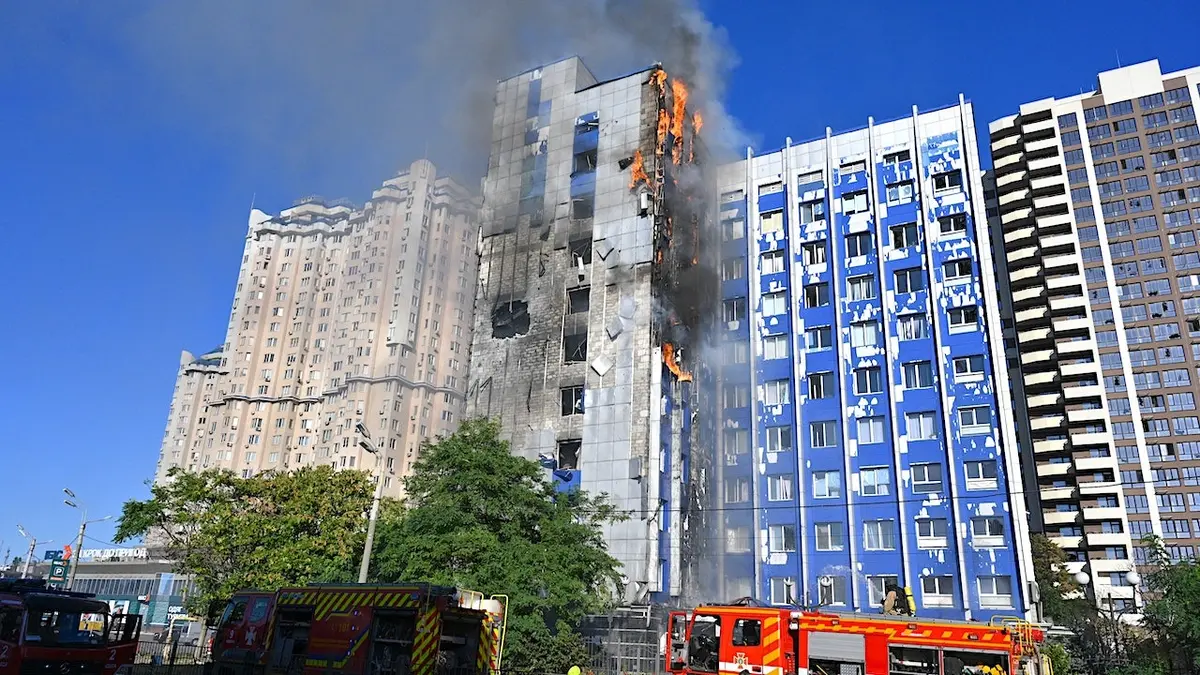
The strikes in Russia followed a week of sustained Russian bombardments against Ukrainian civilian centers and critical infrastructure. Ukrainian government data said Russian forces had launched more than 2,000 attack drones, predominantly jet-propelled models, together with 1,700 guided aerial bombs and 19 cruise and ballistic missiles over the preceding seven days.
On the eve of the Moscow strikes, Russian barrages caused casualties and structural damage in several Ukrainian regions. Tymur Tkachenko, head of the Kyiv regional administration, said a Russian missile strike on a residential area in the capital killed a mother and her three children.
In southern Ukraine, a Russian drone hit an Orthodox monastery in the Kherson region, killing a member of the clergy and injuring four other people. Russian drone and missile salvos also ignited major structural fires in central Odesa and damaged commercial and administrative buildings amid continuing pressure on Ukrainian port and logistical hubs.
Ukraine’s intensified long-range strategy relies increasingly on domestically produced strike drones capable of reaching high-value refining, storage, and export facilities hundreds of miles behind the front lines. The stated aims are to restrict Russian battlefield fuel logistics and curtail oil export revenues.