Russia Hides Signal Repeaters in Kyiv to Guide Drones
Lunchbox-sized radio relays form a covert mesh network that undermines Ukrainian electronic warfare and lowers drone interception rates.
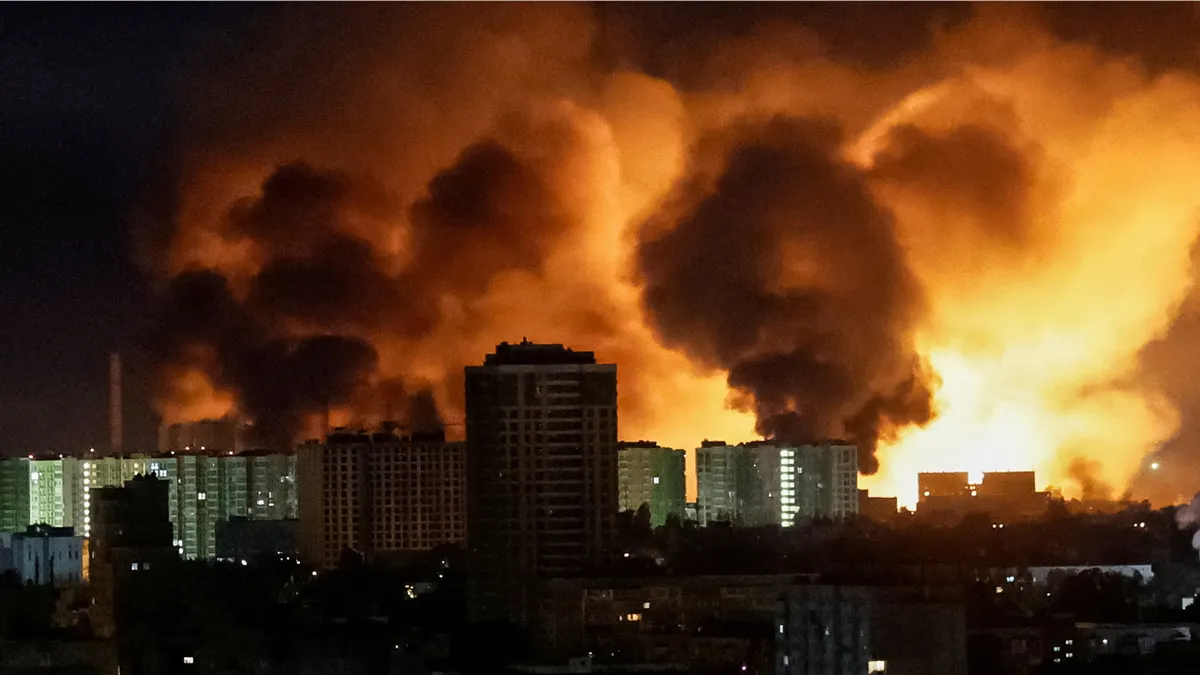
Ukrainian counter-drone defenses face a growing blind spot: small radio transmitters smuggled into cities and activated only when Russian strikes are already inbound. The tactic transforms urban infrastructure into a covert communications grid, allowing long-range drones to navigate through electronic warfare barriers that previously rendered them ineffective.
Serhii Beskrestnov, a defense technology adviser to the Ukrainian presidency, warned on Oct. 3 that Russian operatives may have planted signal repeaters inside Kyiv. The devices receive and retransmit control signals, extending the operational reach of drone pilots far beyond standard line-of-sight limits. Because the hardware can be powered down until moments before an attack, sweeping the city for their electromagnetic signatures yields little result.
The physical footprint of the threat is minimal. Cameron Chell, CEO and co-founder of Draganfly, described the units as roughly the size of a large lunchbox. Concealing two or three inside a metropolitan area of Kyiv’s scale provides enough relay points to sustain encrypted command links during complex strike missions. Unlike traditional jamming targets, which emit constant signals, these dormant nodes evade detection until they are actively routing traffic.


Ukrainian Air Force spokesperson Yurii Ihnat confirmed on Sept. 29 that Russian forces are integrating mesh networking architectures alongside upgraded onboard optics. Mesh networks distribute data across multiple pathways simultaneously. If one node is destroyed or jammed, the system automatically reroutes the connection. For air defense operators attempting to sever a drone’s link to its pilot, this means breaking dozens or hundreds of connections at once rather than targeting a single frequency.
Technical analysts traced early indicators of this shift to a Sept. 4 strike on the Security Service of Ukraine headquarters on Volodymyrska Street in central Kyiv. Tracking data from that attack showed no airborne relay drones operating in the vicinity, suggesting ground-based repeaters maintained the control link. Historically, Russia relied on larger UAVs flying at high altitudes to bounce signals between operators and strike drones. Eliminating those visible relay aircraft removes a primary warning sign for radar operators.
The tactical evolution arrives as interception rates deteriorate. Ukrainian President Volodymyr Zelenskyy reported on Sept. 28 that while conventional drone interception holds near 70 percent during mass attacks, the rate drops to 57 percent against newer jet-powered unmanned aerial vehicles. Jet-propelled drones, such as the Geran-series variants modified with turbojet engines, compress the reaction time available to anti-aircraft crews and mobile fire groups. Mesh networking compounds this speed advantage by ensuring the faster platforms do not lose guidance during terminal approach maneuvers.
Moscow signaled further escalation on Oct. 3, issuing diplomatic notices urging foreign nationals and embassy personnel to leave Kyiv immediately, citing “mortal danger” and threatening massive retaliatory strikes. The warning followed intensified cross-border tensions and precedes anticipated winter campaigns targeting energy infrastructure.
Financial commitments underscore the strategic pivot. Zelenskyy noted that Russia allocated $12 billion specifically for manufacturing jet-powered drones and loitering munitions for the upcoming year. This budget excludes conventional cruise missiles, ballistic weapons, and glide bombs, indicating that unmanned systems now represent a primary pillar of Russian offensive planning rather than a supplementary tool.
Standard electronic warfare systems deployed around Ukrainian cities, such as GPS spoofers and broadband jammers, were designed to disrupt point-to-point radio links. A distributed mesh network fundamentally alters that calculus. Defense manufacturers globally are now racing to develop artificial intelligence-driven spectrum analyzers capable of identifying transient burst transmissions used by mesh nodes, but deployment lags behind battlefield adaptation.
Chell assessed that the communication architecture has superseded the drone itself as the primary weapon system. Under this doctrine, individual unmanned aircraft function merely as kinetic payloads delivered by a resilient, decentralized digital network. He cautioned that the same repeater placement tactics tested in Kyiv could expand to other Ukrainian regions and operational frontlines, permanently altering how urban airspace is defended.
Russian military logistics units continue adapting commercial off-the-shelf radio components for battlefield use, accelerating the production cycle for concealable repeaters independent of specialized defense manufacturing supply chains.