Florida Trial: Jury Hears Evidence in Fatal I-95 SUV Crash
Telematics data and a judge's decision to exclude the victim's dying statements shape the prosecution's case in Flagler County.
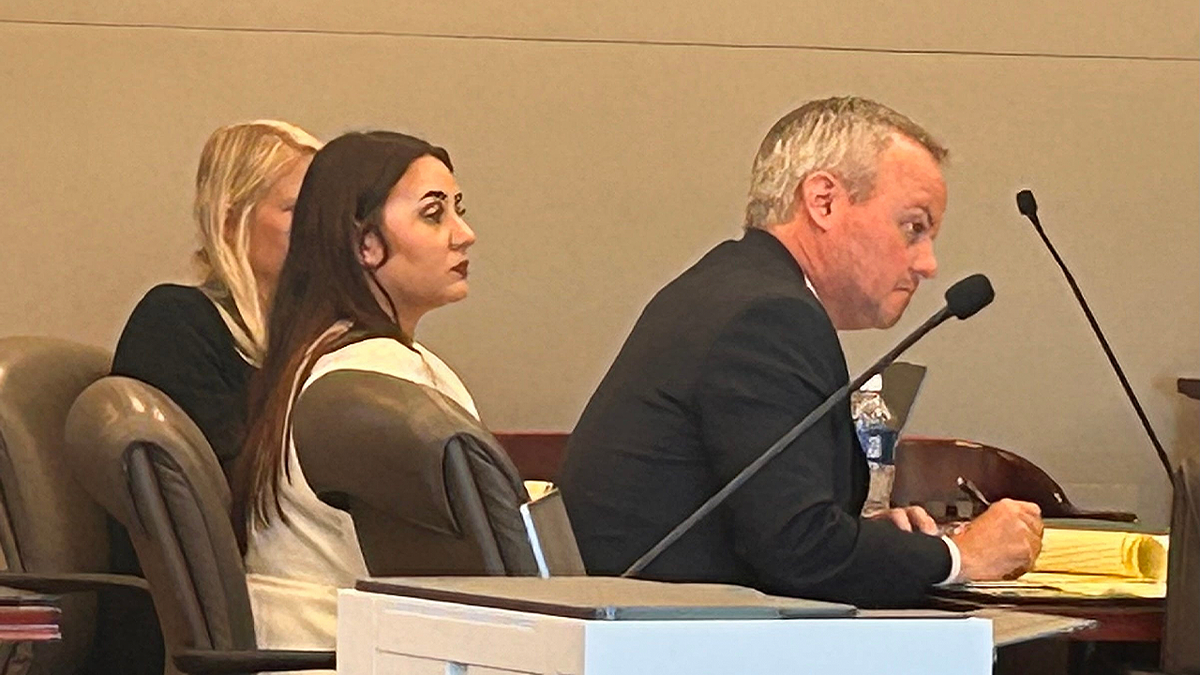
A Florida jury must decide whether a 45-degree steering input at 94 mph was an act of rage or an uncontrollable reflex, as the vehicular homicide trial of Leigha Mumby opened Tuesday in Flagler County.
Mumby, 25, faces charges of vehicular homicide and reckless driving causing serious bodily injury following a Feb. 9, 2025, wreck on Interstate 95 that left her boyfriend, Daniel Waterman, paralyzed from the neck down. Waterman, 22, died eight months later on Oct. 8, 2025, from complications tied to his injuries.
The prosecution’s case rests heavily on telematics data extracted from the SUV. Assistant State Attorney Melissa Clark told jurors the vehicle’s onboard computer recorded speeds exceeding 100 mph before logging the sharp left-hand turn that launched the car off the highway and into a wooded area. Under Florida law, vehicular homicide requires prosecutors to prove a driver operated a vehicle in a reckless manner likely to cause death or great bodily harm, making the telemetry evidence central to establishing intent rather than mere negligence.
Jurors will not hear Waterman’s own account of the crash. Before his death, he told investigators from his hospital bed that Mumby deliberately swerved off the road during an argument over another woman’s text messages, allegedly telling him, “I don’t care what happens, you’ll get what you deserve.” Judge Dawn Nichols excluded those statements under Florida’s rules of evidence. Because Waterman died before he could testify under oath, his out-of-court statements to detectives did not qualify for admission, stripping prosecutors of their most direct piece of evidence regarding what happened inside the cabin.
Defense attorney Reid Hart framed the wreck as a catastrophic accident rather than a calculated attack. He argued the case hinges entirely on a single steering wheel input, suggesting something occurred inside the vehicle that Mumby neither anticipated nor controlled. Once the SUV began careening toward the tree line, Hart said, physics took over and she could not stop it.
Testimony from Sarah Stappenbeck, Waterman’s cousin and Mumby’s best friend, provided the timeline leading up to the crash. Stappenbeck hosted a Super Bowl gathering the couple attended earlier that evening. She testified that Mumby had announced she was pregnant that same day but was deeply agitated about Waterman communicating with other women.
The couple departed before the game concluded. Roughly 20 minutes later, Stappenbeck received a phone call from Mumby, who was yelling about the text messages and threatening to bring Waterman back to the house. Stappenbeck noted she could not hear Waterman speaking in the background. After urging them to drive safely and resolve the dispute the next day, Mumby accused her of taking his side and hung up. A second angry call followed approximately 20 minutes later. The couple never returned; instead, Mumby’s roommate called Stappenbeck to report the crash.
Vehicular homicide cases involving intimate partner disputes frequently challenge juries because they require distinguishing between reckless driving fueled by emotional distress and premeditated use of a vehicle as a weapon. A parallel case drawing national attention involves Mackenzie Shirilla, an Ohio woman convicted in 2023 of intentionally driving into a brick building at nearly 100 mph in Strongsville, Ohio, in July 2022, killing her boyfriend, Dominic Russo, 20, and their friend, Davion Flanagan, 19. Shirilla is serving two concurrent sentences of 15 years to life. The Ohio Supreme Court recently denied her latest appeal bid, and the case became the subject of the Netflix documentary “The Crash.”
Unlike Shirilla’s conviction, which relied heavily on surveillance footage showing no attempt to brake, the Florida case against Mumby currently lacks video evidence of the final moments, placing heavier reliance on the digital vehicle data and witness testimony regarding her state of mind.
Mumby was initially arrested in July 2025 on charges of reckless driving causing serious bodily injury and aggravated battery with a deadly weapon. Prosecutors upgraded the charges to include vehicular homicide after Waterman succumbed to his injuries. She was booked into the Flagler County Jail and subsequently released after posting a $150,000 bond.
Three days after Waterman died, Mumby gave birth to a daughter. Waterman’s family, represented by attorney John Hager, publicly supported the upgraded charges in November 2025, calling the prosecution “right and just.”
Court adjourned Tuesday following opening statements and initial witness testimony.