TVA Wins First U.S. Permit for GE Vernova Hitachi Small Modular Reactor at Clinch River
Cross-border partnership with Ontario Power Generation aims to validate factory-built nuclear economics before wider U.S. deployment
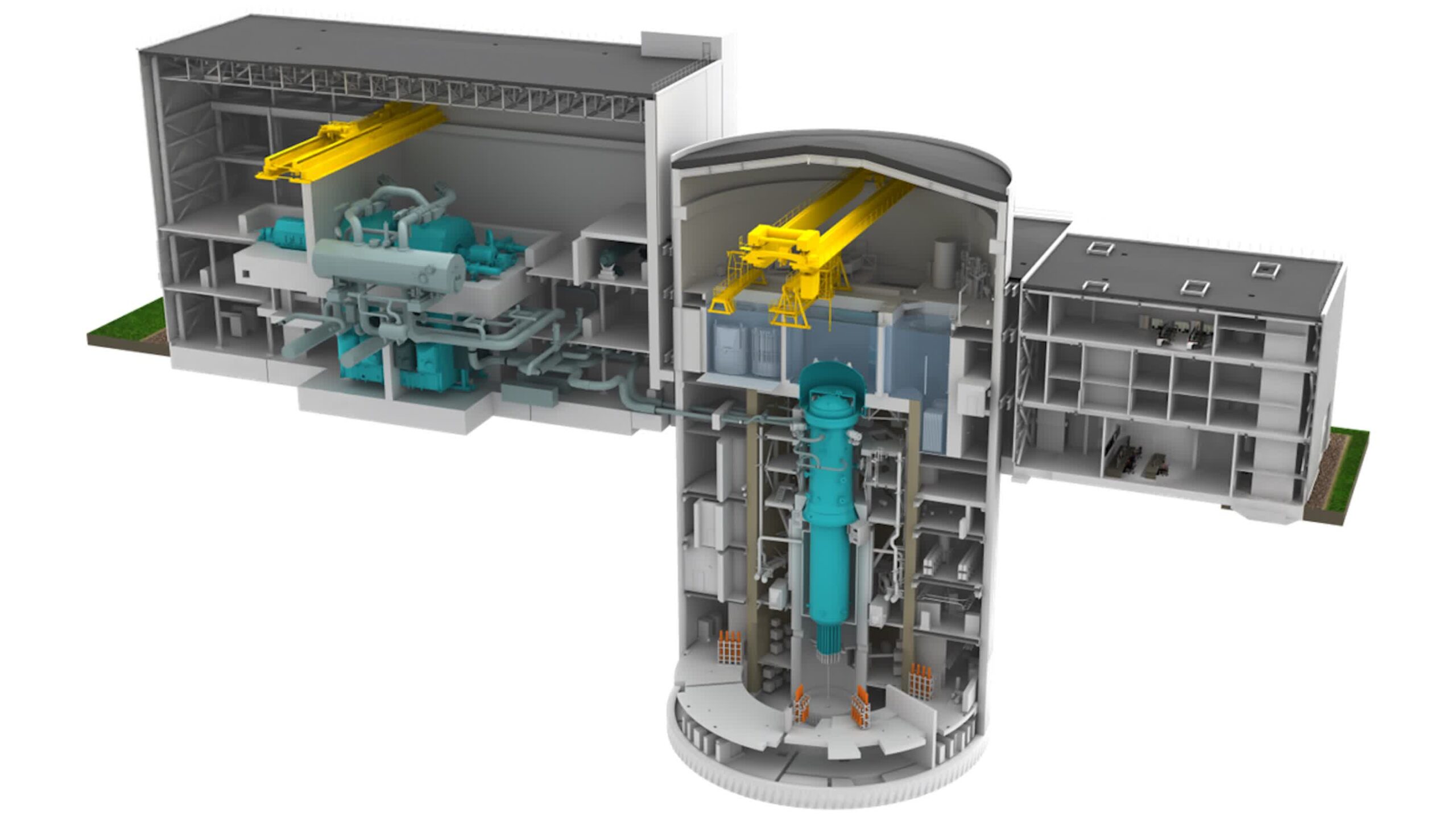
The Tennessee Valley Authority has secured the first federal construction permit in the United States for a GE Vernova Hitachi BWRX-300 small modular reactor, clearing the way for ground-breaking at the Clinch River site near Oak Ridge, Tennessee. The Nuclear Regulatory Commission issued the authorization following a 14-month safety and design review that concluded four months ahead of schedule, marking a critical regulatory milestone for an industry attempting to restart domestic nuclear manufacturing after decades of stagnation.
While the permit allows TVA to begin physical construction of the 300-megawatt unit, it does not authorize fuel loading or commercial operation. The utility must still obtain a separate operating license from the NRC before the plant can generate electricity. No construction start date or final cost estimate has been released, though TVA is evaluating the potential deployment of up to four BWRX-300 units at the site to achieve economies of scale.
The BWRX-300 represents a deliberate shift away from the bespoke engineering that characterized recent large-scale nuclear projects. Unlike the AP1000 reactors at Georgia’s Vogtle plant, which faced massive cost overruns and delays due to first-of-a-kind construction challenges, the BWRX-300 utilizes established boiling water reactor technology that has operated commercially for over half a century. The design relies on natural circulation for cooling and passive safety systems driven by gravity and stored water pressure rather than active pumps and external power sources, significantly reducing component count and complexity.


This technological simplification is intended to address the financing risks that have plagued the U.S. nuclear sector since the cancellation of multiple projects in the 2010s. By maximizing factory fabrication and minimizing on-site custom work, developers aim to compress construction schedules and provide lenders with greater cost certainty. The Clinch River project will serve as the primary domestic test case for whether this standardized approach can actually deliver on promised efficiencies compared to traditional gigawatt-scale plants.
The strategic rationale extends beyond a single Tennessee site. Ontario Power Generation is simultaneously preparing its own BWRX-300 fleet in Canada and has already poured foundations for its first unit, creating a cross-border supply chain synergy rarely seen in North American nuclear development. This parallel development allows both utilities to share procurement leverage, manufacturing learning curves, and operational experience, potentially lowering unit costs through volume production rather than isolated demonstration.
Private sector interest is also accelerating around the same design platform. Blue Energy has filed permit applications to deploy BWRX-300 reactors in Texas specifically to serve data center campuses, signaling that tech-driven electricity demand is creating a new market segment for baseload carbon-free generation. Grid operators increasingly view nuclear as one of the few dispatchable low-carbon options capable of meeting the continuous, weather-independent load profiles required by artificial intelligence infrastructure and advanced manufacturing.
The urgency stems from a widening gap between projected electricity demand and available clean firm capacity. While renewable energy and battery storage continue to expand, they cannot currently provide the 24/7 reliability that industrial users and grid planners require without massive overbuilding. The BWRX-300’s 300-megawatt output—roughly one-quarter the capacity of Vogtle’s newest units—is sized to match incremental grid needs and integrate with existing transmission infrastructure without requiring billion-dollar substation upgrades.
Regulatory efficiency has emerged as a key enabler of this timeline. The NRC’s completion of the construction permit review in under 15 months suggests the agency is adapting its processes to accommodate standardized SMR designs more rapidly than previous generations of novel reactors. However, the true validation of the BWRX-300 model will come only when TVA demonstrates predictable construction performance and transparent cost tracking at Clinch River, providing the empirical data necessary for subsequent projects to secure private capital at viable rates.