Sylvester Stallone Memoir ‘The Steps’ Details the $360,000 Offer He Rejected to Star in Rocky
With only $106 in the bank, the actor turned down escalating buyout offers from producers Irwin Winkler and Robert Chartoff to guarantee his place as the lead in the 1976 Best Picture winner.
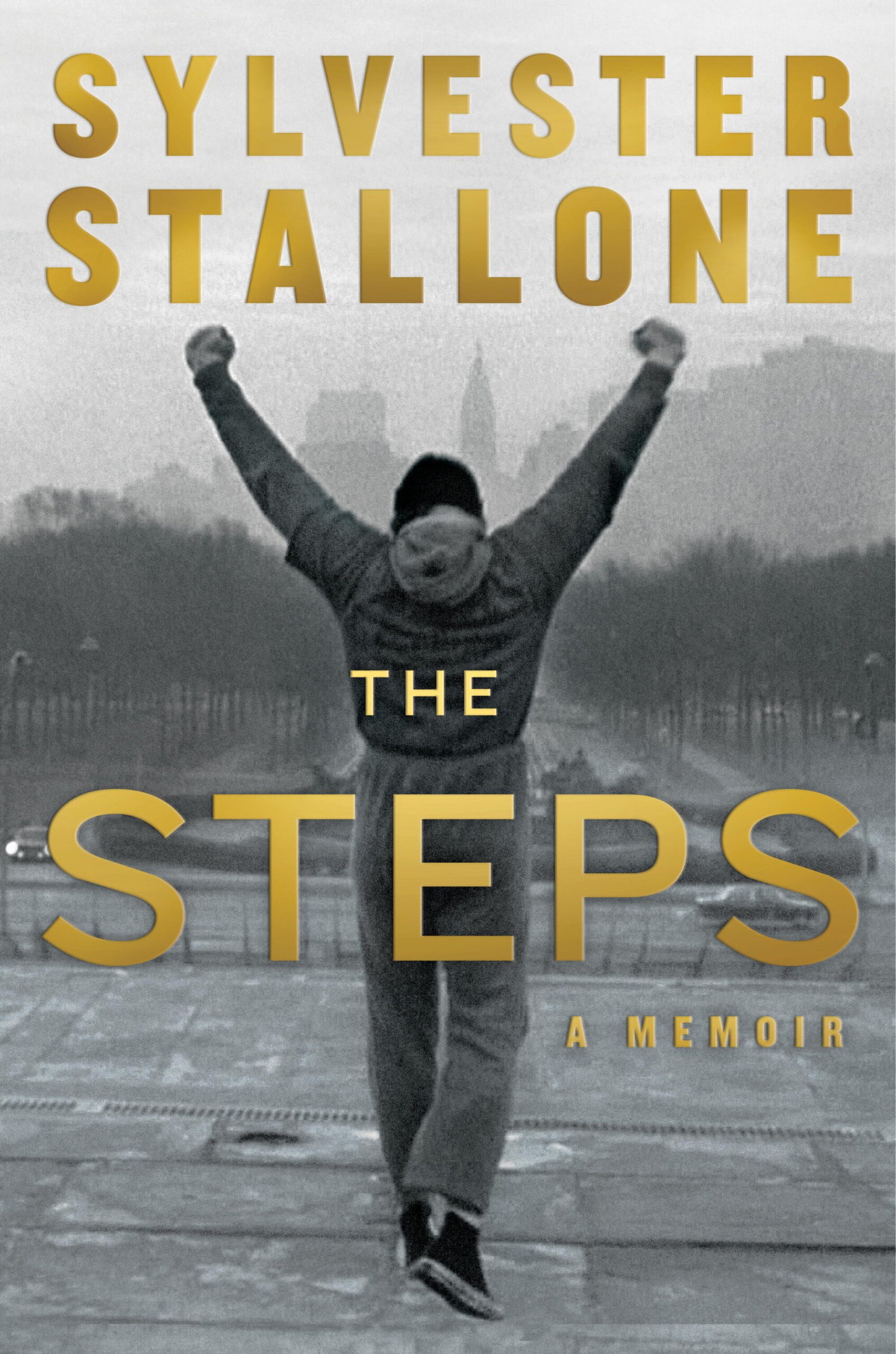
Sylvester Stallone walked away from $360,000 in 1975 with exactly $106 left in his bank account. The money was a final offer from producers Irwin Winkler and Robert Chartoff for the screenplay to “Rocky,” contingent on one condition: Stallone could not play the lead role. He refused, left their conference room, and forced Hollywood into a standoff that altered the trajectory of American cinema.
That negotiation, detailed in Stallone’s new memoir “The Steps” (William Morrow, 304 pages, $32.50), anchors a broader account of how an actor with partial facial paralysis and no industry connections engineered one of the most improbable breakthroughs in film history. While the broad strokes of the “Rocky” origin story have circulated for decades, the memoir reconstructs the specific financial pressures and psychological calculations behind Stallone’s refusal to sell his script without himself attached as its star.
Before he ever wrote about a Philadelphia boxer, Stallone spent years studying film mechanics out of sheer survival instinct. Working as an usher at the Baronet and Coronet Theatre on Third Avenue and 59th Street in New York, he bypassed the breaks other theater workers took between screenings. Instead, he analyzed the structural differences between successful and failing films during a pivotal era for American cinema. He smuggled a tape recorder into the theater to capture and study dialogue from releases including “MASH,” “Love Story,” “Billy Jack,” “The French Connection” and “Patton.” This self-directed education occurred after he had dropped out of the University of Miami just short of completing a drama degree, and after abandoning studies at the American College in Switzerland, a converted sanatorium where he briefly sought formal training.


The physical traits that casting directors repeatedly cited as disqualifying liabilities — his slurred speech and asymmetrical mouth — were the direct result of a botched forceps delivery. A doctor accidentally severed a nerve in Stallone’s cheek during his birth in New York’s Hell’s Kitchen, paralyzing the lower left side of his face. Rather than undergoing corrective procedures or hiding the impairment, Stallone eventually leveraged it as a defining screen presence. But during his early years in New York, those same agents who rejected him never saw past the physical damage.
His pre-fame employment record reflects the desperation required to stay in proximity to the entertainment business without any access to it. He shoveled animal waste at a zoo, worked in a deli where a physical altercation led to a brief stint in The Tombs, Manhattan’s notoriously brutal detention complex, and survived on $34 a week in a flophouse apartment he described as smaller than modern federal minimum standards for jail cells. To find representation, he flipped through yellow pages directories and physically knocked on talent agency doors holding his headshot.
A minor speaking role alongside Henry Winkler in the 1974 film “The Lords of Flatbush” provided enough momentum to justify a relocation to Los Angeles with his future wife, Sasha Czack. In California, he secured work in low-budget Roger Corman productions, notably “Death Race 2000” with David Carradine. On the set of “Capone,” actor Ben Gazzara delivered advice that crystallized Stallone’s approach to his career: control your own professional destiny rather than waiting for permission to participate in someone else’s project.
Stallone drafted the first version of “Rocky” in three days during the winter of 1975. He immediately recognized it was structurally flawed. The protagonist lacked nobility and ambition. Stallone discarded that draft and rebuilt the character as a third-rate fighter seeking a second chance, writing subsequent versions using a frayed record album cover balanced on his lap as a desk.
When Winkler and Chartoff expressed interest, they initiated a bidding war designed specifically to separate Stallone from the starring role. The offers escalated from $60,000 — significantly more than the average $40,000 cost of a home in Los Angeles County at the time — to $75,000, then $160,000, and finally $300,000 before reaching the $360,000 ultimatum. For an actor living in poverty whose trunk contained nothing but unsold spec scripts loaded into a junker car his father had sold him, rejecting a sum of that magnitude defied conventional logic.
The gamble resolved when the producers relented. Released in 1976, “Rocky” became the highest-grossing film of the year and won the Academy Award for Best Picture, launching a franchise that has generated billions of dollars across six core sequels, the “Creed” spinoff series, and the recent Paramount+ television expansion “Tulsa King.” Stallone’s insistence on retaining creative control over his own material established a precedent for writer-actors negotiating studio deals that remains heavily referenced in Hollywood contract discussions today.