Starship Flight 14: SpaceX Targets First Orbital Insertion and Starlink Deployment
First Attempt at Sustained Orbit and Payload Release Validates Reusable Architecture
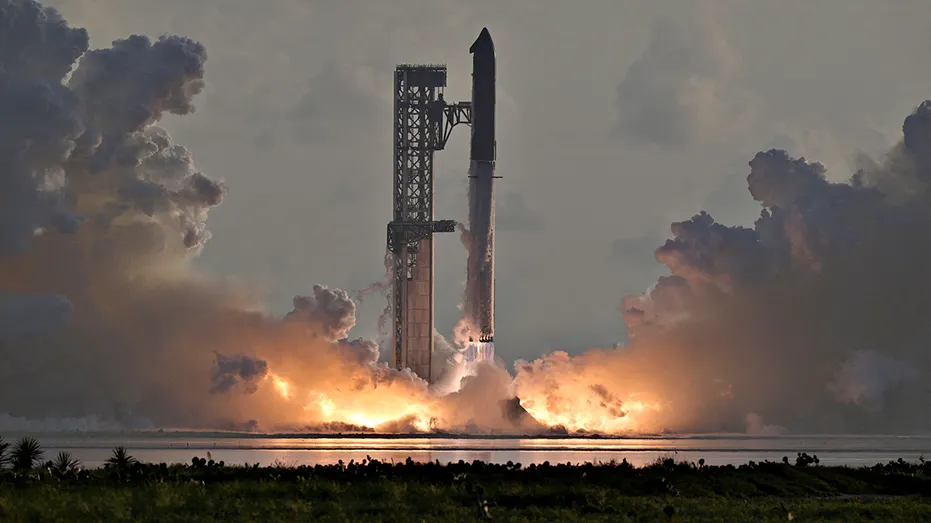
SpaceX initiated a historic milestone in commercial spaceflight on Sunday morning, launching its Starship vehicle from the company’s Starbase facility in Boca Chica, Texas. The mission, designated as Flight 14, represents the first dedicated attempt by the fully reusable heavy-lift system to achieve stable Earth orbit. Previous iterations of the program focused on suborbital trajectories and controlled splashdowns; this test shifts the operational envelope toward sustained orbital mechanics and payload deployment capabilities essential for future satellite constellations and deep-space missions.
The flight profile involves a roughly ten-hour duration during which the spacecraft is scheduled to complete six orbits around the planet. Central to the test objectives is the deployment of 26 simulated or actual Starlink satellites into low-Earth orbit. This maneuver serves as a critical validation of the ship’s ability to open its payload bay doors, release cargo via robotic arms or ejection mechanisms, and maintain attitude control while deploying mass in microgravity conditions. Successful execution would demonstrate that Starship can function not just as a transport vehicle, but as an operational platform for servicing the world’s largest satellite network.
Technically, the mission relies on the integration of the Super Heavy booster and the Starship upper stage, both utilizing Raptor engines powered by methalox (liquid methane and liquid oxygen). Unlike traditional expendable rockets, the architecture aims for rapid reusability. While this specific flight focuses on orbital insertion and payload operations, the broader engineering challenge remains the recovery of the stages. For Flight 14, the primary focus is on reaching the target altitude and velocity required for circularization, typically exceeding 7.5 kilometers per second, rather than immediate landing tests, though telemetry data collected will inform subsequent recovery attempts.


The transition from suborbital hops to full orbital flights marks a significant leap in complexity. Suborbital missions previously tested structural integrity under high dynamic pressure and engine performance during ascent and descent phases. Orbiting requires precise guidance, navigation, and control systems to manage fuel consumption over extended periods and ensure the vehicle does not deorbit prematurely due to atmospheric drag at lower altitudes. Additionally, thermal protection becomes paramount, as reentry speeds are higher and heat loads more severe compared to ballistic returns.
Industry analysts view this launch as a barometer for SpaceX’s progress toward Mars colonization goals outlined by CEO Elon Musk. However, near-term utility lies in expanding Starlink capacity and reducing launch costs per kilogram to orbit. If successful, the deployment of multiple satellites in a single launch could drastically accelerate global broadband coverage efforts. Conversely, failure to achieve orbit or deploy payloads would delay these economic advantages and necessitate further design refinements before regulatory approval for crewed flights can be considered.
As the vehicle ascends through the atmosphere, ground teams monitor real-time data streams covering engine health, propellant usage rates, and avionics status. The public interest surrounding Starship stems from its unprecedented scale—standing approximately 120 meters tall when stacked—and its potential to reshape access to space. With no astronauts aboard, risks are confined to hardware loss, allowing engineers to push performance boundaries without endangering human life. The outcome of this ten-hour journey will determine whether Starship is ready for routine operational flights later this year.