Oura Ring Closes the Fitness Gap With Apple Watch and Fitbit
Passive VO2 Max estimates no longer require a manual walking test, though GPS-enabled workouts remain necessary.
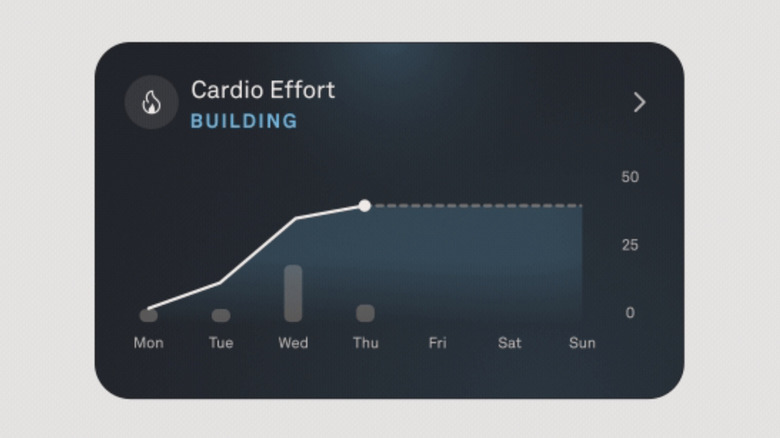
Wearable makers are racing to turn passive biometric sensors into active training tools, and the latest move comes from a company that built its reputation on sleep tracking. Oura announced it is adding Cardio Effort and automatic VO2 Max estimations to its smart rings, features long standard on wrist-worn devices like the Apple Watch and Fitbit.

The shift signals a broader push by ring manufacturers to compete directly with established fitness wearables rather than serving merely as complementary health monitors. For consumers weighing whether a $300-plus ring can replace a smartwatch for workout tracking, the update addresses one of the most glaring feature deficits in the form factor.

Cardio Effort measures cardiovascular strain during physical activity using the Training Impulse method, according to the company. The metric categorizes exertion into five personalized ranges: light, fair, maintaining, building and reaching. Rather than delivering raw heart rate data, it compares a user’s weekly activity against their individual baseline to track long-term cardiovascular trends.
VO2 Max, widely considered the gold standard for measuring aerobic fitness, represents a more significant technical pivot. Oura previously offered this measurement under the name Cardio Capacity within its experimental Oura Labs tool. That version required users to complete a dedicated six-minute walking test to generate an estimate. The revised system eliminates the manual test entirely. It now calculates VO2 Max passively during regular GPS-enabled workouts, the company said.
This passive estimation will be available in Oura Labs for the third-generation Oura Ring and later models.
The reliance on GPS-enabled workouts highlights a persistent hardware constraint specific to rings. Because smart rings lack built-in GPS chips, they must pull location data from a paired smartphone to calculate metrics like VO2 Max. Wrist-based competitors have integrated GPS receivers for years, allowing standalone tracking. Users who run or cycle without carrying their phones will not trigger the new passive VO2 Max calculations.
Apple introduced VO2 Max estimates to the Apple Watch in 2017 through watchOS updates, calculating cardio fitness levels during outdoor walks, runs, or hikes. Garmin and Fitbit followed with similar algorithms across their device lineups. By adopting these metrics now, Oura is attempting to retain subscribers who might otherwise migrate to wrist-worn alternatives as their fitness goals evolve beyond basic recovery monitoring.
The update arrives as the smart ring market faces intensifying competition. Samsung released the Galaxy Ring last year, while smaller manufacturers continue to introduce lower-cost alternatives. Oura also operates under a mandatory subscription model, charging users a monthly fee to access detailed analytics, making the continuous rollout of advanced metrics essential to justifying the recurring cost.