SpaceX Starship Reaches Orbit for the First Time, Deploys 26 Starlink Satellites in Historic Test Flight
The 171-foot rocket's milestone ascent tests heat shield technology critical to SpaceX's reusability goals and NASA's plans for crewed lunar landings
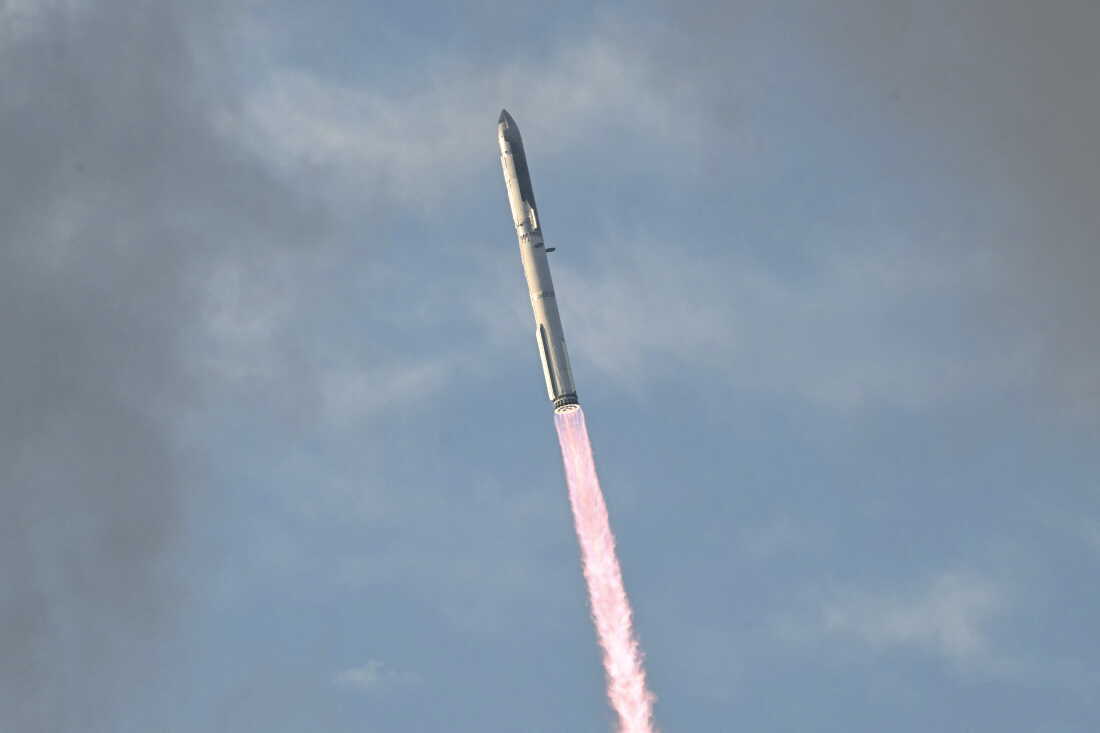
A 171-foot-tall SpaceX Starship vehicle broke new ground on Monday morning, becoming the first of its kind to reach Earth orbit during its 14th test flight — a milestone that opens the door to the rocket’s central role in the company’s commercial and interplanetary ambitions.
At 7:48 a.m. Central Time, the rocket’s Super Heavy booster fired all 33 of its Raptor engines from SpaceX’s Starbase facility at Boca Chica Beach, Texas, propelling the stacked vehicle skyward. The upper stage, known as Starship, separated from the booster roughly two-and-a-half minutes into the flight and continued climbing toward space.


One of the six engines aboard the Starship upper stage malfunctioned during ascent, forcing mission engineers to weigh whether continuing to orbit was safe. Approximately 22 minutes after liftoff, the team gave the go-ahead to press forward. The decision marked a pivotal moment for a vehicle that had previously flown only suborbital trajectories on its 13 prior attempts.
Reaching orbit demands velocities of roughly 17,500 mph — a threshold Starship crossed for the first time during this mission. SpaceX had originally outlined a 10-hour flight plan involving six full laps around the planet at an altitude near 170 miles. Mission managers ultimately trimmed the profile to about three hours and three orbits, a shortening whose rationale was not immediately disclosed.
The flight carried a payload of considerable commercial importance: 26 next-generation Starlink V3 satellites. SpaceX has been steadily expanding its Starlink broadband constellation, which currently numbers in the thousands and provides internet service to millions of subscribers worldwide. The company has historically launched Starlink spacecraft aboard its smaller Falcon 9 rocket from Florida and California, but it has signaled a strategic shift toward using Starship for future satellite deployments, including from Florida’s Space Coast.

The Starlink V3 satellites represent the largest and most capable version of SpaceX’s internet spacecraft, and Starship is currently the only vehicle in the world with the capacity to loft them into orbit in significant numbers. This exclusivity has made the rocket indispensable to SpaceX’s corporate roadmap. In regulatory filings ahead of its June 2026 stock market debut — when company executives rang the opening bell at the Nasdaq — SpaceX itself warned that any stumble in Starship’s development or launch cadence could directly threaten the company’s growth strategy.
Beyond commercial satellites, Starship is central to the future of human space exploration. NASA selected SpaceX to develop the vehicle as a human landing system for its Artemis program, the effort to return astronauts to the lunar surface. During the upcoming Artemis III mission, planned for late next year, NASA intends to test whether its Orion crew capsule can dock with Starship in orbit. Blue Origin is building a second lander for the same mission, providing a secondary option for delivering astronauts to the moon.
The stakes of Monday’s flight extended beyond reaching orbit. SpaceX is rigorously validating Starship’s ability to survive the extreme heat of atmospheric reentry — a prerequisite for the company’s long-term goal of recovering and reflying the vehicle. Three of the Starlink satellites deployed on this mission carried instruments designed to photograph and measure the performance of Starship’s thermal protection system during its return through the atmosphere.
The Super Heavy booster, meanwhile, did not attempt a return to the launch tower as designed. Instead, it executed a simulated descent and landing in the Gulf of Mexico, allowing SpaceX to test upgraded software and hardware systems aboard the booster. No personnel were aboard the vehicle for either stage of the flight.
With the shortened mission timeline, Starship is expected to descend into the Pacific Ocean for a splashdown north of Hawaii. SpaceX has not yet confirmed whether any data from the reentry was successfully recovered, but the company has indicated that the flight generated substantial engineering data on heat shield performance and flight dynamics.
The company’s ambitions for Starship extend well beyond test flights. SpaceX has announced plans for a massive new launch complex in Louisiana, described as a $100 billion investment that would eventually include dozens of launch pads. The company has said it aims to begin Starship launches from the new facility at Starbase, Louisiana, by 2029 — a timeline that would need to hold if the rocket is to support the cadence of satellite launches and eventually crewed lunar missions that SpaceX and NASA have outlined.

Monday’s flight confirmed that Starship can achieve orbital velocity and deploy operational payloads, but the road to full reusability — the capability that would transform the economics of space access — remains under active testing. Every data point gathered from missions like this one brings SpaceX closer to a vehicle that can fly, land, and fly again, a vision that underpins the company’s plans for global broadband, lunar exploration, and ultimately, missions to Mars.