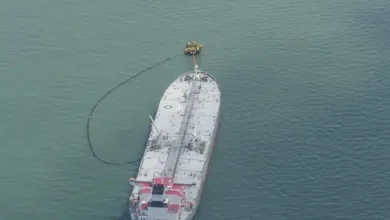
Iranian forces have repeatedly attempted to obtain American uncrewed systems operating in the Middle East, a campaign that defense technology specialists say could help Tehran map U.S. electronic surveillance networks and develop physical countermeasures. “What’s going on with drones generally in the Strait right now—when we see all these types of intel capture missions that Iran is launching—we need to make no mistake that these are very coordinated, absolutely deliberate drone capture missions,” said Cameron Chell, chief executive officer of drone manufacturer Draganfly.
On Sept. 14, U.S. military forces destroyed two Iranian fast-attack craft in the Strait of Hormuz after Islamic Revolutionary Guard Corps (IRGC) personnel tried to intercept and seize an American uncrewed surface vessel patrolling international waters. U.S. Central Command (CENTCOM) launched self-defense strikes to prevent the IRGC from taking control of the uncrewed surveillance craft.
“Iranian small boats recently attempted to take possession of a U.S. unmanned surface vessel, but they were unsuccessful after CENTCOM forcefully responded,” CENTCOM spokesperson Capt. Tim Hawkins said. “The surface drone remains under U.S. operational control.”
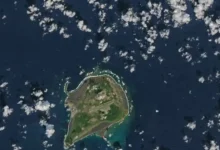
Iranian state media rejected the Pentagon’s account, saying American naval strikes had hit civilian fishing vessels operating off Kargan and near Larak Island. Iranian officials said emergency search-and-rescue teams were sent out after reports that fishermen were missing.
The Sept. 14 clash followed the recovery of an Anduril Dive-LD autonomous underwater vehicle (AUV) by IRGC forces in Persian Gulf waters on Sept. 8. Anduril Industries, which acquired Dive Technologies in 2022, engineered the Dive-LD as a 3D-printed autonomous submarine for long-endurance oceanographic surveillance, bathymetric mapping, and subsea reconnaissance at depths of up to 6,000 meters.
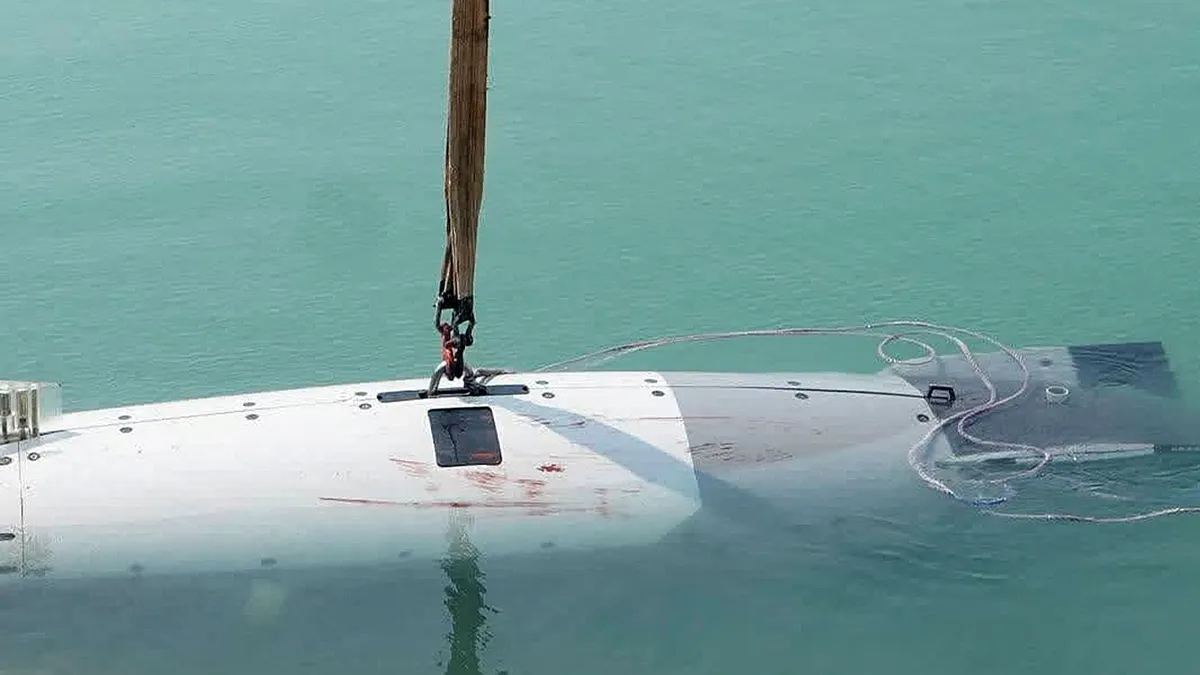
Iran’s diplomatic mission in Hyderabad, India, posted on X that Iranian military engineers were scheduled to hold an “unboxing ceremony” for the captured platform. Anduril Chief Executive Officer Palmer Luckey acknowledged the loss, saying the system had been designed for high-risk operations in which capture was an expected operational risk.
“I can’t get into the details, but it provided significant value for months before capture,” Luckey said. U.S. Navy representatives said the Sept. 8 platform was an older, unclassified model that had suffered a propulsion failure and gone dead in the water before Iranian forces retrieved it.
Chell said that physically examining autonomous hardware can allow foreign militaries to assess sensor sensitivities, optical payloads, radar signatures, and operating patterns, even when onboard cryptographic controls block access to classified data stores. “If Iran captures a drone, it could give them an immediate tactical advantage,” he said. “It may not yield specific classified data, but it gives insight into the theater of operations, which at any given moment offers an advantage. I wouldn’t doubt it for a heartbeat that it is escalating.”
“The other important thing is that when they get their hands on these drones—even if they’re only able to spend some time glimpsing at them before they have to evacuate or abort a mission—is they get a real understanding of the types of sensors on them,” Chell added. “That gives them a complete picture of how they can launch attacks and evade the type of sensing equipment out there. They can understand how to counter or measure the intelligence being gathered, and potentially use that design offensively in their own equipment.”
Commercial shipping has also been disrupted in the Strait of Hormuz, the narrow maritime bottleneck linking the Persian Gulf with the Gulf of Oman. The route normally carries nearly 20 percent of global petroleum transit, but commercial traffic has fallen below historical averages since wider regional hostilities began in February.
U.S. Marines aboard the amphibious transport dock USS New Orleans (LPD-18), together with allied warships, have conducted maritime blockade operations in the region. CENTCOM data says American forces have intercepted at least 44 commercial vessels and directed them to turn around or return to port during ongoing regional monitoring.
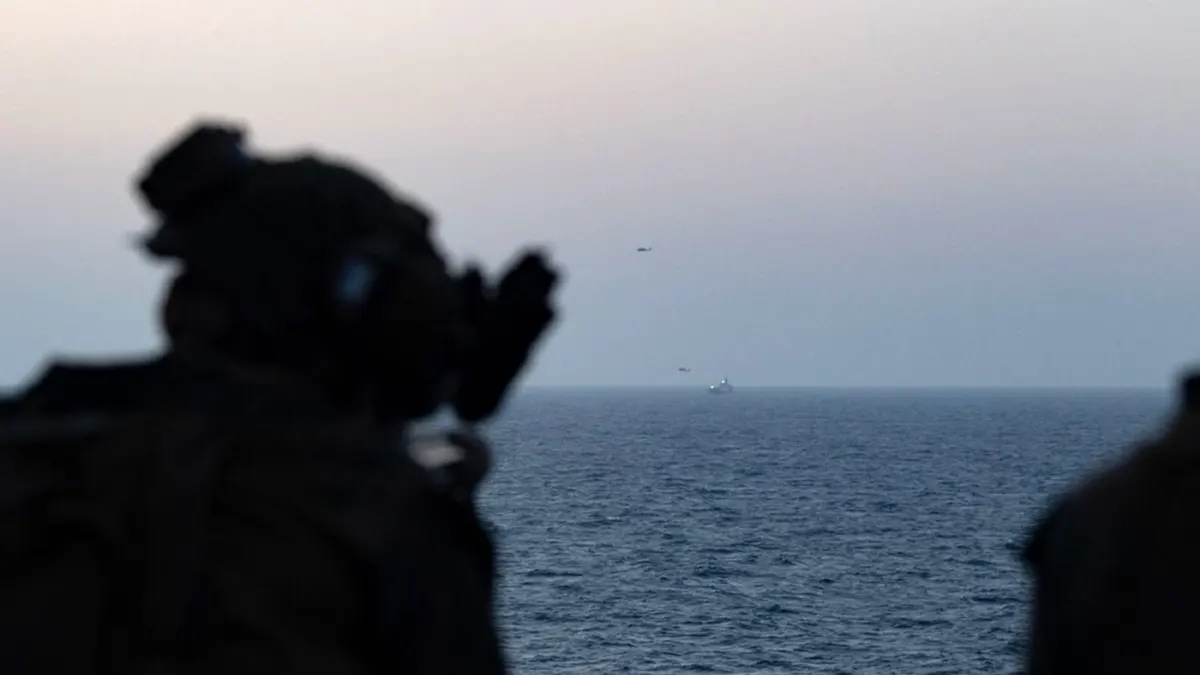
The region’s broad use of low-cost uncrewed surface vessels and autonomous submersibles has been led by Task Force 59. The U.S. 5th Fleet established the task force in September 2021, with headquarters in Manama, Bahrain, to integrate artificial intelligence and commercial autonomous systems into U.S. Naval Forces Central Command operations across the Persian Gulf, Gulf of Oman, and Red Sea.
Low operating costs allow the Navy to maintain persistent intelligence, surveillance, and reconnaissance (ISR) coverage across thousands of square miles of ocean. Slow speeds and unarmed configurations, however, leave the platforms vulnerable to physical interdiction by fast-attack craft when they operate without immediate surface or air escort.
During high-intensity operations in March 2026 under Operation Epic Fury, carrier-based aircraft, including F/A-18 Super Hornets launched from the Nimitz-class aircraft carrier USS Abraham Lincoln (CVN-72), were routed to provide aerial defense cover for uncrewed sensor networks operating near Iranian territorial waters.

Iran has previously used captured U.S. military hardware to support domestic weapons development and regional strategic messaging. In August and September 2022, IRGC naval forces made multiple attempts to take U.S. Navy Saildrone Explorer uncrewed surface vessels operating in international waters.
On Aug. 30, 2022, the Iranian support ship Shahid Baziar attached a towline to an operational Saildrone in the Persian Gulf. The ship released the platform only after the coastal patrol ship USS Tempest and an MH-60S Seahawk helicopter intercepted it. Two days later, on Sept. 1, the Iranian Navy frigate Jamaran seized two U.S. Navy Saildrones in the Red Sea and held them on deck for 18 hours. U.S. Navy destroyers USS Nitze and USS Delbert D. Black then deployed armed helicopters to force their return.
Tehran’s most significant recovery of American technology occurred in December 2011, when an intact Lockheed Martin RQ-170 Sentinel stealth unmanned aerial vehicle was brought down near Kashmar in eastern Iran. Central Intelligence Agency operatives had been flying the low-observable craft from Afghanistan when Iranian military units commandeered it, claiming they had disrupted its GPS guidance system.
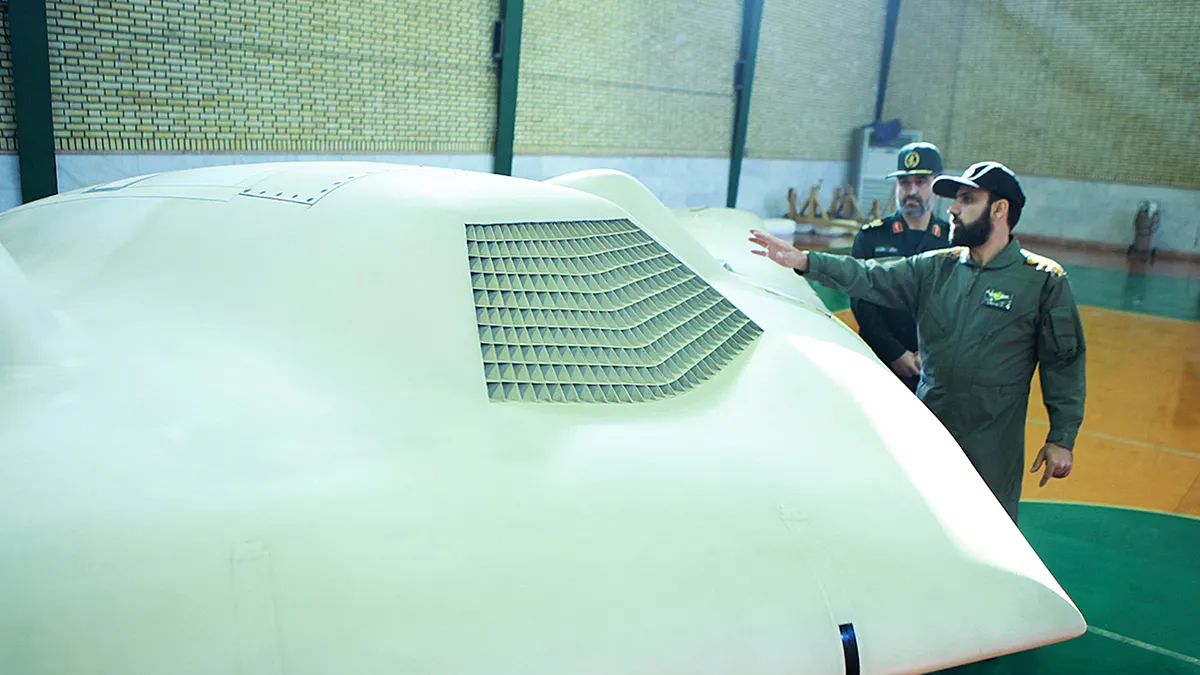
President Barack Obama publicly asked Iran to return the classified aircraft, but Tehran refused. Iranian authorities displayed the stealth drone publicly and later produced domestic lookalike platforms, including the Saegheh and Simorgh combat drones, using reverse-engineered components from the RQ-170 platform.
Military commanders have adjusted operating protocols for uncrewed platforms in the Persian Gulf to keep technical intelligence from reaching adversaries. “The U.S. being alert to the fact that these are high-value targets dictates where and how they use and protect them,” Chell said. “Still, when the U.S. knows a drone has been captured, they adjust their tactics and operational overview accordingly. There is no question that autonomy and unmanned systems are the new standard in warfare.”