Roger Herman’s $150K Plywood Studio Redefines LA Artist Living
How salvage and plywood enabled a 40-year live-work practice in Solano Canyon
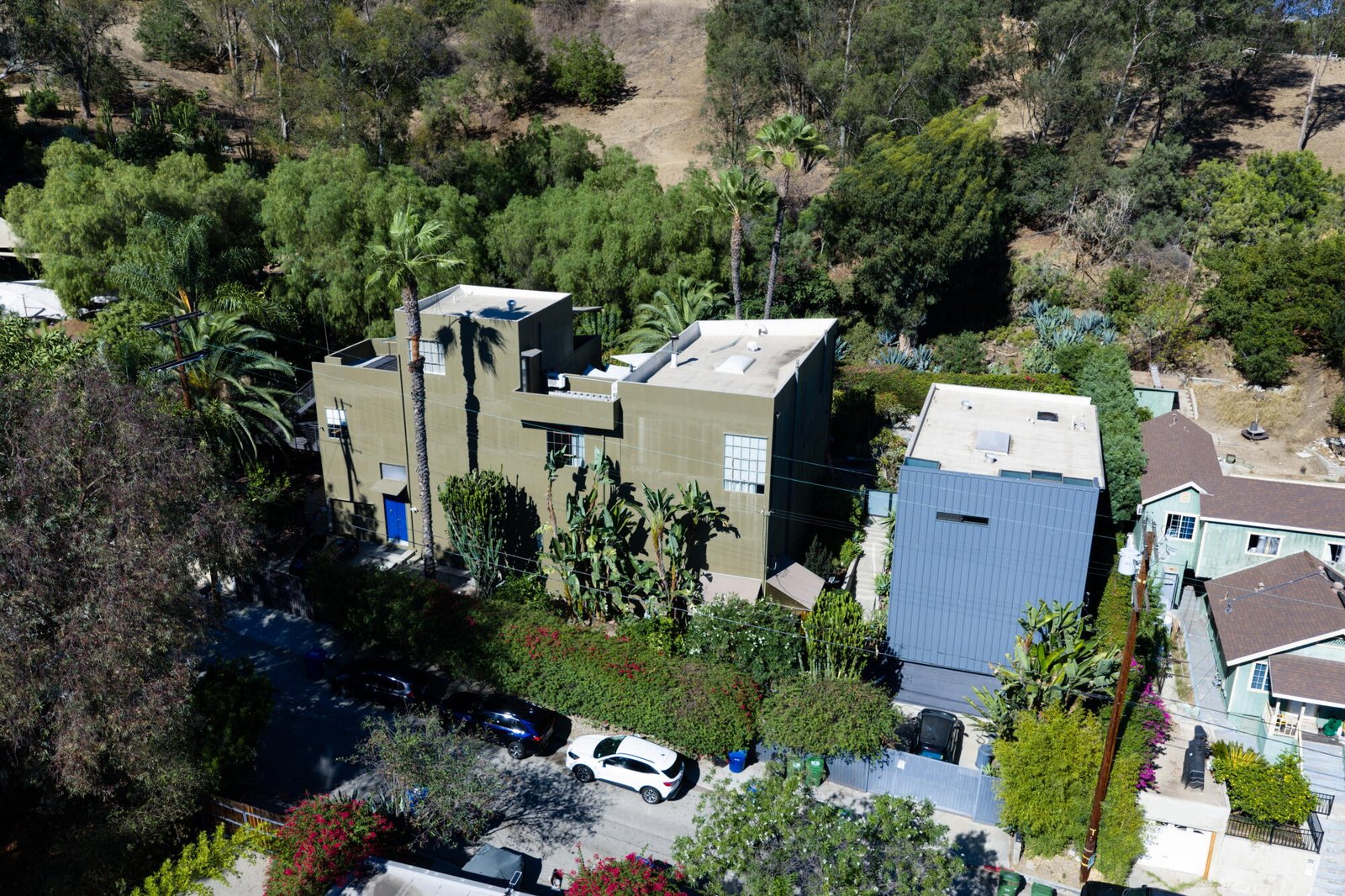
In an era where Los Angeles real estate prices have effectively priced out most working artists, the Solano Canyon home and studio of painter Roger Herman stands as a radical architectural and economic anomaly. Constructed in 1985 for just $150,000—roughly $30 per square foot even by Reagan-era standards—the 5,000-square-foot complex demonstrates how industrial salvage and unconventional zoning can sustain a decades-long creative practice in one of America’s most expensive cities.
Herman, 78, is a central figure in West Coast neo-Expressionism whose work hangs in LACMA, MOCA, and the Hammer Museum. Yet his primary legacy may be as tangible as his canvas: a self-built environment that prioritizes production volume over residential polish. The structure, designed by architect Frederick Fisher shortly after he left Frank Gehry’s office, rejects domestic finish in favor of raw utility. The exterior and interior surfaces are clad entirely in plywood sheeting, a material choice dictated by budget that has since become the building’s defining aesthetic signature. Over four decades, the facade has cycled through clear stain, light green, dark green, blue, and back to green, serving as a living record of maintenance rather than renovation.
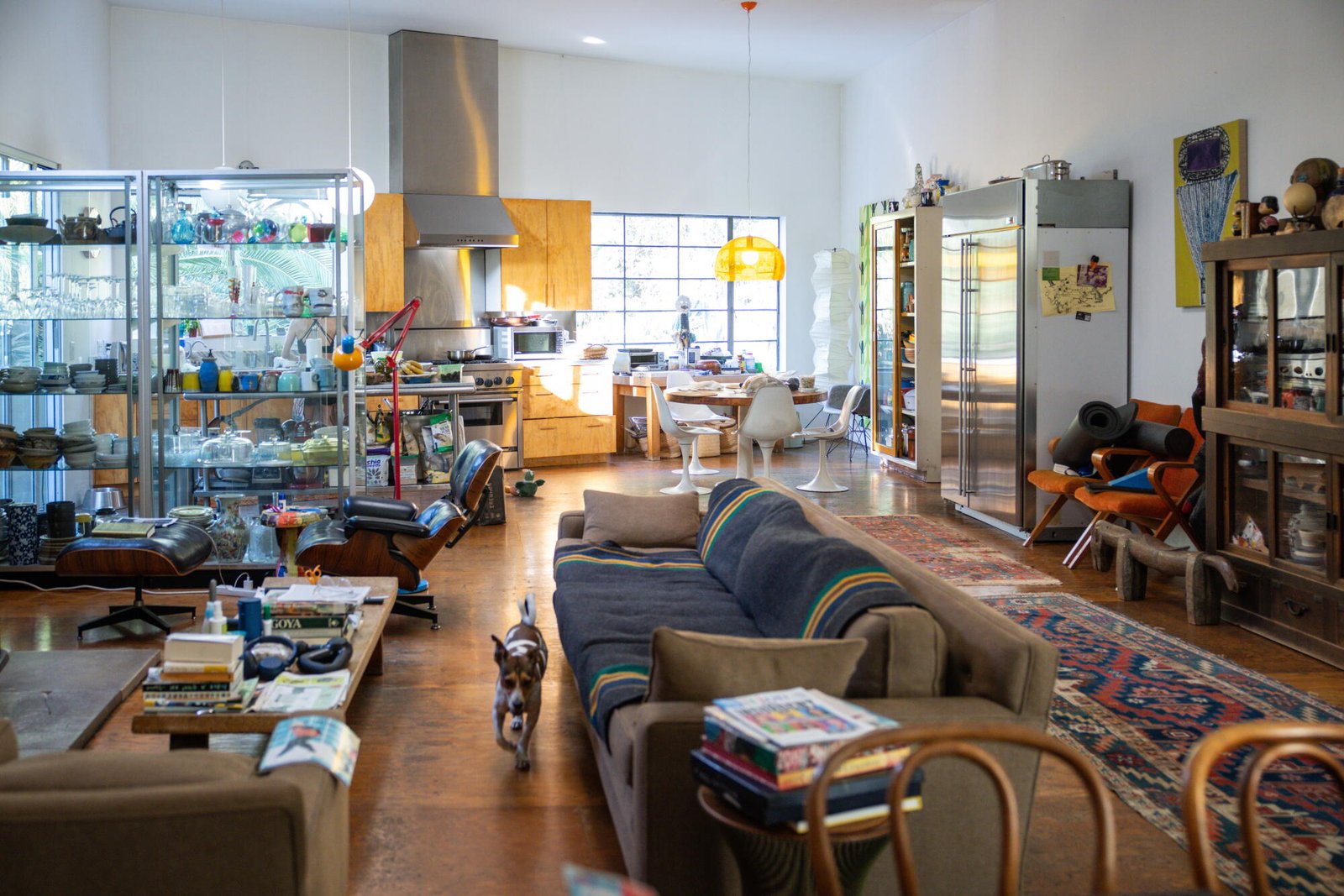


The project’s feasibility relied heavily on pre-construction scavenging. Before breaking ground on the triangular lot abutting Elysian Park, Herman spent years stockpiling steel casement windows and oversize doors salvaged from demolished downtown Los Angeles buildings. These reclaimed components determined the fenestration patterns and scale of the house, reversing the traditional architectural process where openings are designed to fit new materials. This adaptive reuse strategy not only slashed costs but embedded the city’s industrial history directly into the artist’s live-work space.
Functionally, the wedge-shaped footprint maximizes the allowable buildable area to serve dual purposes. The ground floor features 16-foot ceilings, clerestory windows, and overhead skylights specifically calibrated for large-scale painting. Unlike typical live-work conversions where the studio is secondary, here the production space dictates the residential layout. The second-floor communal living area uses translucent plastic strips instead of solid doors to maintain light penetration, while a central cast-iron stove provides the sole heat source. A third-floor master bedroom surrounded by three decks completes the vertical stack, separating private rest from active creation without sacrificing connectivity.
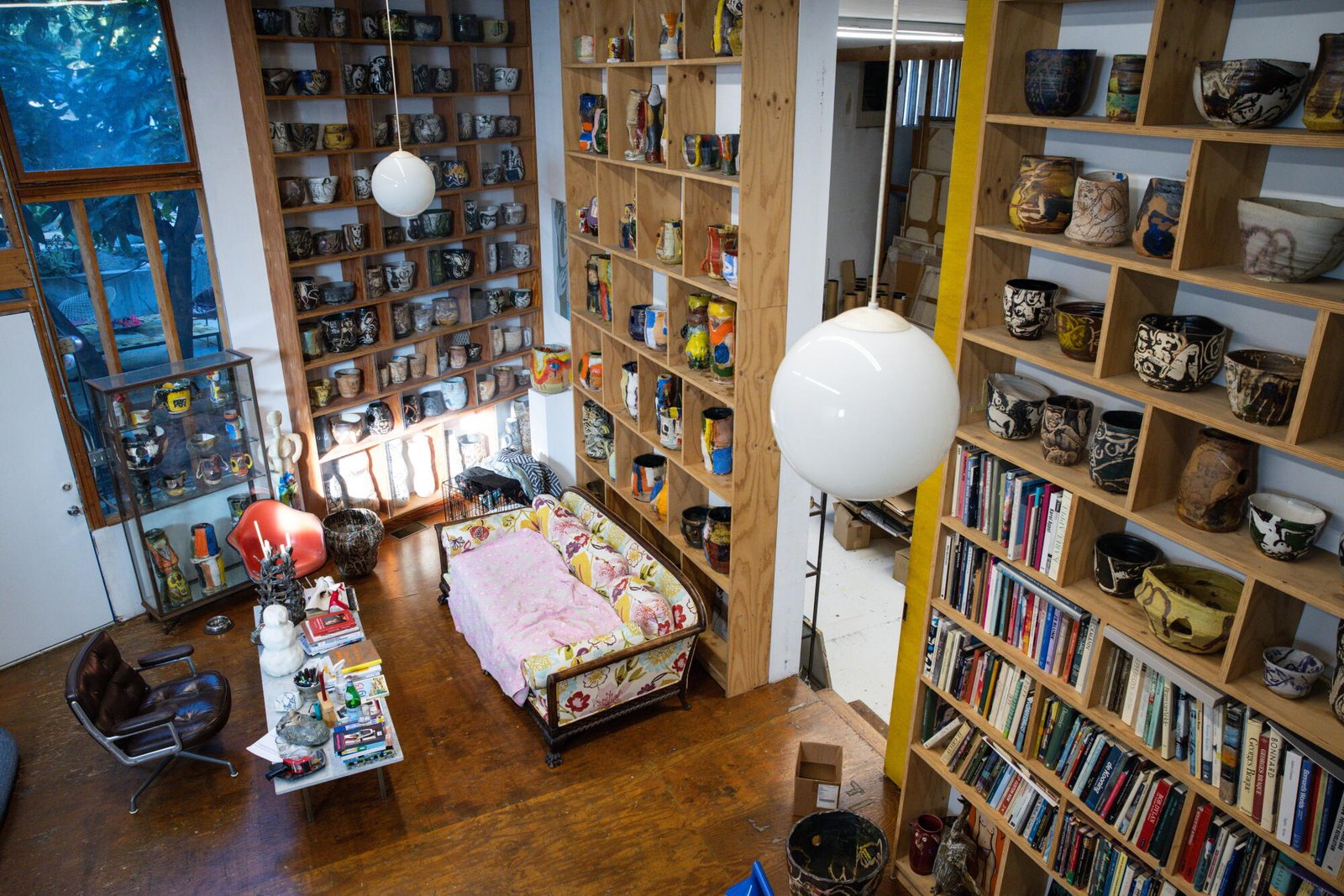
As Herman’s practice evolved from purely two-dimensional work to include massive ceramic vessels, the original facility required adaptation. In 2003, Fisher returned to design a secondary building that applied the same economical principles with slightly more refined finishes to accommodate professional visits from gallerists and curators. This addition includes a dedicated cinderblock ceramics studio equipped with a kiln, acknowledging that clay work demands infrastructure distinct from painting. The expansion illustrates a critical lesson for aging artists: sustainable studios must be flexible enough to accommodate medium shifts without requiring relocation.
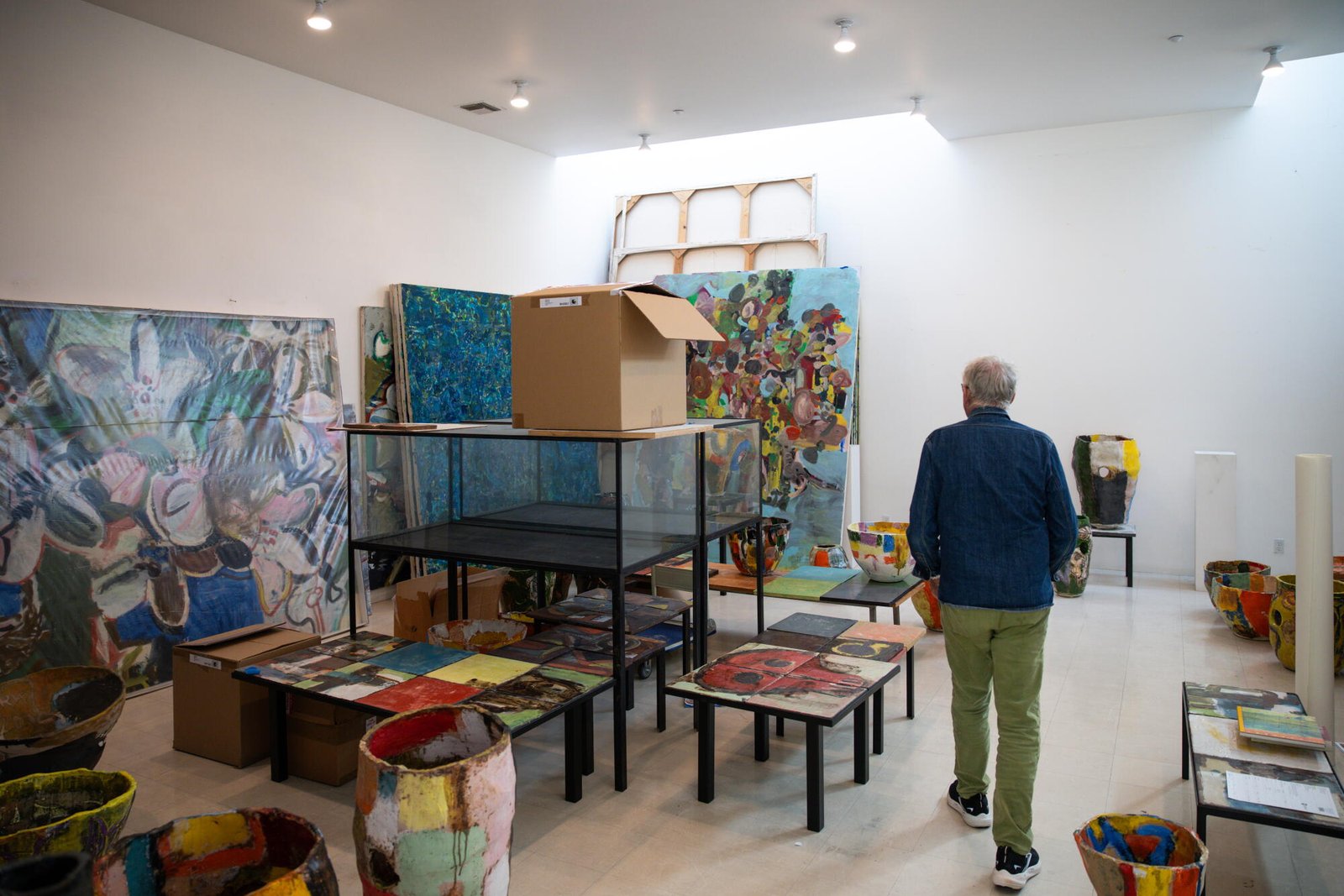
This architectural flexibility mirrors Herman’s current artistic output. His recent exhibition “California Poppies” at Carpenters Workshop Gallery showcases modular ceramic tile tables where collectors can rearrange individual glazed tiles to create custom compositions. This interactive element extends the DIY ethos of his home into the commercial gallery context, challenging the notion of the static art object. Simultaneously, Herman has scaled down to functional objects like mezcal cups and tomato graters, citing Giorgio Morandi’s influence. He notes that these small pieces require equal labor to his monumental vases, representing a deliberate shift toward intimacy after decades of maximalist production.
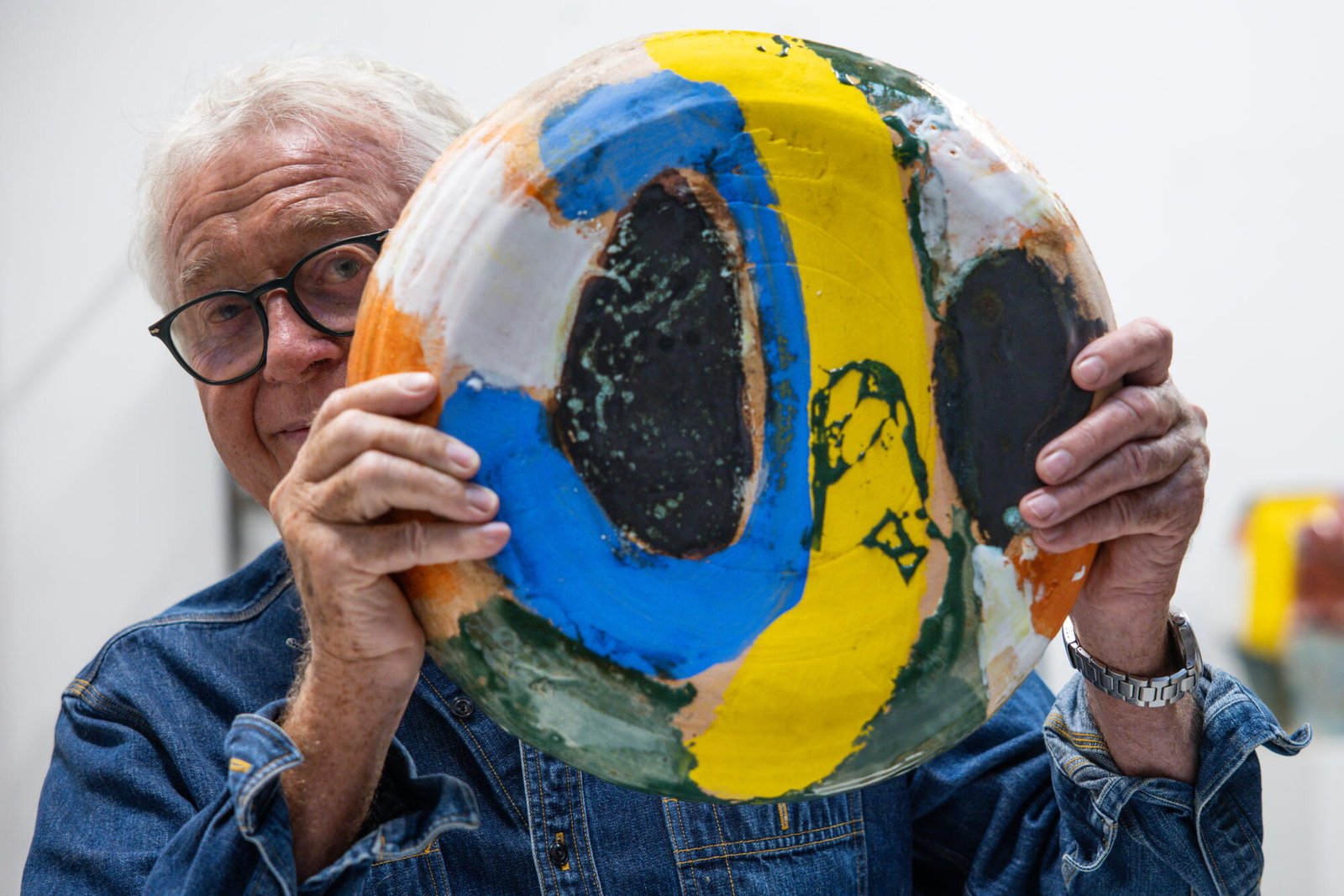
The Solano Canyon compound also functions as an informal archive of Los Angeles art history. As a former UCLA professor and co-founder of the defunct Black Dragon Society gallery, Herman has filled every available surface with work by former students and peers, including Raymond Pettibon, Ruby Neri, and Adam Silverman. This density transforms the residence into a private museum of community relationships, reinforcing Fisher’s observation that the architecture was always intended to support collective creativity rather than individual isolation.
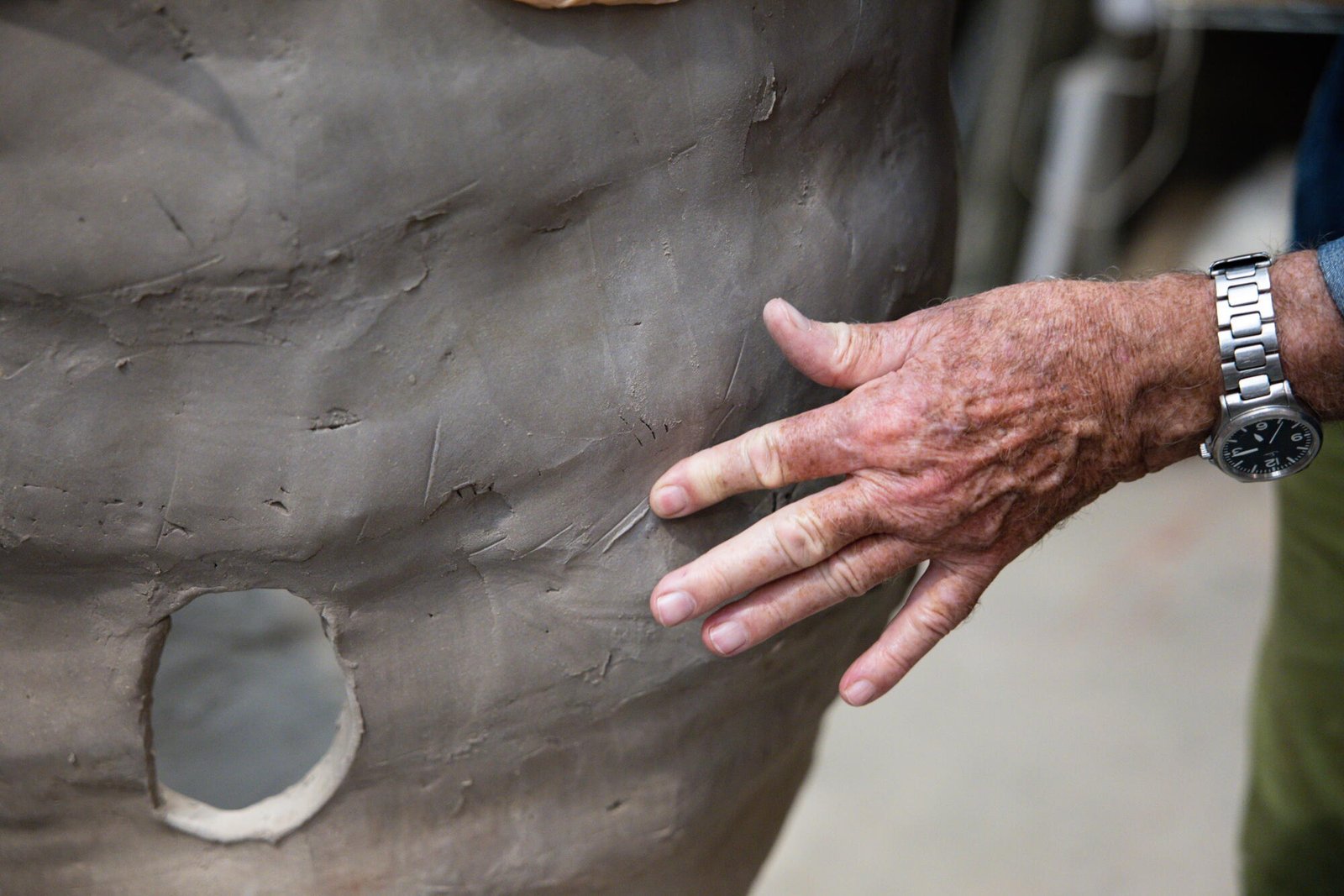
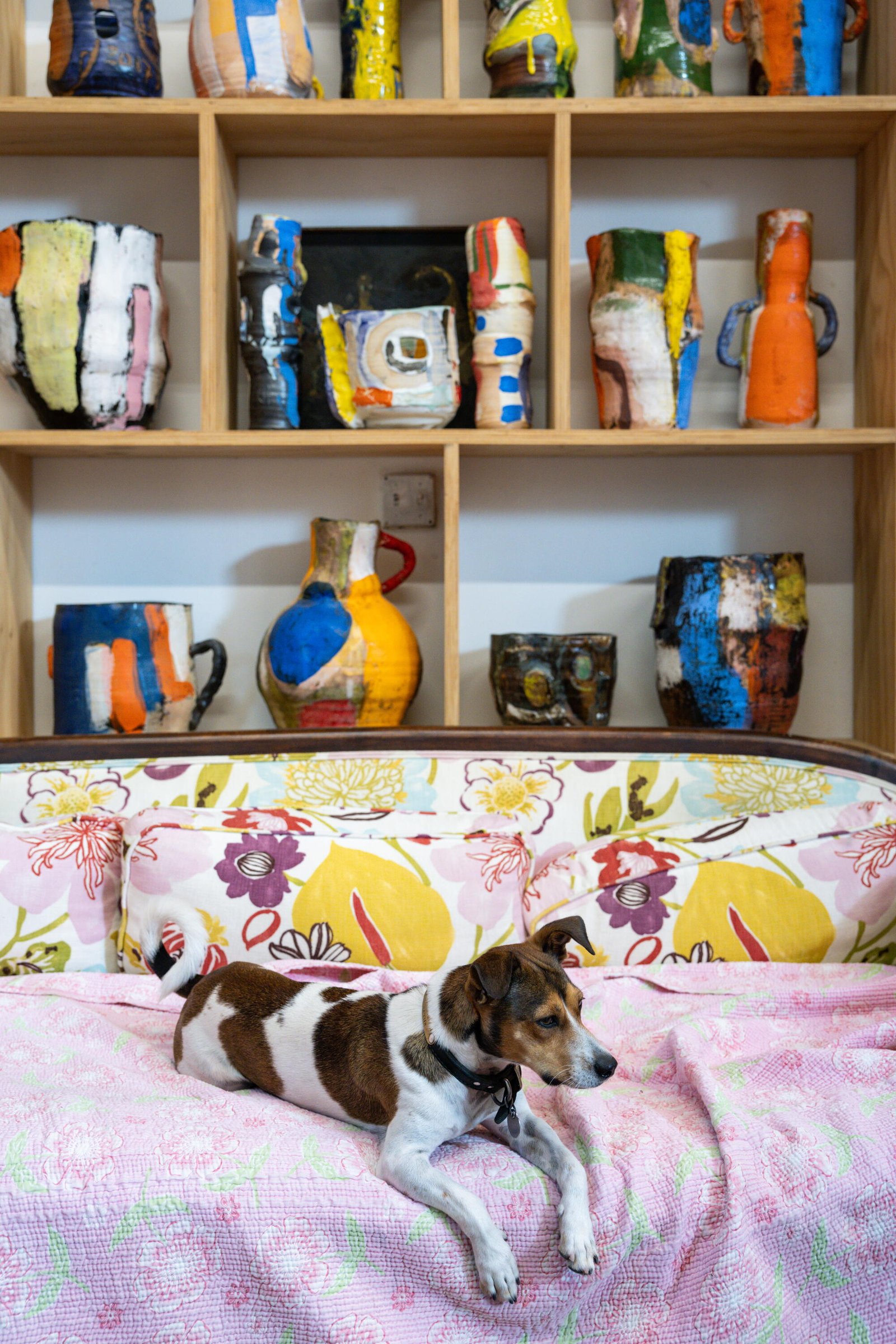
Herman continues to produce new work at the Solano Canyon site, with his most recent ceramic series reflecting the same experimental acceptance of kiln unpredictability that defined the original construction. The “California Poppies” exhibition remains on view at Carpenters Workshop Gallery in Hollywood through this Saturday.