Pre-Owned Luxury Watch Market Reaches $10.5 Billion as Digital Drops Accelerate Sales
A London dealer says most watches in his scheduled Instagram releases sell within 30 minutes.
LONDON — The global secondary market for pre-owned luxury watches reached $10.5 billion in the first half of 2026, up 37.2% from a year earlier, according to industry analytics firm EveryWatch. Buyers under 50 are helping drive the growth, entering the vintage and secondary market through Instagram and TikTok as dealers use scheduled online releases to sell watches that might once have spent months in catalogs or storefronts.
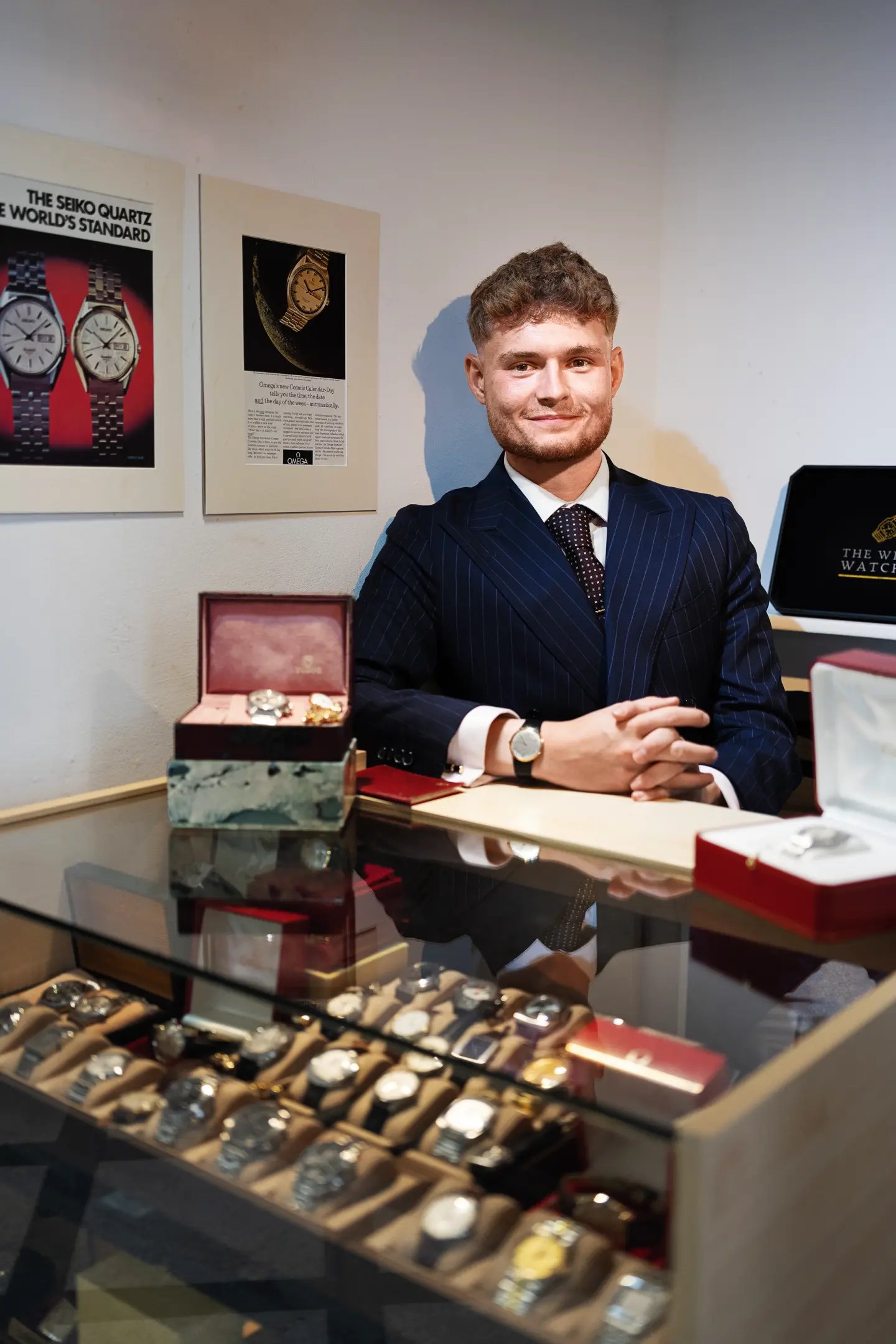
At The Wrist Watcher Ltd., based in Grays Antique Market in London’s Mayfair district, 22-year-old founder Tom Collins releases inventory at 8 p.m. U.K. time to his 260,000 Instagram followers. Collins said roughly 80% to 90% of the watches listed sell within 30 minutes; sought-after models can be claimed in under 60 seconds.
The pace marks a change for a trade long built around dealer networks and physical viewings. When Adam Golden founded Menta Watches in downtown Miami in 2012, deals were conducted predominantly through private appointments, regional trade shows and specialized collector forums. Digital cataloging now gives buyers immediate visibility into global supply, from entry-level vintage Casio references to niche releases by independent Japanese manufacturers such as Grand Seiko.


Golden said digital channels are vital to sustaining collector interest across generations. Unlike traditional hobbies such as philately, whose demographic bases have contracted, watch collecting has gained a route to younger buyers through social media curation. Those buyers may regard mechanical watches as historical artifacts, design objects and liquid alternative assets at the same time.
Established luxury watchmakers initially resisted third-party digital commerce, leaving room for secondary resellers. Over the past decade, they have incorporated digital consumer behavior into their own commercial strategies. In 2017, Swiss watchmaker Omega issued a limited-edition Speedmaster honoring “Speedy Tuesday,” a hashtag and online collector community established in 2012 by digital magazine Fratello Watches. It sold out online in four hours and 15 minutes, an early example of a major Swiss brand making a watch in direct response to an online community.
More recent attempts to reach digital audiences have produced friction in stores. The collaborative launch of the Audemars Piguet x Swatch “Royal Pop” prompted physical stampedes, crowd-control deployments and police intervention at shopping centers as limited-run allocations met speculative secondary demand.
Yet collector spending remains heavily concentrated in historically significant watches. A platinum 90th-anniversary edition of the Cartier Santos, with a salmon-toned dial and blued Breguet hands, sold for nearly $48,000 at Christie’s. The Santos has appeared in dozens of production variations and remains liquid at public auctions.
Louis Cartier originally designed it in 1904 for Brazilian aviation pioneer Alberto Santos-Dumont, who needed a hands-free way to measure flight intervals aboard dirigibles. It made its commercial debut in 1911 and established the functional framework for the modern men’s wristwatch. Cartier changed course again in 1978 with the Santos Carrée, answering the Quartz Crisis with an automatic mechanical caliber in a sportier silhouette. Its integrated bracelet combines stainless steel and 18-karat gold; exposed screws appear on the bezel and links, while the casebacks carry stamps specifying gold gram weights. The model currently trades around $5,000 on the secondary market.
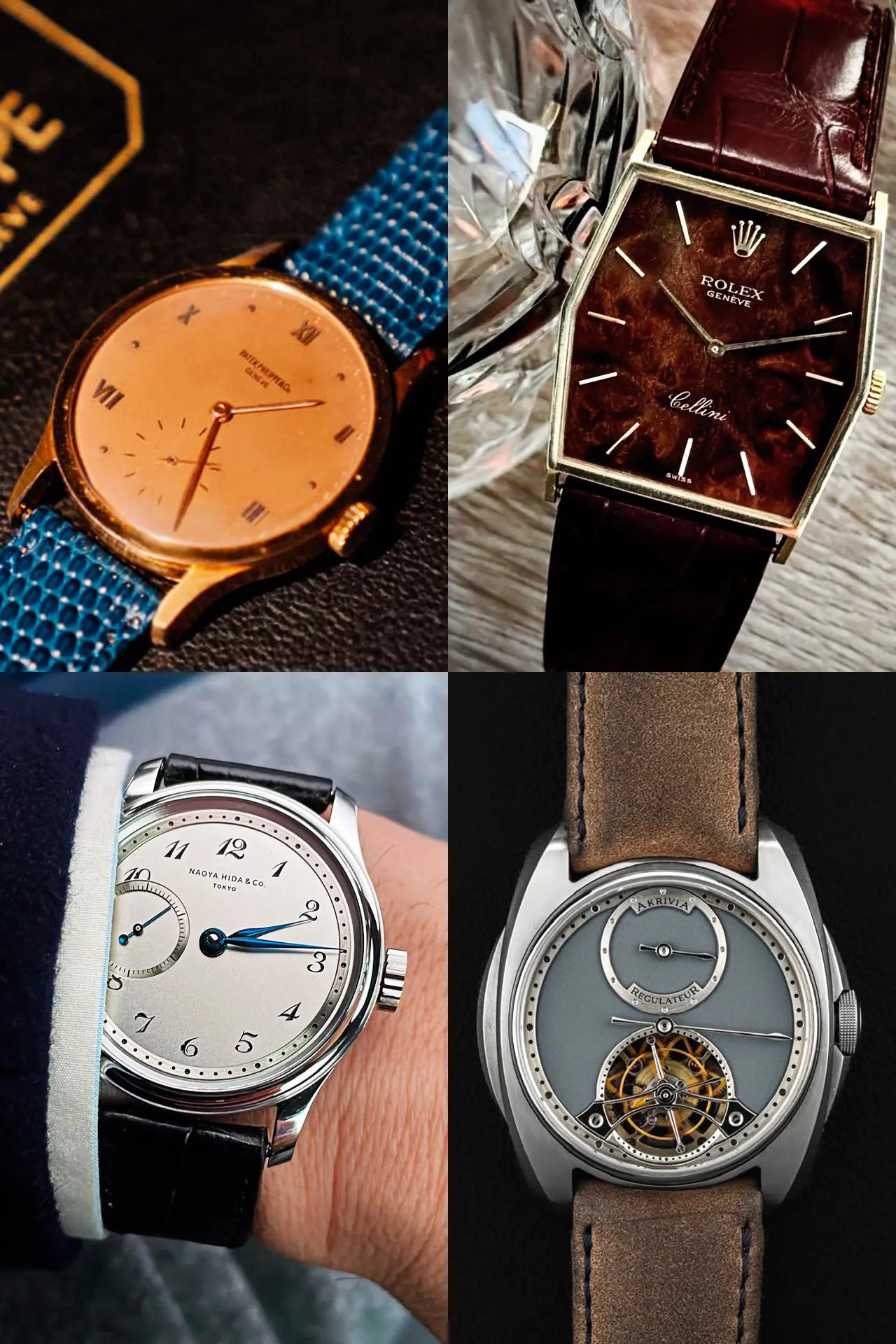
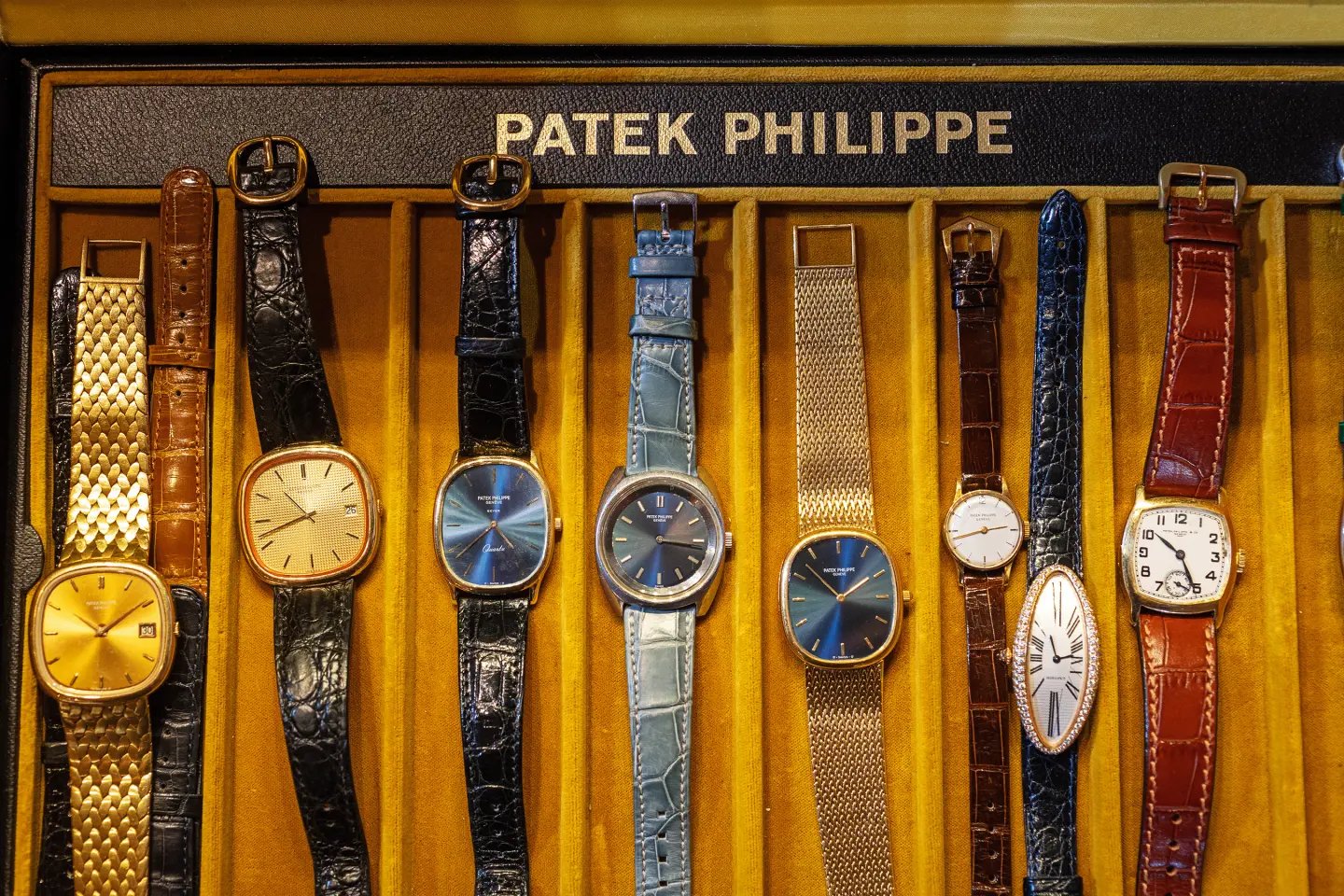
Prices across the wider market range far beyond that level. An example of the 1942 Patek Philippe Reference 570 recently cleared $54,500. It has a 35-millimeter Calatrava case, unusually large for its era, and a rose-gold dial configuration; dealers say only a minimal number in that exact specification were brought to market. A preserved 1976 Rolex Cellini Reference 4122, with an angular hexagonal case and burled-wood dial, sold for approximately $7,400. The design dates from Rolex’s experimental period before its catalog consolidations in the 1990s.
At the rarer end, current valuations for the 2017 Akrivia Regulator Tourbillon AK04 run from $3 million to $5 million. Designed by independent master watchmaker Rexhep Rexhepi, it is estimated to have a global production run of fewer than 10 pieces. The 2022 Naoya Hida & Co. Type 1D, from an independent Japanese atelier, trades for approximately $14,000. It features hand-carved Breguet numerals, high-polish finishing and an inset subsidiary seconds dial.
Despite the cross-border reach of algorithmic distribution and direct-to-consumer drops, physical dealerships remain important for verifying transactions and managing client relationships. At Grays Antique Market, 38-year-old Watch Locator proprietor Rahul Shamshad said online channels bring broad visibility, but in-person evaluation remains decisive for high-value purchases because buyers need to inspect authenticated vintage watches. His stock focuses on mid-century Patek Philippe watches and vintage Omega dress lines, including the 1970–1971 Omega De Ville Reference 111.0103, with its hexagonal case and linen-finished dial.