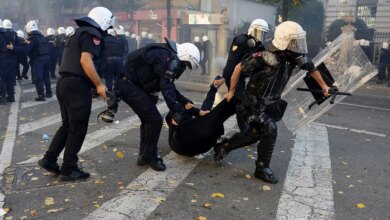
Flavio Bolsonaro Leads Lula in Brazil Election First Round
The Liberal Party candidate outperformed polls across Brazil's largest states, setting up an October 25 runoff with incumbent President Lula da Silva.
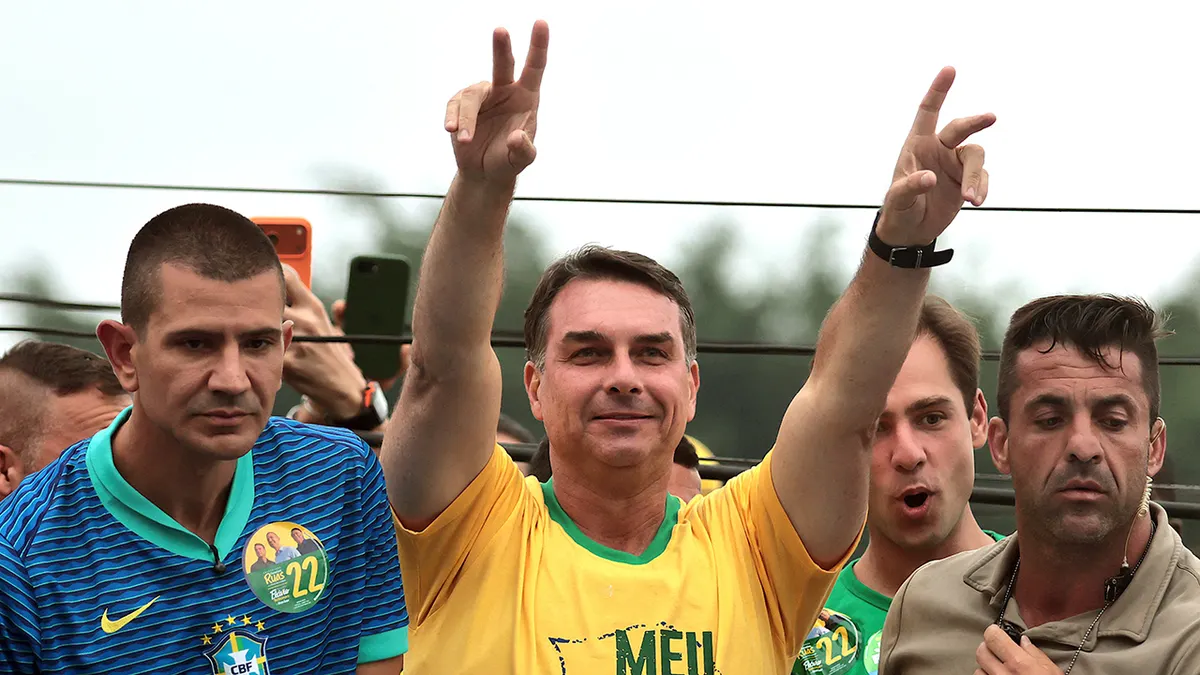
Flavio Bolsonaro captured 47.2% of the vote in Brazil’s presidential first round on Sunday, outpacing incumbent President Luiz Inacio Lula da Silva by more than two percentage points and forcing a runoff that upends months of polling consensus.
With 99% of ballots tallied, Lula trailed at 44.9%, falling short of the 50% threshold required to avoid a second round. The Oct. 25 runoff now pits the 80-year-old Workers Party founder against the eldest son of former President Jair Bolsonaro in a contest that will test the durability of Latin America’s accelerating conservative realignment.
The margin defied virtually every major survey released in the final weeks of the campaign. Polling aggregates had consistently placed Lula ahead by single digits, reinforcing expectations that the incumbent could secure a fourth non-consecutive term. Instead, Flavio Bolsonaro delivered dominant performances across Brazil’s three most populous states—São Paulo, Minas Gerais, and Rio de Janeiro—regions that collectively account for nearly half of the national electorate.


In São Paulo, the economic engine of South America, Bolsonaro secured 52% against Lula’s 38%. He carried Minas Gerais, historically considered Brazil’s most reliable electoral bellwether, by a 50%-43% margin, and won his home state of Rio de Janeiro 53% to 39%. Lula maintained his traditional dominance in the northeastern states of Bahia, Pernambuco, and Ceará, but those margins proved insufficient to offset the southern deficit.
Brazilian pollsters have faced scrutiny before. During Jair Bolsonaro’s successful 2018 campaign and his narrow 2022 defeat, surveys systematically underestimated right-wing support. However, the disparity in Sunday’s results represents a significantly larger deviation, likely intensifying long-standing allegations from the Bolsonaro political network that leading research institutes harbor structural biases favoring the Workers Party.
<img src="https://nile1.com/wp-content/uploads/2026/10/1791160435_873_brazil-election-bolsonaro.jpg" alt="Brazil election 2026” width=”1200″ height=”675″ />
The mechanics of Brazil’s mandatory runoff system now shift attention to four eliminated candidates who collectively earned nearly 8% of the vote: Augusto Cury, Renan Santos, Ronaldo Caiado, and Romeu Zema. Both Caiado, the governor of Goiás, and Zema, the governor of Minas Gerais, belong to the center-right establishment and are widely expected to endorse Flavio Bolsonaro. Cury and Santos have signaled they may withhold formal endorsements entirely. Under Brazilian electoral law, voters are not bound by candidate endorsements, but historical data shows unified coalition signals typically transfer between 60% and 75% of an eliminated candidate’s base in a runoff.
Lula’s decision to seek another term has become a central vulnerability heading into the final three weeks of campaigning. After defeating Jair Bolsonaro by fewer than two million votes in 2022—a race he initially pledged would be his last—the reversal of that commitment alienated segments of the moderate electorate. His 2022 victory itself followed a dramatic legal arc: imprisoned during Operation Car Wash on corruption convictions later annulled by the Supreme Federal Court on jurisdictional grounds, which restored his political rights.
A Bolsonaro presidency would carry immediate consequences for Brazil’s judiciary and military leadership. Former President Jair Bolsonaro and several senior armed forces officers are currently incarcerated following convictions related to an alleged plot to overturn the 2022 election results. Flavio Bolsonaro has made their release a foundational promise of his campaign, setting up a potential constitutional clash with the Supreme Federal Court should he win the runoff.
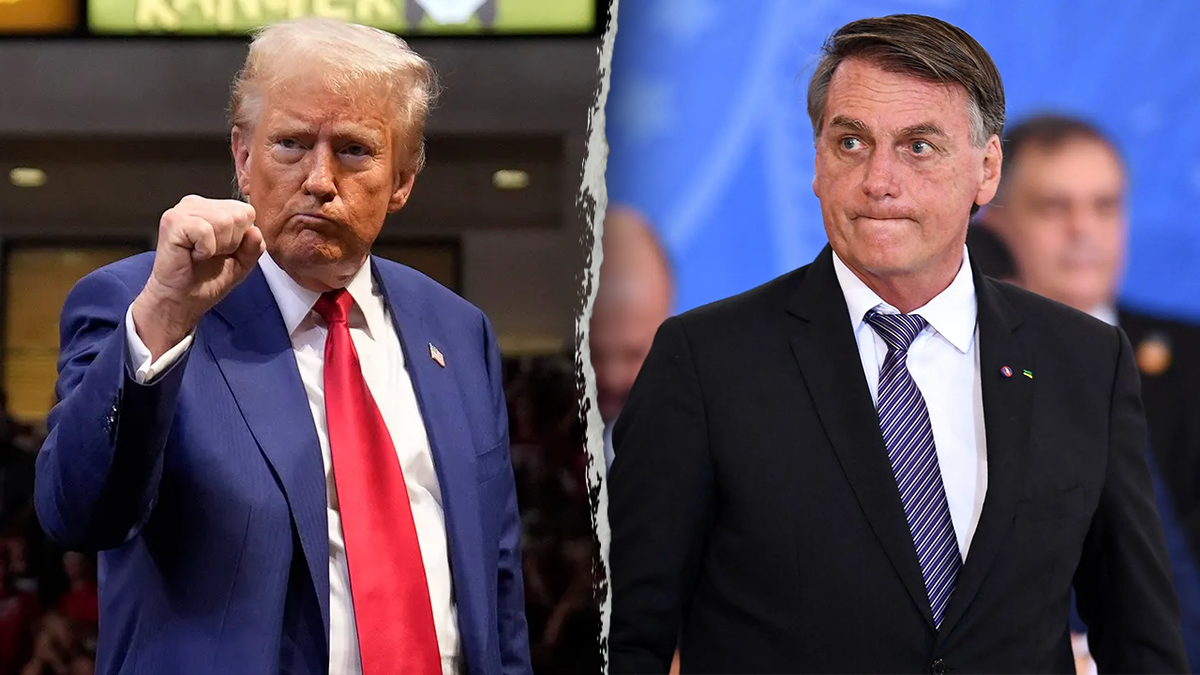
Sunday’s result extends a broader ideological shift across South America. Over the past two years, conservative or right-leaning candidates have secured presidential victories in Argentina, Chile, Ecuador, Peru, and Bolivia, reversing the so-called “pink tide” of left-wing governments that dominated the early 2020s. U.S. President Donald Trump publicly aligned himself with the Bolsonaro campaign, maintaining close contact with the family and previously issuing correspondence demanding an end to the judicial proceedings against Jair Bolsonaro.
Beyond the presidential race, the Bolsonaro family expanded its institutional footprint significantly. Jair Bolsonaro’s wife, Michelle, won a Senate seat, as did his son Carlos. Another son, Renan, was elected federal deputy. The Liberal Party (PL) is projected to hold 29 seats in the 81-member Federal Senate, compared to just nine for Lula’s Workers Party, ensuring that any future administration will face a heavily consolidated opposition or a deeply aligned legislative bloc depending on the runoff outcome.
Brazil’s Superior Electoral Court formally certified the first-round totals late Sunday night and scheduled the mandatory televised debate series between the two remaining candidates to begin Oct. 12.