Nvidia Says RTX 5090 Lives, but US Storefronts Disagree
Third-party listings exceed $11,000 as the GB202 chip gets redirected toward enterprise hardware.
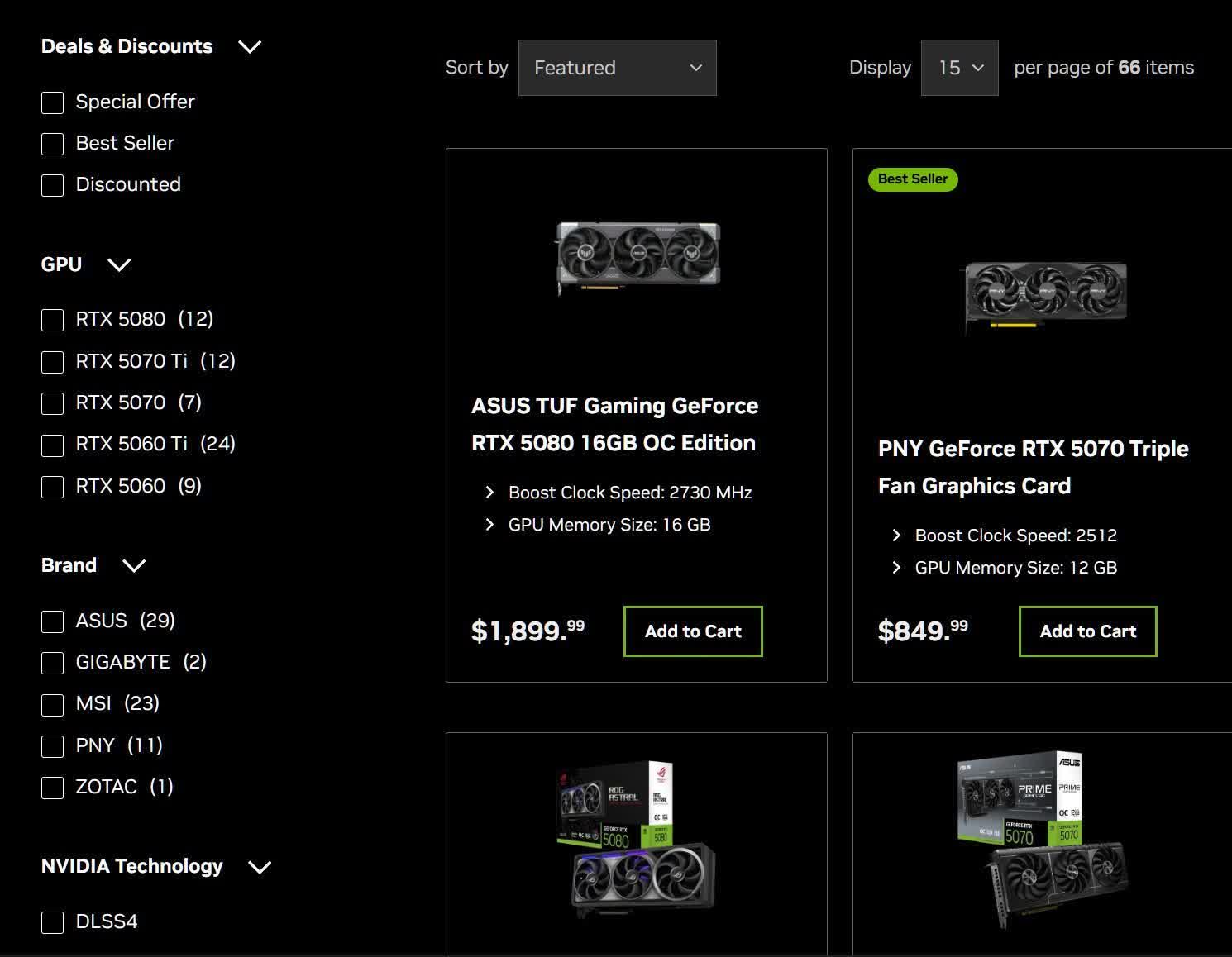
Nvidia’s official U.S. storefront no longer lists the RTX 5090. The flagship consumer graphics card vanished from the company’s direct sales portal recently, leaving the RTX 5080 as the top-tier option, even as executives insist the product remains in active production.
The disappearance contradicts statements made by Jeff Fisher, Nvidia’s senior vice president of personal computing. Speaking at an RTX Spark launch event in Taipei, Taiwan, Fisher addressed supply chain constraints directly. “Although there are other variants of the RTX 5090 chip, it has not been discontinued, and Nvidia will continue shipping, which is very important,” Fisher said, according to a machine-translated report by 4Gamers.
Fisher also used the appearance to credit CUDA with enabling the current artificial intelligence market boom.


Buyers looking for the card outside Nvidia’s own channels face brutal pricing. On Newegg, most available RTX 5090 units list above $9,300, with one model tagged at $10,899. Amazon carries a single unit priced at $11,565 that ships from Germany with a two-to-three-week delivery window. Physical retail shelves hold virtually zero inventory. For context, the card carried a manufacturer suggested retail price of $1,999 when it launched in January 2025.
Rumors of the card’s demise accelerated last week. Prolific leaker MEGAsizeGPU wrote that Nvidia had internally confirmed the GB202 silicon powering the RTX 5090 would stop flowing into consumer models, redirecting future GPU supplies exclusively toward RTX Pro Blackwell-based enterprise hardware. A second leaker, Hongxing2020, claimed Nvidia plans to replace the RTX 5090 entirely with a new RTX 5080 variant packing 24GB of VRAM.
Speculation around an RTX 5080 Super or 24GB model points to a potential release next year. Industry watchers long assumed Nvidia had canceled its mid-cycle Super refreshes for this generation, though recent claims suggest the hardware could arrive sooner than expected.
The allocation fight stems from basic margin math. Data center GPUs like the H100 and B200 sell for tens of thousands of dollars each, generating exponentially higher profit per wafer than any gaming card. With hyperscalers buying every AI accelerator they can secure, diverting GB202 dies away from gamers represents a rational financial decision for Nvidia, regardless of what executives say at regional launch parties.
Competitive pressure won’t force Nvidia’s hand anytime soon. The RTX 6000 series isn’t expected until 2028. AMD’s RDNA 5 architecture is tipped for late 2027. That leaves Nvidia operating without a rival threat in the high-end desktop GPU space for at least another year.