
Mourinho’s Cold Warning to Vinícius: Effort Alone Won’t Save Your Place
Firm Message: Reputation Alone Won't Secure a Starting Role
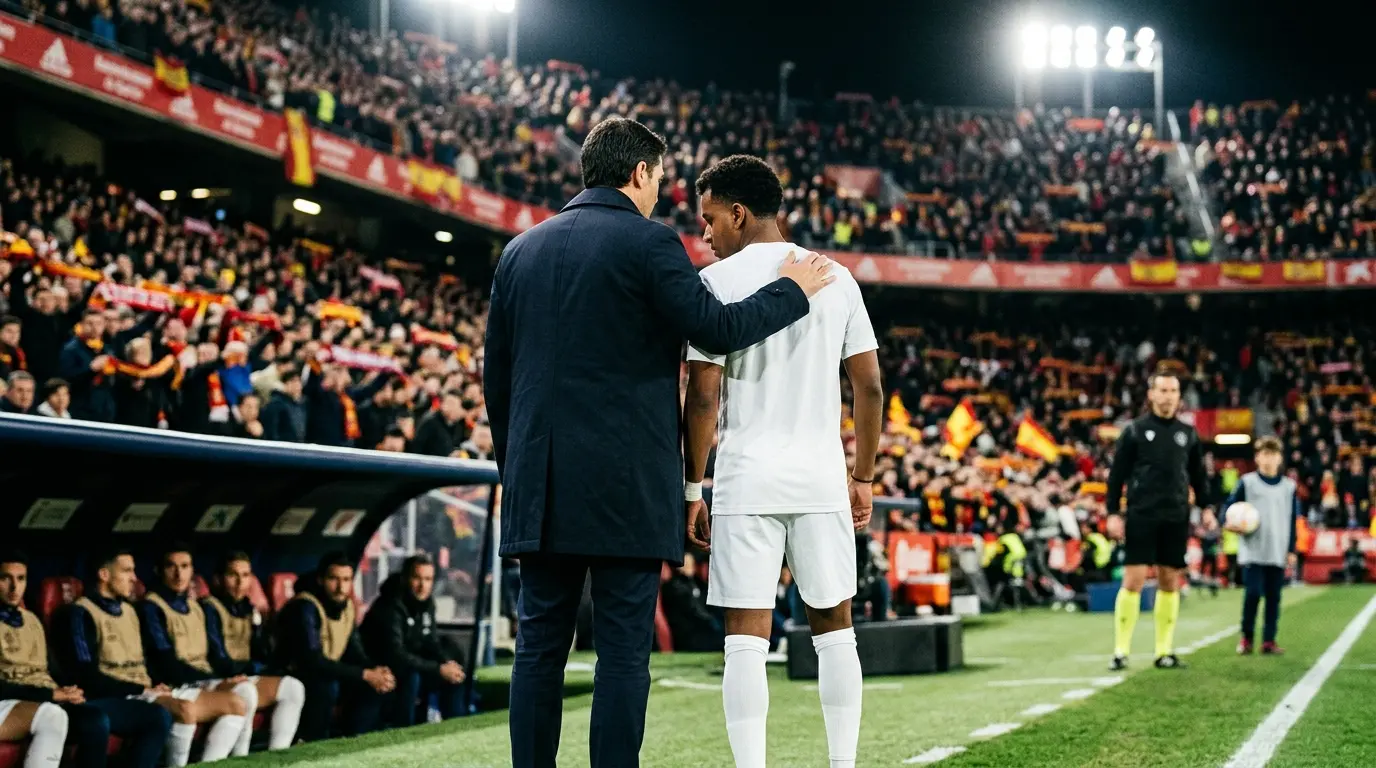
MADRID — Jose Mourinho has delivered a firm message to Vinícius Júnior, warning that individual stardom will not guarantee a starting role at Real Madrid without a relentless commitment to collective defensive work.
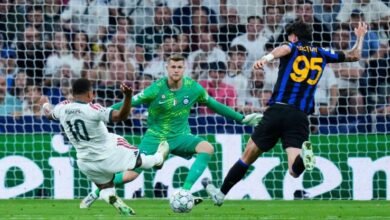
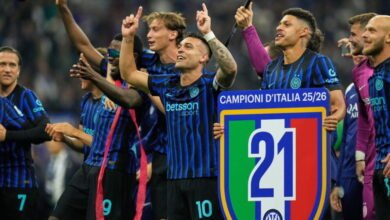
The match quickly devolved into a chaotic, end-to-end affair—a style of play Mourinho later admitted he prefers to avoid due to the defensive vulnerabilities it exposes. Inter Milan’s tactical setup, built around three central defenders and active wing-backs, successfully congested the flanks and restricted the space Vinícius typically exploits.
Speaking after Real Madrid’s hard-fought 2-1 victory over Inter Milan in their Champions League league-phase opener at the Santiago Bernabéu, Mourinho offered public but highly conditional support to the Brazilian winger, who was substituted after struggling to find his rhythm against the Italian side’s disciplined defensive block. The scrutiny surrounding Vinícius comes at a sensitive time for the 24-year-old forward, who joined Real Madrid from Flamengo in 2018 for a reported €45 million.


While acknowledging the tactical difficulties the system posed for his wide players, Mourinho made it clear that his backing of Vinícius is earned through work rate rather than granted by reputation. Mourinho noted that while maximum effort is the baseline expectation for any player under his management, putting in that effort does not entitle a player to a permanent place in the starting lineup or a guaranteed 90 minutes on the pitch.
Despite scoring the winning goal in the 2022 Champions League final and establishing himself as one of the world’s premier attackers, questions regarding his long-term contract situation at the Bernabéu have persisted. This demand for tactical discipline over individual freedom has been a defining hallmark of Mourinho’s career.
Throughout his managerial tenures at Chelsea, Inter Milan, and Real Madrid, he has routinely demanded that elite attacking talents sacrifice personal accolades for defensive structure. During his first spell at Chelsea, he famously challenged creative players like Joe Cole to track back, and later at Inter Milan, he convinced world-class striker Samuel Eto’o to play as a temporary left-back during their historic 2010 treble-winning campaign.
To illustrate the level of clinical efficiency he expects, Mourinho recalled a decisive counter-attacking sequence from his past tenure at Benfica, where a late-game transition at a 1-1 deadlock secured a vital victory. He pointed to that high-intensity, vertical style of play as the benchmark Vinícius must consistently reach. Even during his record-breaking 2011–2012 La Liga championship season with Real Madrid, Mourinho prioritized high-intensity defensive transitions from his wingers.
His performance against Inter Milan also drew isolated jeers from sections of the Bernabéu crowd. Mourinho was quick to separate his coaching assessment from the fans’ reactions, stating that he has utmost respect for the player but acknowledging that Vinícius is currently operating below his peak form—a reality he said the winger himself recognizes. Mourinho attributed the Brazilian’s recent lack of cohesion to physical fatigue rather than any deeper tactical regression, expressing confidence that the decisive, match-winning version of the player will return as his fitness improves.
This approach to managing high-profile talent closely mirrors the tactical balance Mourinho has sought to establish with Jude Bellingham. Since Bellingham’s €103 million transfer to Spain, the coaching staff has consistently emphasized the need to balance the midfielder’s offensive freedom with strict defensive responsibilities, reinforcing a squad-first philosophy where individual brilliance must always serve the team’s structure.