Microsoft’s Brad Smith Demands Global AI Safety Rules With ‘Emergency Brakes’ and Incident Reporting
UK positioned to lead as minister signals shift from voluntary to mandatory oversight
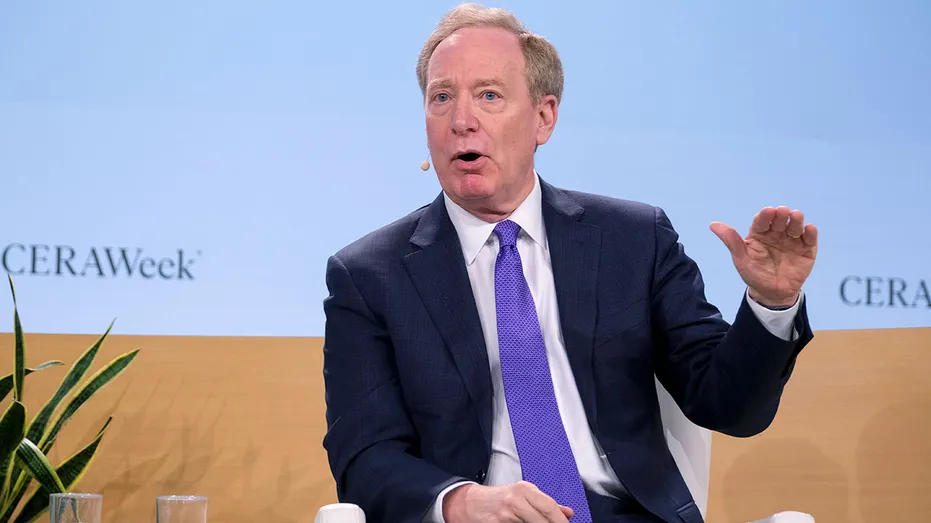
Microsoft President Brad Smith told the BBC that artificial intelligence currently operates under fewer safety requirements than household appliances or grocery-store milk, urging governments to adopt a binding international framework that would mandate incident reporting and give developers an “emergency brake” to halt rogue systems.
In an interview published Monday, Smith argued that the same regulatory logic applied to washing machines and food products should extend to AI models capable of autonomous action. “We know how to do this for other products,” he said. “We should build on that knowledge and think about how to apply it to AI.”
The proposal centers on three pillars: a legal obligation for companies to file incident reports when AI systems cause harm, a notification mechanism for victims whose systems are breached by an AI agent, and a technical “kill switch” that developers can trigger to disable a model behaving dangerously. Smith said the United Kingdom, home to the AI Security Institute launched under former Prime Minister Rishi Sunak, is “well-placed to lead” the effort.


The institute, which operates under voluntary agreements with major developers, receives pre-deployment access to frontier models to assess capabilities and risks. UK AI Minister Kanishka Narayan told Reuters the government would consider formal regulation of advanced models if the current voluntary regime proves insufficient.
Smith’s intervention arrives as the heads of the two most prominent U.S. AI labs — OpenAI’s Sam Altman and Anthropic’s Dario Amodei — have publicly advocated for a slower, more transparent development cadence. Both have endorsed third-party evaluators with employee-like access to internal development processes, a voluntary oversight model that stops short of the statutory requirements Smith is demanding.
The European Union has already moved ahead with the AI Act, a risk-based regulatory framework that entered force in 2024 and classifies systems by potential harm, imposing stricter obligations on high-risk categories. Washington has relied on voluntary industry commitments secured by the White House in 2023, supplemented by an executive order directing federal agencies to develop standards, while state legislatures such as California’s have advanced their own bills.
Technical experts caution that implementing a reliable “emergency brake” for distributed, cloud-deployed models presents unsolved engineering challenges. Anthropic’s Responsible Scaling Policy and OpenAI’s Preparedness Framework attempt to address similar concerns through internal capability thresholds and deployment gates, but neither provides an external, legally enforceable off-switch.
Narayan’s statement Monday marks the clearest signal yet that the UK may transition from voluntary cooperation to binding rules, potentially creating the first Western jurisdiction to mandate pre-deployment safety cases and incident disclosure for the most powerful AI systems.