Macklemore’s Firing Sparks Million-Dollar Aid Race for Gaza
Artists, sports owners, and creators turn a tour dispute into a multimillion-dollar humanitarian fundraising campaign

The primary beneficiaries of Macklemore’s $1 million pledge are six established relief entities operating in the Palestinian territories and surrounding host nations, including the Palestine Children’s Relief Fund (PCRF), American Near East Refugee Aid (Anera), Medical Aid for Palestinians (MAP), and the United Nations Relief and Works Agency for Palestine Refugees in the Near East (UNRWA). Executives at the recipient organizations said the funds carry no administrative restrictions, allowing teams on the ground to adjust their work as physical conditions shift.
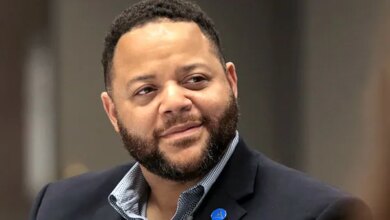
The fundraising surge followed a corporate dispute over political speech on live music stages. Seattle-born rapper Macklemore, whose real name is Ben Haggerty, was removed from Ed Sheeran’s global Loop Tour after making pro-Palestinian remarks on stage at MetLife Stadium in East Rutherford, New Jersey. Four opening acts later walked off Sheeran’s tour in solidarity with him.
Macklemore, who became internationally known through his 2012 hit single “Thrift Shop” and won four Grammy Awards in 2014, pledged $1 million in response to his dismissal. The amount represented his complete net earnings from the stadium tour and was designated for six humanitarian organizations supporting Palestinian civilians. In a statement posted to social media, he said the pledge was intended to redirect public discourse away from industry infighting and toward the humanitarian crisis facing Palestinian civilians.


New England Patriots owner Robert Kraft acknowledged publicly that he had pushed for Macklemore’s removal. His holding company, The Kraft Group, operates Gillette Stadium in Foxborough, Massachusetts, where Sheeran’s tour is scheduled to perform later this month. Kraft founded the Foundation to Combat Antisemitism in 2019 and said the decision followed Macklemore’s recent stage remarks and “a broader history of antisemitic rhetoric and imagery.”
Macklemore rejected those allegations, arguing that criticism of the Israeli government and its military conduct in Gaza must not be conflated with antisemitism. The disciplinary action and his pledge then widened into a financial and political controversy across the American entertainment industry, involving corporate sponsors, billionaire sports owners, and children’s media figures.
Ed Sheeran announced a $2 million donation to humanitarian aid operations active in the Middle East region. Kraft said on Instagram that he would match Sheeran’s $2 million contribution and direct the funds to regional relief efforts, although he did not identify individual recipient organizations. Rachel Accurso, the early childhood educator and creator of the viral YouTube channel “Ms. Rachel,” announced a $1 million donation to pediatric relief efforts and challenged other public figures to match it.
Digital content creators and online progressive influencers also launched parallel grassroots campaigns. Those efforts generated more than $72,000 in direct online contributions within 48 hours.
Anera’s acting chief executive officer, Alicia Phillips Mandaville, said, “Even if you don’t see bombs falling every night, the rubble is still there. And the traumatized children are still traumatized.” The organization was founded in 1968 following the Six-Day War and manages agricultural, sanitation, and emergency assistance projects across Palestine, Lebanon, and Jordan.
Mandaville said unrestricted gifts are essential when operational access, border logistics, and civilian needs change weekly. Such capital allows field staff to shift quickly among distributing emergency food rations, purchasing winter blankets, and constructing emergency drainage during seasonal flooding. In the 24 hours after Macklemore’s social media announcement, Anera recorded more than triple its average daily social media donation volume and gained more than 8,000 new digital followers, bringing a younger demographic to the 56-year-old relief organization.
The Palestine Children’s Relief Fund was established in 1991 by American humanitarian Steve Sosebee to provide medical care to injured and ill children across the Middle East. PCRF plans to place its share of Macklemore’s pledge in an unrestricted emergency response fund.
PCRF director of strategic engagement Tareq Hailat said public perception often suggests that active combat operations have subsided, while severe medical emergencies and civilian casualties continue daily. PCRF arranges medical evacuations for critically ill children who cannot receive adequate care inside Gaza because hospital infrastructure has been destroyed, and it also flies foreign surgical teams into the territory.
Macklemore’s involvement in regional relief predates the latest campaign. In May 2024, he released the independent protest track “Hind’s Hall,” named for Hind Rajab, a six-year-old Palestinian girl killed in Gaza, and referring to the student occupation of Columbia University’s Hamilton Hall. In September, he released “Hind’s Hall 2” with Palestinian artists Anees, Amer Zahr, and MC Abdul, alongside the Gaza Youth Choir.
Streaming royalties and sales proceeds from both tracks went to UNRWA USA, the independent American non-profit supporting the U.N. agency created by General Assembly Resolution 302 (IV) in December 1949. Mara Kronenfeld, chief executive officer of UNRWA USA, said royalties from the two tracks had produced more than $509,000 in direct aid to date.
UNRWA USA data shows that the organization has added 203,000 new individual American donors since October 2023. Those donations have enabled the transfer of more than $117 million in emergency assistance for basic healthcare, schooling, and shelter operations serving registered refugees.
The agencies receiving the new funds continue working amid severe economic and physical displacement. Global food security monitors, including the Integrated Food Security Phase Classification (IPC), warned in July that vast majorities of families in Gaza still face extreme food deficits despite incremental changes in border-crossing access.
Ongoing military operations and security incidents have claimed more than 1,000 Palestinian lives since temporary pause agreements were introduced last autumn. Healthcare access and potable water shortages remain acute across both Gaza and the West Bank.