Apple HomeView Smart Display Launches at $299 With Face ID AI
The $299 hub identifies up to six household members to personalize screens and anchors Apple's new line of proprietary locks and cameras.

Apple entered the smart display market Tuesday with HomeView, a $299 hub designed to pull users away from their iPhones for household tasks while serving as the command center for a newly expanded lineup of proprietary home security hardware.
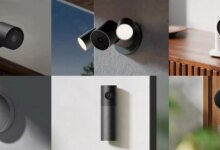
The device arrives as Apple simultaneously introduced its own branded smart deadbolt lock, security cameras, and doorbell. By manufacturing both the central interface and the connected accessories, Apple is attempting to replicate the closed-ecosystem strategy that defines its mobile business — a sharp departure from competitors that rely heavily on third-party device makers to populate their platforms.
HomeView features a 7-inch front-facing display housed in a cuboid enclosure resembling a flattened HomePod, with speakers and microphones integrated into the base. Buyers can choose between a countertop stand or a wall-mountable configuration. Preorders opened Tuesday across four finishes: silver, starlight, rose pink, and space gray, with retail availability set for Nov. 13.


Unlike Amazon’s Echo Show or Google’s Nest Hub, which primarily rely on voice commands or proximity sensors to shift between users, HomeView uses its single front-facing camera to visually identify up to six distinct household members. When someone approaches, the updated Siri artificial intelligence system recognizes them and dynamically reconfigures the screen to surface that specific individual’s messages, calendar appointments, notes, contacts, and preferred applications. The interface transitions automatically when another recognized person steps in front of the lens.
This visual recognition capability positions the hardware closer to a shared family computer than a traditional smart speaker screen. It also raises immediate questions about how Apple handles biometric data processing in a communal space, though the company has historically processed facial recognition locally on-device rather than in the cloud.
Apple preloaded the hub with Calendar, Messages, Photos, FaceTime, Notes, Reminders, Music, and Podcasts. The software selection targets high-traffic domestic areas like kitchens, where users frequently need hands-free access to recipes, video calls, or scheduling tools without retrieving a phone from another room. As a smart home dashboard, it allows residents to ask Siri to view live camera feeds, adjust thermostats, toggle lights, and lock doors. A built-in chime alerts the household when someone presses the new Apple doorbell.
The launch follows years of industry speculation and reported delays tied directly to the maturation of Apple’s Siri AI capabilities. The original HomePod, released in 2018, struggled to gain traction against cheaper alternatives from Amazon and Google because its utility was largely confined to audio playback. Apple discontinued the first-generation model in 2021 before reviving the brand with a second version in 2023. HomeView represents the company’s attempt to finally anchor its HomeKit architecture around a visual, interactive centerpiece rather than an audio-first peripheral.
The current 7-inch stationary model appears to be an initial step. Bloomberg reporter Mark Gurman has previously reported that Apple’s hardware division is developing a more advanced iteration equipped with a robotic arm, allowing the display to physically track and orient toward users as they move through a room.
Retail shipments begin Nov. 13.