Lanterns Finale: John Stewart’s Oath Redefines Green Lantern Legacy
Showrunners explain the personalized oath, Sinestro’s lantern, and why Hal Jordan’s death remains intentionally unresolved
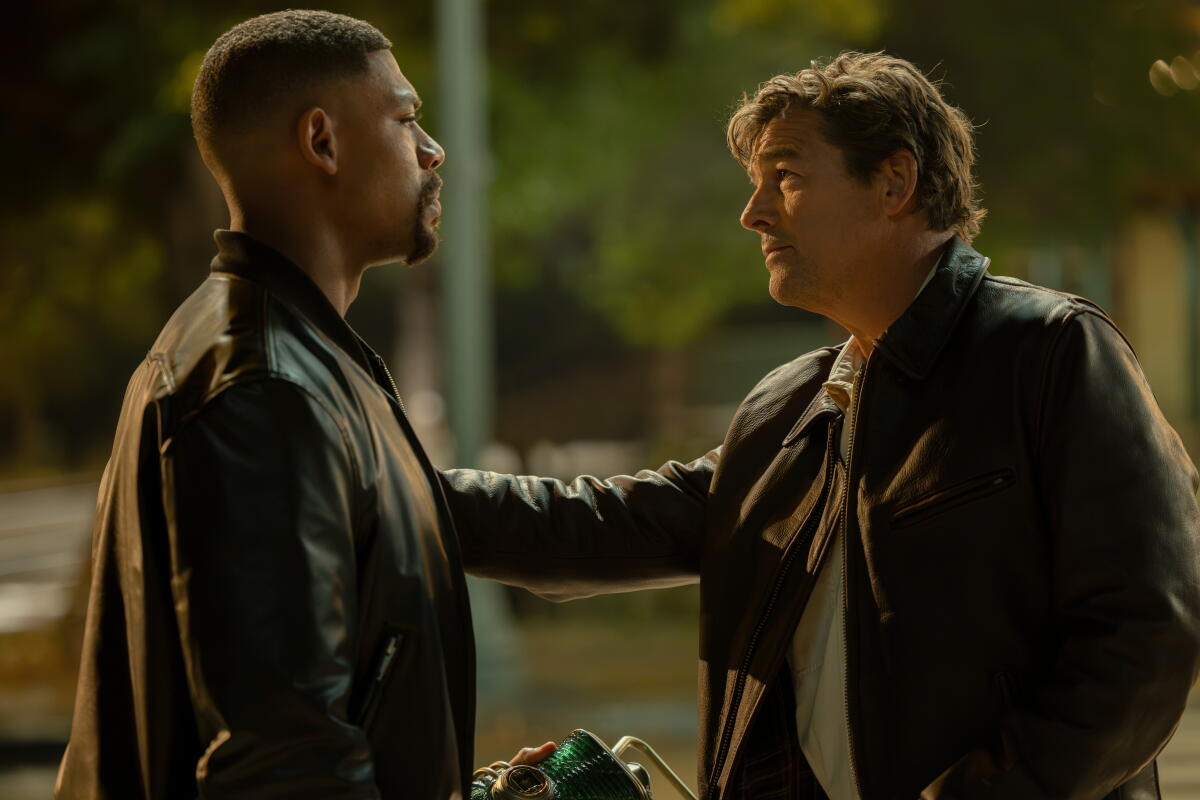
John Stewart has officially claimed Hal Jordan’s power ring in the Season 1 finale of HBO Max’s “Lanterns,” but his ascension marks a deliberate break from Green Corps tradition rather than a simple succession. In the episode “Dirt and Stars,” Stewart does not merely inherit a weapon; he rewrites the terms of his service with a personalized oath that signals independence from the Guardians of the Universe, the immortal administrators who created the intergalactic police force.
This narrative choice distinguishes the series’ interpretation of Stewart from decades of comic book canon, where new recruits typically adhere strictly to established liturgy. Co-creator Chris Mundy confirmed that the modified pledge was designed to reflect Stewart’s unique journey and his refusal to be a subordinate cog in an alien bureaucracy. While the Guardians originally identified Stewart as an ideal candidate due to his perceived willingness to follow orders without question, his experiences investigating Jordan’s death have fundamentally altered that dynamic. He accepts the mantle on his own terms, prioritizing personal integrity over institutional obedience.
The transition also introduces a significant lore complication for future storylines: Stewart is now using a recharging lantern forged by Sinestro, Jordan’s disgraced former mentor. In DC mythology, Sinestro’s fall from grace and subsequent turn toward fear-based tyranny is one of the franchise’s most pivotal tragedies. Possessing equipment tied to such a controversial figure suggests potential volatility for Stewart, even as showrunners remain noncommittal about specific consequences. This artifact serves as a physical reminder that Stewart’s legacy is intertwined with both heroism and corruption.


Stewart’s path to the ring was complicated by a backstory developed specifically for the series, depicting him as a child prodigy whose parents preordained his destiny. Co-creator Damon Lindelof explained that this “programming” mirrored the rigid directives of the Manhunters, the rogue androids central to the season’s mystery. The creative team used this parallel to explore nature versus nurture, forcing Stewart to reject the role before he could healthily reclaim it. His eventual acceptance of the ring represents an act of self-actualization rather than compliance with parental or cosmic expectations.
The emotional core of the finale rests on an intentionally unresolved relationship between Stewart and the real Hal Jordan, who died earlier in the timeline. Stewart’s final interactions occur with a “Halogram,” an AI backup of Jordan’s consciousness from 2006, rather than the embittered veteran who perished in 2026. Co-creator Tom King noted that the trauma of Sinestro’s betrayal had emotionally closed off the older Jordan, making genuine connection impossible during his lifetime. The Halogram, unburdened by that specific pain, offers empathy and validation that the living Jordan could not provide.
This lack of traditional closure was a calculated decision by the writers to mirror the reality of grief. Lindelof compared Stewart’s interaction with the digital echo to finding an old note from a deceased loved one, where meaning must be extrapolated from an earlier version of the person. The Halogram never uses the affectionate nickname “Junior” until their final exchange, underscoring that while Stewart receives love, he does not receive forgiveness or resolution from the man who actually failed him.
The investigation into Jordan’s death ultimately revealed that maternal protection, not paternal legacy, drove the season’s central conflict. Writer Vanessa Baden Kelly pushed the creative team to move beyond the father-centric tropes common in superhero origin stories. The revelation that Kerry Kane’s actions were motivated by fierce, albeit morally complex, devotion to her son reframed the mystery as a story about the extremes of parenthood. Similarly, Stewart’s mother, Bernadette, is recontextualized not as a villain but as an architect of his destiny who accepted her child’s resentment as the price for his ultimate greatness.
While HBO Max has not announced a second season of “Lanterns,” Stewart’s storyline will continue in the upcoming DC Studios film “Man of Tomorrow.” His appearance in the sequel to James Gunn’s “Superman” confirms that this version of the character is now integrated into the broader cinematic universe, carrying forward the thematic and narrative deviations established in the series finale.