

Judge delays approval of $111-billion Paramount–Warner Bros. Discovery merger settlement
The court has ordered responses to a senator’s request for an independent public-interest review.
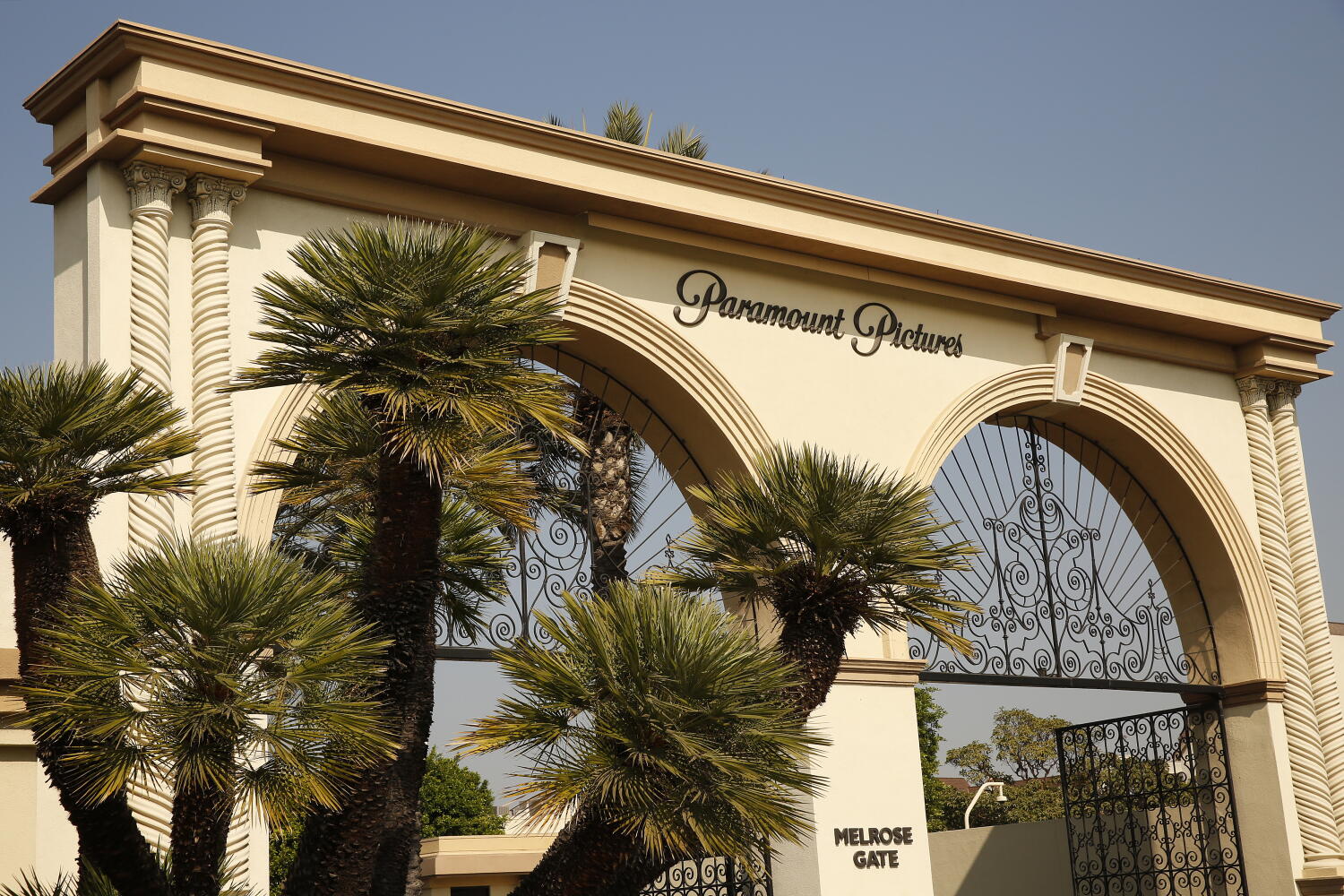
SAN FRANCISCO — A federal judge declined Thursday to approve an antitrust settlement for Paramount Skydance’s proposed $111-billion acquisition of Warner Bros. Discovery, putting the companies’ plan to complete the merger by early October in doubt. U.S. District Judge Araceli Martínez-Olguín said she needed more information before deciding whether to sign the five-year consent decree negotiated by the studios and 12 state attorneys general.
At a hearing in the Northern District of California, Martínez-Olguín ordered the parties to respond by noon Monday, Sept. 28, to a letter from U.S. Sen. Cory Booker (D-N.J.). Booker, who chairs the Senate Judiciary Subcommittee on Antitrust, Competition Policy, and Consumer Rights, has requested an independent public-interest review of the transaction. He argued that the state-level decree is the only legally binding mechanism for regulating the combined media company because the U.S. Department of Justice ended its federal antitrust investigation without demanding concessions.
“I’m not the only one who has some questions for you all. There’s lots of interest,” Martínez-Olguín said. She said she would rule “in due course” after reviewing the submissions. The delay cuts against an assurance Warner Bros. Discovery Chief Executive David Zaslav gave employees earlier in the week that the deal was on track to close within days.


The settlement, announced by California Attorney General Rob Bonta to address the anti-competitive risks of combining two of Hollywood’s most historic film and television empires, would require the company to release at least 30 feature films in theaters each year and spend at least $1.5 billion on domestic film production. It would also establish a $47.5 million fund for workers displaced by the merger.
California attorney Paula Blizzard told the court the film commitments respond to a prolonged shortage of movies that has hurt commercial theater chains since the pandemic. “When theater owners have publicly said that supply is the problem, those are voices that carry weight because they’re in the market,” she said. “They are the people we’re trying to protect — the businesses and the competition that we are trying to protect.”
Attorneys for the studios pressed the court to let the merger proceed, describing it as a defensive response to tech giants that have aggressively gained share in digital streaming. “Paramount wants to get to work. Paramount is doing this deal because it wants to compete,” said Paramount attorney Josh Holian. “Netflix, Amazon, Disney are far larger streaming undertakings. Paramount believes that a transaction like this can be transformative in fueling its ability to compete in that market.”
Other provisions would create an independent oversight board to protect the editorial autonomy of CBS News and CNN under their shared corporate parent. The company would also have to maintain and operate Paramount’s Melrose Avenue lot in Los Angeles and Warner Bros.’ Burbank headquarters, with neither historic property allowed to be sold or closed.
Those protections have not ended political and labor friction in California. Industry observers have accused Bonta of softening his regulatory position under pressure from Governor Gavin Newsom and Los Angeles Mayor Karen Bass. During negotiations, Paramount executives reportedly threatened to move the studio’s operations out of California, a prospect Newsom acknowledged treating as a severe economic threat to the state’s signature industry. After the settlement was announced, Skydance and Paramount Chief Executive David Ellison confirmed that the combined company would remain headquartered in Los Angeles.
Labor groups remain strongly opposed. Paramount has signaled to Wall Street that it intends to make more than $6 billion in post-merger cost reductions. A recent economic impact analysis commissioned by Los Angeles County estimated that the consolidation could eliminate 4,500 industry jobs over the next three years, while some labor advocates have criticized the settlement’s $47.5 million worker assistance fund as insufficient to offset the long-term effects of such extensive downsizing.










One Comment