Japan’s Traditional Craft Sector Faces Collapse as Artisan Numbers Plummet 83% Since 1979
Workforce down 83% since 1979; survival depends on regional supply chains, not individual masters
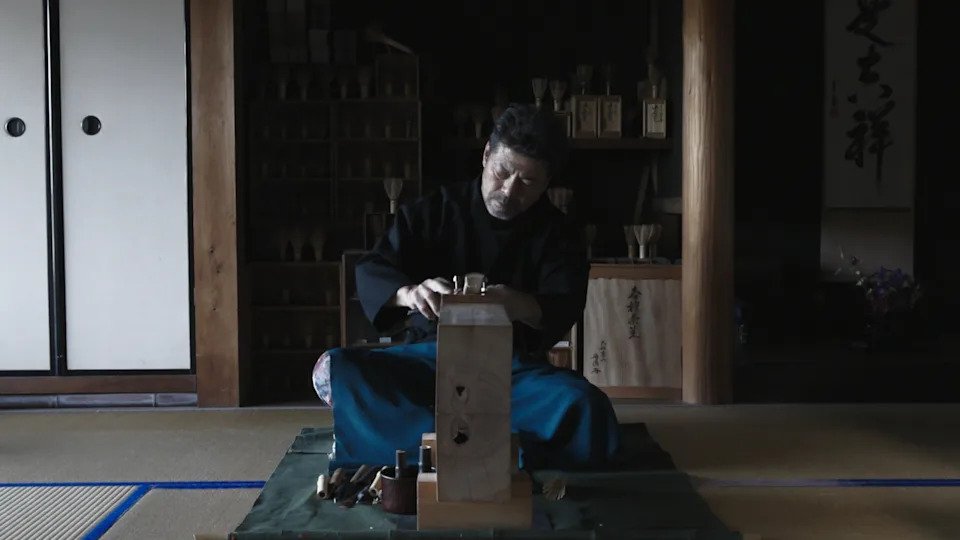
Japan’s government-designated traditional craft industries employed 288,000 people in 1979. By 2022, that number had fallen to 48,334 — an 83% decline over four decades, according to data from the Ministry of Economy, Trade and Industry. The collapse threatens not just individual workshops but the regional ecosystems that sustain a production model built on collective labor rather than individual mastery.
The term “kogei” (工芸) refers to objects made for daily use — cloth, bowls, kettles — that are rooted in a specific place, draw on generational knowledge of local materials and climate, and require human judgment at every stage. Unlike the Western concept of “craft,” kogei is not defined by handmade production or single-artist authorship. A kitchen cloth woven on power looms qualifies if operators adjust tension for humidity and loom quirks. A ceramic piece passes through separate specialists for clay, glaze, molds, and firing — a division of labor centuries old.
“What Nakagawa hopes to pass on is not individual products or techniques,” said Tasuku Ogino, executive vice president of Nakagawa, a Nara-based distributor founded in 1716 that now works with more than 800 workshops nationwide. “But rather the regional ecosystems that make kogei possible at all.”


The 1974 Traditional Crafts Law formalized this framework, requiring that designated crafts be primarily for everyday use, rely on hand-worked processes for key stages, use traditional materials and techniques, and be produced in established regions. Today 244 crafts hold the designation across all 47 prefectures, from Arita porcelain in Saga to Tsubame-Sanjo metalwork in Niigata and Mino washi paper in Gifu.
The system differs fundamentally from Japan’s Living National Treasures program, established in 1950 to protect individual masters of performing arts and craft techniques. Only about 116 individuals hold that title at any time. Kogei’s survival depends instead on maintaining entire supply chains — when a single glaze specialist or mold maker retires without a successor, an entire regional production line can halt.
Nakagawa’s Hana Fukin cloth illustrates the model. Originally kaya mosquito-netting fabric, it was repurposed as a kitchen towel because its loose weave dries quickly and resists bacteria. The cloth is machine-woven, but operators make constant micro-adjustments for humidity and loom behavior. That judgment, not the absence of machinery, keeps it kogei.
Similar collective production models exist globally — France’s Appellation d’Origine Contrôlée for cheese and wine, Korea’s Intangible Cultural Heritage system — but Japan’s integration of division-of-labor manufacturing with legal protection for everyday objects is distinctive. The 1974 law was a response to postwar industrialization that had already hollowed out many regional industries.
Demographic pressure accelerates the decline. The average age of traditional craft artisans exceeds 70 in many sectors. Successors are scarce: workshops often cannot offer wages competitive with urban employment, and the multi-year apprenticeship required to internalize material judgment deters younger workers. Cheap imports, particularly from China, have undercut price points for utilitarian items like iron kettles and cotton textiles.
Some workshops adapt. In Tsubame-Sanjo, metalworking factories now produce precision components for medical devices and aerospace alongside traditional knives. Mino washi makers collaborate with interior designers on acoustic panels and lighting. Nakagawa curates selections for international design retailers and operates an e-commerce platform shipping to 40 countries, bypassing traditional wholesale channels that once took 50% margins.
The Ministry of Economy, Trade and Industry revised its support policies in 2023 to subsidize successor training and fund digital transformation for regional craft associations. Early results show a 12% increase in apprenticeship inquiries year-over-year, though completion rates remain below 30%.