

Iran Fortifies Nuclear Sites as Russia and China Block UN Sanctions Watchdog
UN sanctions oversight collapses as Iran hardens Pickaxe Mountain and rebuilds Taleghan 2

UNITED NATIONS — Iran is reinforcing its most sensitive underground facilities while diplomatic divisions at the United Nations deepen over sanctions enforcement and international oversight.
On Thursday, the UN Security Council failed to extend the mandate of the Panel of Experts supporting the 1737 Iran Sanctions Committee. The U.S.-drafted resolution would have kept the watchdog panel active through September 2027, but Moscow and Beijing vetoed it. The draft received 11 votes in favor, while Pakistan and Somalia abstained.
The Panel of Experts has long been the primary independent body investigating sanctions evasion, tracing illicit procurement networks, and identifying entities violating international restrictions on Iran’s nuclear and missile programs. The 1737 Sanctions Committee was established in 2006 under UN Security Council Resolution 1737, which imposed initial restrictions after Tehran refused to suspend its uranium enrichment activities.

A day before the vote, U.S. Ambassador to the UN Mike Waltz defended the legitimacy of the measures and said the United States considers the snapback sanctions fully active.
“The snapback sanctions … occurred, the United States and this UN Security Council followed appropriate procedures for that to occur,” Waltz told reporters at a press conference in New York. “Those sanctions are in place and we expect those who are a party to fully enforce those sanctions.”
The dispute centers on the “snapback” mechanism created under the 2015 Joint Comprehensive Plan of Action (JCPOA), commonly known as the Iran nuclear deal. Under UN Security Council Resolution 2231, any participant state to the JCPOA could unilaterally trigger a snapback restoring all pre-2015 multilateral sanctions if Iran was deemed in non-compliance.
While the United States asserts that the comprehensive sanctions have been legally restored, Russia and China argue that Washington lost the legal standing to trigger the mechanism after unilaterally withdrawing from the nuclear accord in 2018. Moscow and Beijing therefore reject the validity of the current sanctions framework and the monitoring bodies associated with it.
Waltz also highlighted how sanctioned entities attempt to bypass international trade bans by altering corporate structures, using shell companies, and renaming cargo vessels. He said the international community has consistently affirmed that the Iranian government must not be allowed to acquire a nuclear weapon.
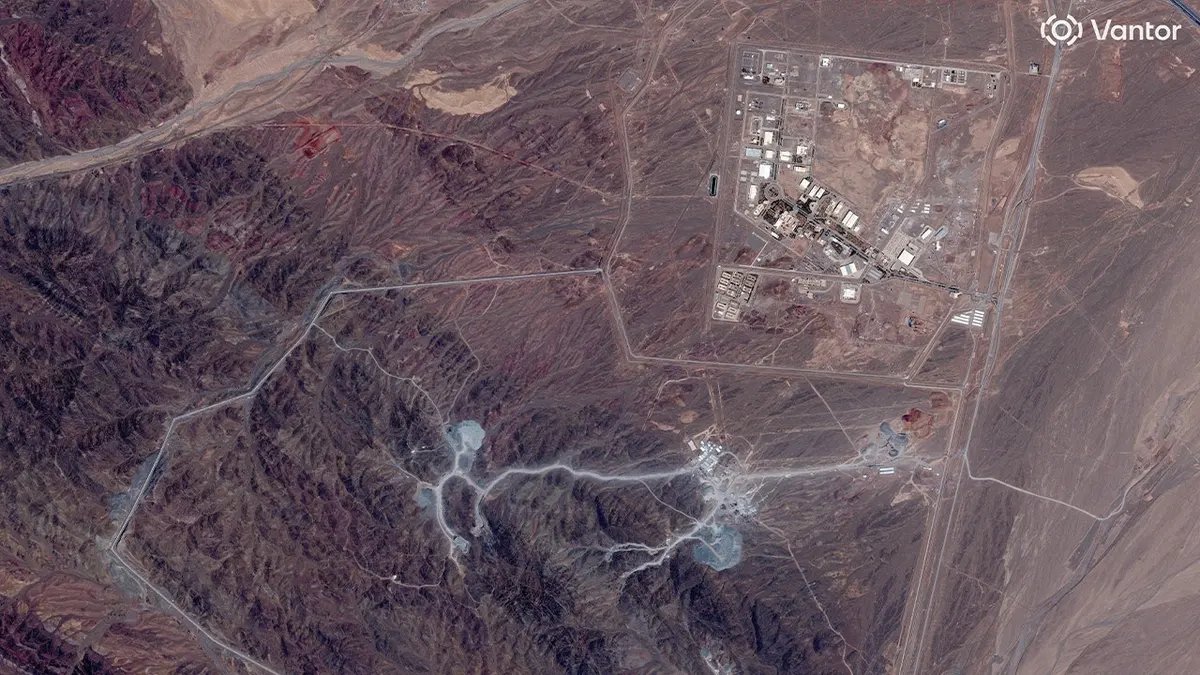
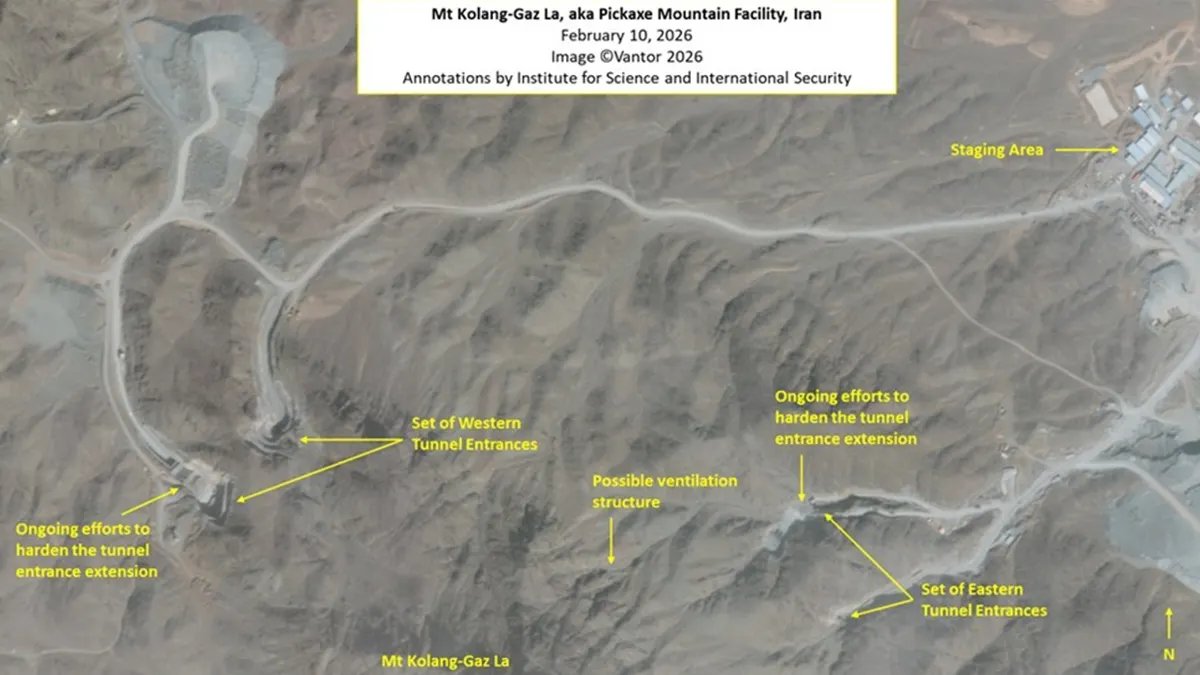
Newly analyzed satellite imagery acquired by Vantor Technologies on Sept. 11, 2026, shows reinforced defenses around the tunnel entrances of Iran’s “Pickaxe Mountain” facility. The site is approximately two kilometers from the primary Natanz uranium enrichment complex and is a heavily fortified underground facility designed to house sensitive nuclear infrastructure.
According to a Thursday report by the Institute for Science and International Security, earthen roadblocks remain active on access roads leading to the western tunnel portals. Analysts at the institute said the continued restrictions indicate that the site is not operating under standard, routine conditions and may instead contain or be receiving high-value equipment, components, or materials.

The institute also identified newly deposited layers of soil covering one western tunnel portal and an adjacent cluster of entrances first constructed in 2007. Significant volumes of earth are a standard military engineering method for hardening underground structures and adding buffer protection against high-explosive, bunker-busting aerial munitions.
Construction at Pickaxe Mountain began in 2020 after a major explosion at the Iran Centrifuge Assembly Center (ICAC) inside the above-ground Natanz complex. Iranian authorities attributed the incident to foreign sabotage. Tehran later announced plans for a more secure replacement facility deep underground to manufacture advanced centrifuges, which are used to spin uranium gas to weapon-grade levels.
Independent analysts estimate that parts of the complex are buried at least 100 meters, or approximately 330 feet, beneath the surface. Western intelligence services and nuclear experts believe the site is intended for centrifuge production, while Iranian officials have repeatedly said it is not intended for active nuclear operations.
The fortification work followed explicit warnings from the White House. “We notice there’s a little activity at Pickaxe,” President Donald Trump told reporters last week. “I would advise Iran not to get cute because we will have to hit them very hard.”
In a July 28 interview on Fox & Friends, Trump said U.S. intelligence was closely monitoring the subterranean site and had detailed information about its internal layout. He warned that the U.S. military could destroy the facility if diplomatic efforts failed to curb Iran’s nuclear ambitions.
Some defense analysts believe the site’s depth could complicate direct military interdiction. Behnam Ben Taleblu, senior director of the Iran program at the Foundation for Defense of Democracies, said the opportunity for a straightforward conventional airstrike to collapse the entire facility may already have passed.
“The window to strike Pickaxe Mountain, according to some, has already expired because the regime has dug an underground nuclear facility several times deeper than Fordow,” Ben Taleblu said.
The Fordow fuel enrichment plant was built deep inside a mountain near Qom to protect it from aerial attacks and has long been a focus of Western military planning. Heavy ordnance such as the U.S. Air Force’s 30,000-pound GBU-57 Massive Ordnance Penetrator (MOP) was developed specifically to target deeply buried facilities. At depths reaching 100 meters, however, direct destruction of underground chambers becomes increasingly difficult.
Ben Taleblu said the U.S. military still has tactical alternatives to total destruction. “Washington can do what it’s traditionally been able to do with sites that are underground, hardened and fortified, and that’s to bury their entrances and raise the political cost to the Islamic Republic of being able to dig out,” he said. “While there may not be the perfect munition just yet, Uncle Sam always has a bigger bomb. And in the meantime, what they can do is show that they mean business by burying the entrances.”
At the Parchin military complex southeast of Tehran, a separate Thursday report by the Institute for Science and International Security documented a major reconstruction effort at Taleghan 2. The highly sensitive facility has historically been linked to Iran’s past nuclear weapons research under the “Amad Plan,” which was officially halted in 2003.
The facility was previously targeted and destroyed in military strikes in October 2024 and again in March 2026, after Iran attempted to rebuild and harden the structure.
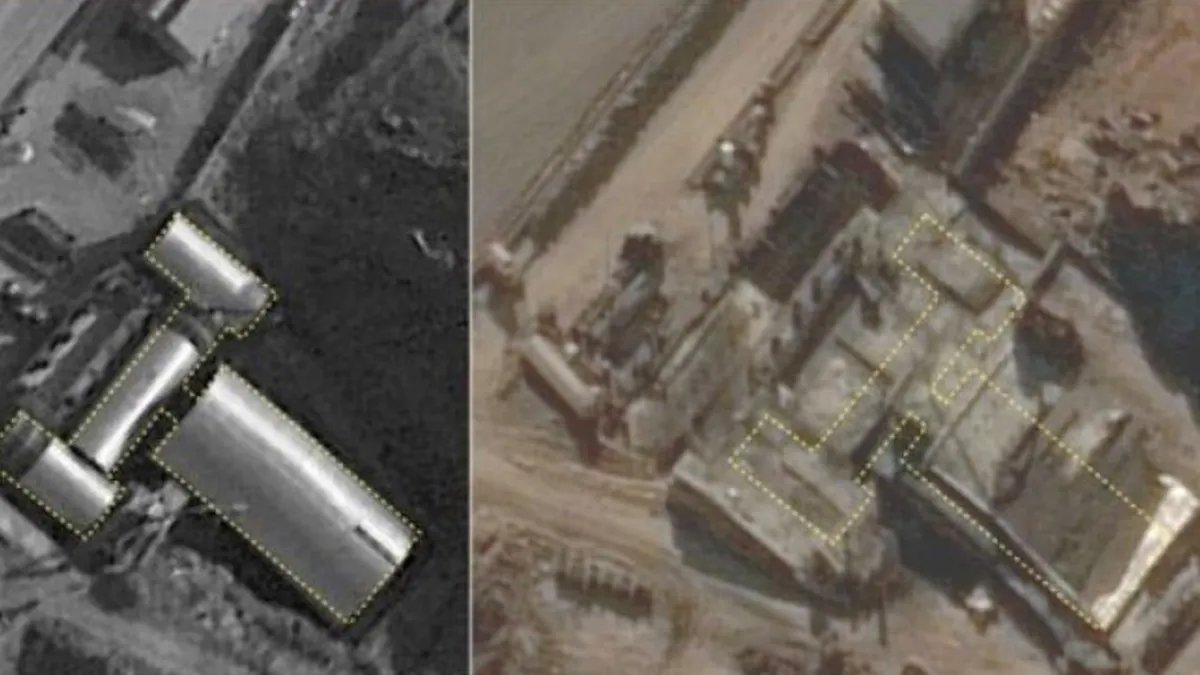
Vantor Technologies satellite imagery captured on Sept. 13, 2026, shows a large tarp erected over Taleghan 2’s ruined footprint. The temporary cover conceals ongoing construction from overhead satellite and aerial surveillance. Heavy equipment, including dump trucks, bulldozers, concrete machinery, and cranes, continues to operate around the perimeter.
The imagery also indicates that new concrete reinforcements are being installed as a protective shield, or “sarcophagus,” over the underlying structure to mitigate the impact of potential future airstrikes. The institute said reconstruction is advancing rapidly, but the precise operational purpose of the rebuilt Taleghan 2 remains unclear.
A UN-appointed independent international fact-finding mission issued findings on Thursday that scrutinized both Washington and Tehran. The panel reported reasonable grounds to believe that two U.S. military strikes against civilian targets inside Iran in February 2026 constituted war crimes.
The mission also concluded that Iranian authorities committed crimes against humanity during a violent domestic crackdown on nationwide anti-government protests. The protests began in late 2022 after the death of Mahsa Amini in police custody.
The fact-finding mission was established by the UN Human Rights Council to document violations, but it functions strictly as an investigative body. It has no judicial authority, and its findings do not carry the weight of formal criminal indictments or legal judgments.
Iran’s mission to the United Nations did not immediately respond to requests for comment about the satellite imagery or the Security Council vote.






One Comment