How a 10-Foot-Wide Ford Festiva Dodged DMV Roadblocks
Builders spliced three donor chassis and secured standard DMV registration for a vehicle exceeding federal highway width limits.
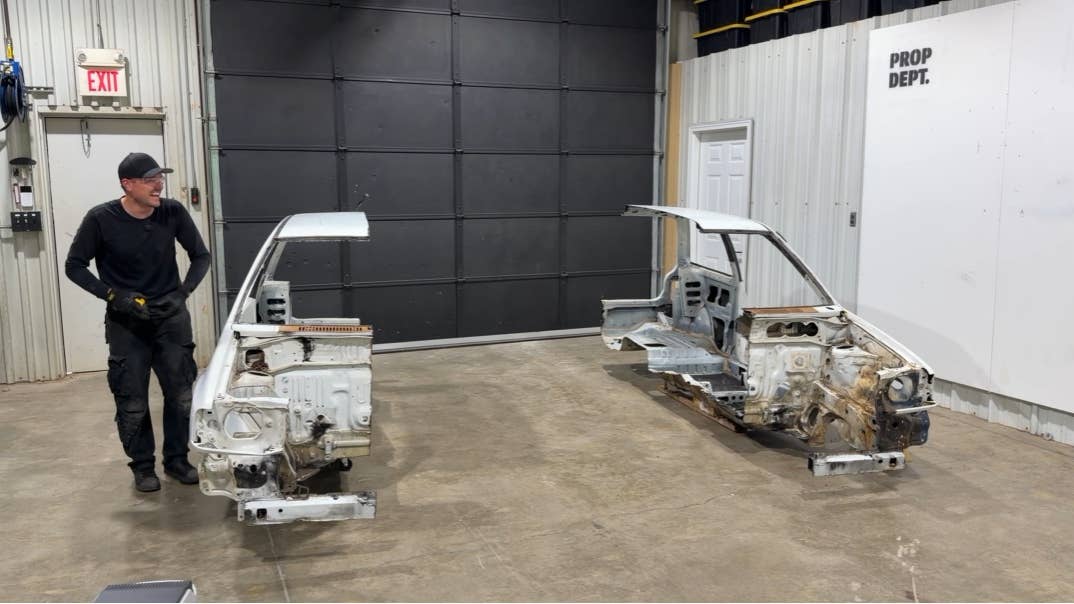
A 120-inch-wide sedan rolling through public traffic is no longer just a fabrication stunt. It is a stress test of state motor vehicle codes. The Prop Department, a YouTube channel known for extreme automotive builds, recently registered a triple-bodied Ford Festiva with the Department of Motor Vehicles, pushing the boundaries of what qualifies as a street-legal passenger vehicle without triggering commercial oversize load regulations.
The build required dismantling three first-generation Ford Festivas and splicing them laterally. According to the creators, the team used lasers to establish the center line before cutting the donor cars in half. They then welded and fabricated new sheet metal to bridge the gaps, extending the original 63-inch width to exactly 10 feet. A laser welder replaced traditional gas welding equipment for the structural joins.
Registration was the primary hurdle. Standard federal highway guidelines cap vehicle width at 8.6 feet (102 inches) for unrestricted travel. Anything wider typically falls under commercial oversize load rules, requiring pilot cars, pre-approved routes, and special permits. By securing standard registration, the Prop Department effectively classified a vehicle wider than a Ford F-450 dually with mirrors—by roughly 14 inches—as a normal passenger car. During road testing, law enforcement officers pulled the vehicle over, but the crew produced valid DMV documents and continued driving, according to the channel’s footage.

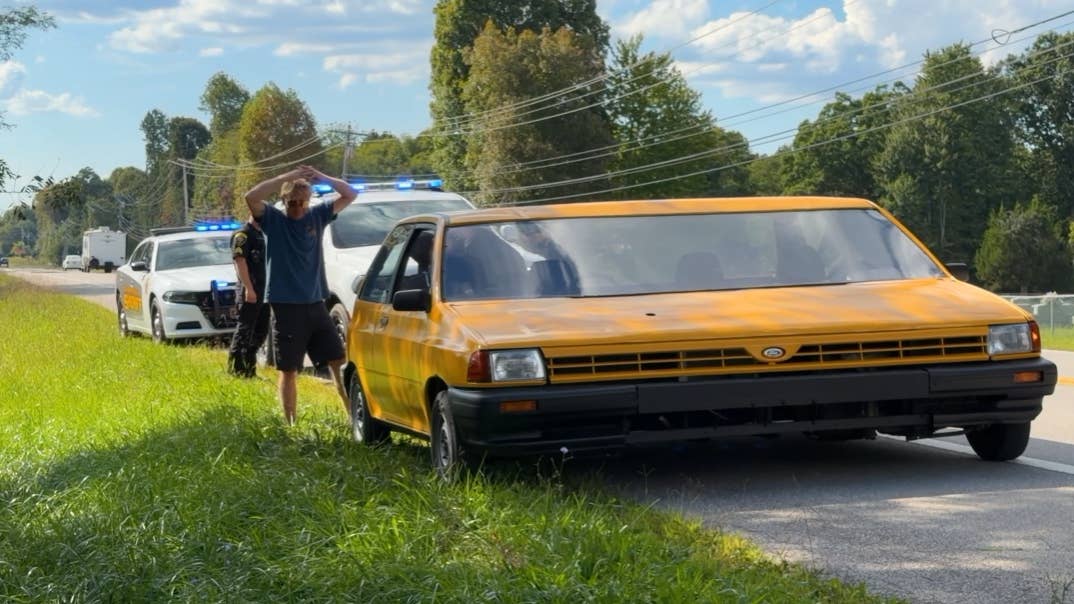
Making a 10-foot-wide hatchback look like a factory product rather than three cars bolted together required additive manufacturing. The team used CNC machines and 3D printers to produce a custom dashboard, grille, and body panels. These components filled the visual seams between the three original chassis, creating the illusion of a single, intentionally wide production model.
Operating the vehicle exposed immediate mechanical limitations inherent to widening a unibody platform designed for a small economy car. Steering requires two people working in tandem. The builders tested the modified Festiva on highways and off-road terrain. To offset the strain on the stock air conditioning system across the expanded cabin volume, the interior was fitted with 14 extra-large cup holders.
This project follows the same channel’s previous record-setting build of the world’s thinnest drivable car. That earlier project established the Prop Department’s pattern of exploiting dimensional extremes within existing traffic laws rather than operating purely as an off-road novelty act.