House Republicans Defy Trump on Shutdown as Vulnerable Candidates Emphasize Local Issues
The September funding vote passed with 209 Democratic votes and 132 Republican votes.
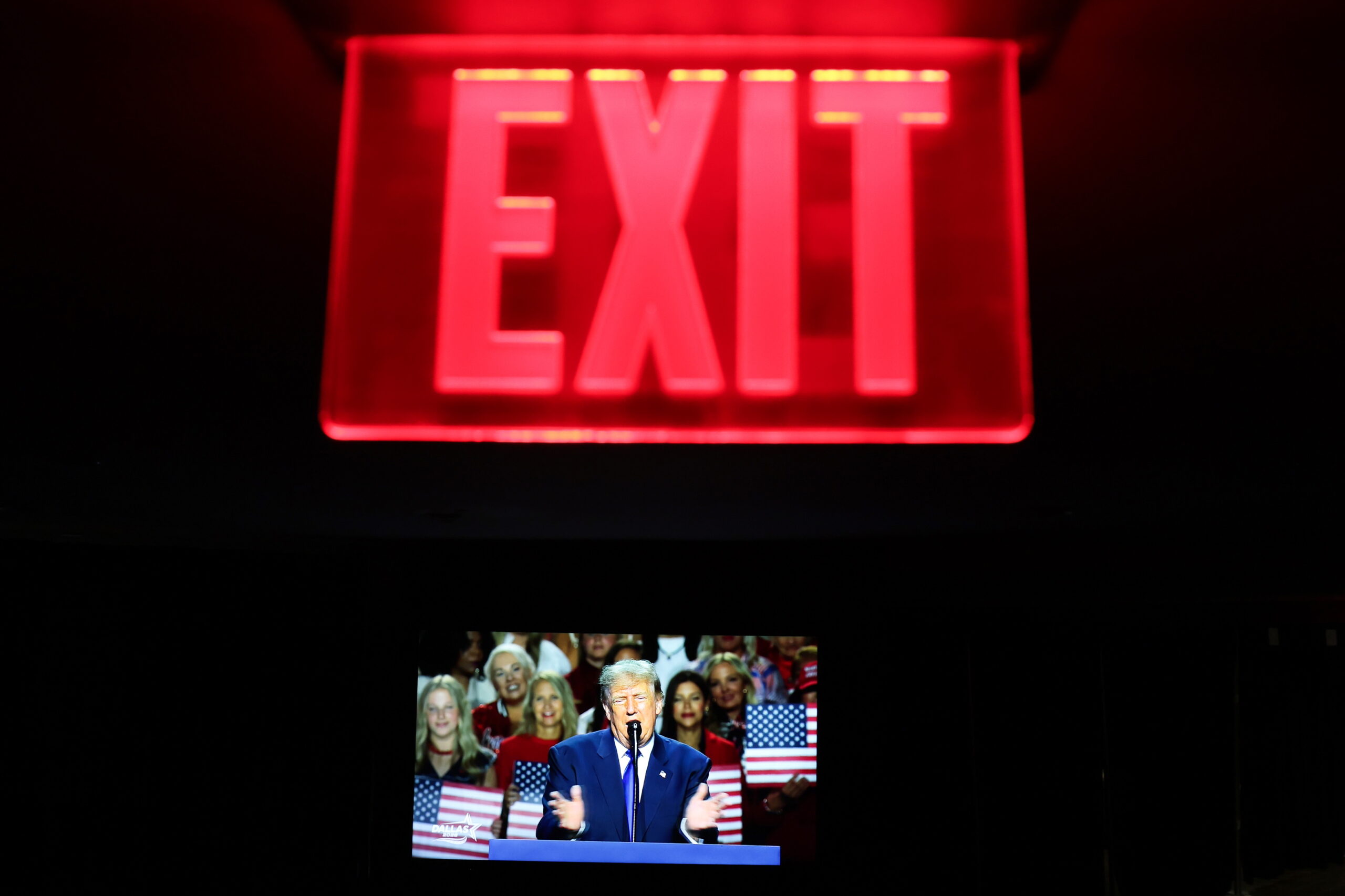
WASHINGTON — With less than six weeks until Election Day, Republicans seeking to defend a razor-thin House majority and win the Senate are increasingly distancing themselves from former President Donald Trump on federal spending, trade and reproductive health. The divide reflects the challenge for GOP candidates in swing districts and blue-leaning states of balancing Trump’s national messaging with platforms aimed at moderate voters.
The split was apparent in September’s fight over government funding. Trump repeatedly urged Republicans to allow a partial shutdown unless legislation included the Safeguard American Voter Eligibility (SAVE) Act, which would require proof of U.S. citizenship to register to vote in federal elections. House Speaker Mike Johnson initially brought a six-month continuing resolution attached to the SAVE Act to the floor on Sept. 18. It failed 202–220, with 14 Republicans joining all 206 Democrats in voting against it.



With the Sept. 30 fiscal deadline approaching and Republicans holding a 220–212 House majority, Johnson dropped the SAVE Act provision. On Sept. 25, the House passed a clean stopgap funding bill extending federal budget authority through Dec. 20. The measure passed 341–82, with 209 Democrats and 132 Republicans voting in favor, despite Trump’s calls to force a government stoppage.
Among the 18 House Republicans representing districts Joe Biden won in 2020, several have taken positions distinct from Trump in competitive races across New York, California, Nebraska and Oregon. In New York’s 17th Congressional District, Mike Lawler voted for the clean spending extension and rejected shutdown tactics, prioritizing local infrastructure grants and law enforcement funding over national party battles. Nebraska’s Don Bacon, who faces a competitive reelection bid in an Omaha-based district, also voted for the funding bill and questioned Trump’s proposed broad import tariffs, citing the risk of retaliatory measures against Midwestern agricultural exports.
Trade policy is a concern for export-dependent agricultural states. Trump has proposed a 10% to 20% baseline tariff on all foreign imports, as well as a 60% tariff on goods from China. Republican Senator Chuck Grassley of Iowa has warned that such policies could prompt other countries to impose retaliatory tariffs on American pork, soybeans and corn.
Reproductive health has also exposed differences within the party. In September, Senate Democrats brought the Right to IVF Act to the floor. It failed to reach the 60-vote threshold, losing 51–44; only two Republican senators, Susan Collins of Maine and Lisa Murkowski of Alaska, voted with Democrats in favor. Several Republicans in vulnerable House districts have publicly backed federal protections for fertility treatments. In New York’s 19th Congressional District, Marc Molinaro supported federal funding measures and introduced resolutions protecting access to in-vitro fertilization (IVF), seeking to counter Democratic campaign messaging on reproductive rights.
Oregon’s Lori Chavez-DeRemer, representing the 5th Congressional District, has broken with national party leadership on key labor and spending measures and emphasized bipartisan legislation. Biden won the district by nearly three percentage points in 2020. In Maryland, former Republican Governor Larry Hogan is running for an open U.S. Senate seat in a state Trump lost by 33 percentage points in 2020. Hogan has said he would not vote for Trump and has declined to take part in national party campaign events.
The contests are unfolding as both parties seek control of the 119th Congress. Democrats need a net gain of four seats to take the House, while Republicans need a net gain of one or two seats to secure a Senate majority, depending on which party wins the vice presidency.