Hollywood Soap Veterans Bet Big on Vertical Microdramas
Red Flair Entertainment shoots non-union vertical series on historic Sunset Las Palmas soundstages as the format expands in Los Angeles.
Sunset Las Palmas Studios, the historic Hollywood lot where “I Love Lucy” and “La La Land” were filmed, has dedicated an entire soundstage to vertical video sets. The permanent builds — a courtroom, a bar, an apartment, an office, a hospital — signal how rapidly microdramas have evolved from a niche mobile experiment into a distinct sector of the Los Angeles production economy.
The format, characterized by 60- to 90-second episodes engineered for smartphone screens and built around relentless cliffhangers, originated in China before spreading globally. Excluding the Chinese market, vertical video is projected to generate $150 billion in global revenue this year, according to consulting firm Owl & Co., though the vast majority currently flows through short-form social platforms like TikTok, YouTube Shorts, and Instagram Reels rather than dedicated narrative apps.
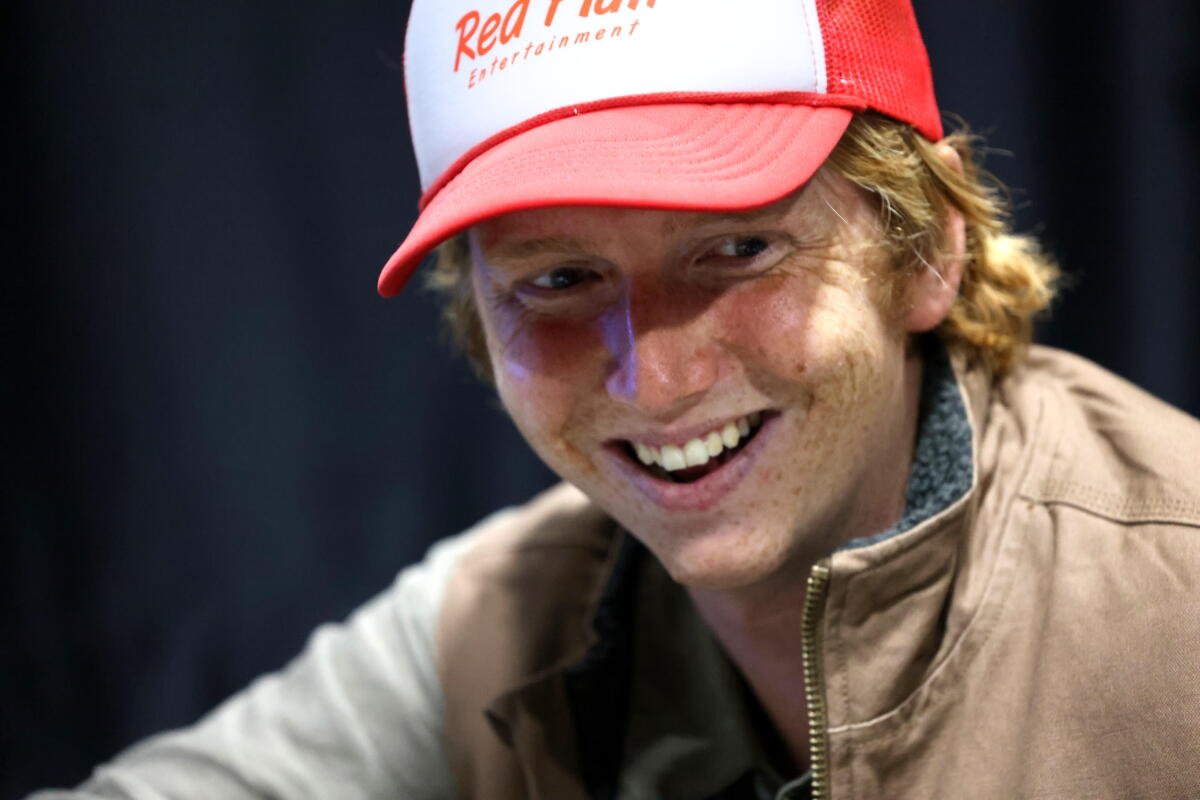
Red Flair Entertainment, a newly formed production company led by 16-time Emmy-winning soap opera head writer Bradley Bell and his 24-year-old son Oliver Bell, is attempting to carve out a premium tier within that ecosystem. Their debut project, “Hollywood Starlet,” premiered Sept. 3 on aTwist, a subscription-based vertical series app launched by former Showtime president Jana Winograde, ex-Warner Bros. Television president Susan Rovner, and former WME chairman Lloyd Braun.


Unlike ad-supported scrolling feeds, aTwist operates on a subscription model. Red Flair financed the production through the platform while retaining a backend deal that grants the company a share of the subscription revenue the series generates.
“Hollywood Starlet” costs between $175,000 and $220,000 per season to produce. To maintain those margins, the 45-episode first season was shot in six days using a non-union cast and crew of 45 people. Oliver Bell cited budgetary restrictions as the reason for bypassing union labor. A second season, comprising 40 episodes, was filmed immediately after during the monthly dark week of CBS’ “The Bold and the Beautiful,” utilizing the same soundstages where Bradley Bell serves as head writer.
The reliance on non-union crews highlights a tension in the microdrama boom. While major film and television productions continue to leave California due to tax incentive competition from other states and countries, ultra-low-budget vertical series are filling local soundstages. However, these shoots operate outside the traditional guild structures that define Hollywood employment, raising questions about long-term labor standards as the format scales.
The structural DNA of the American daytime soap opera translates directly to vertical video. Traditional soaps rely on daily episode breaks and weekly Friday cliffhangers to retain audiences over the weekend. Microdramas compress that pacing, inserting narrative hooks every few minutes to prevent viewers from swiping away.
This compression arrives as the American broadcast soap opera faces historical attrition. Until the 1980s, networks aired 10 to 12 daytime serials simultaneously. Today, only five remain in production: four on broadcast television and “Days of Our Lives,” which moved exclusively to streaming. Elana Levine, a media professor at the University of Wisconsin-Milwaukee who studies the genre, noted that adapting serialized storytelling to mobile devices offers a logical path forward for formats that once dominated American television.
Yet the audience dynamics differ significantly. Daytime soaps historically targeted female demographics. Vertical dramas, driven by algorithmic distribution on social platforms, capture a broader and younger cross-section of viewers. Michael Berry, director of UCLA’s Center for Chinese Studies, observed that the format delivers the core emotional beats of a soap opera in a more compact, addictive structure.
Oliver Bell, who wrote his university dissertation at the University of St Andrews in Scotland on the intersection of soap operas and microdramas, views the vertical format as a modernization of serialized television rather than a replacement. His grandfather, William Bell, and grandmother, Lee Phillip Bell, created both “The Young and the Restless” and “The Bold and the Beautiful.”
Bradley Bell, who was working on episode 9,911 of “The Bold and the Beautiful” during the development of “Hollywood Starlet,” argued that bite-sized narratives bypass the intimidation factor of decades-long soap histories. New viewers rarely commit to shows with thousands of prior episodes, but short-form entry points eliminate that barrier.
Following the completion of two seasons of “Hollywood Starlet,” Red Flair Entertainment is developing additional vertical series spanning genres including horror and romance. Production veteran Lou Trabbie, who has worked in the industry for 38 years and served as production designer on the project, noted that smaller crews and rapid turnaround schedules represent a fundamental shift in how physical production operates in Los Angeles.
Sunset Las Palmas Studios completed its dedicated vertical video stage buildout in June.