

GOP Targets Gas Prices With Energy Offensive Ahead of Midterms
Republicans make gasoline prices and domestic production central to their midterm strategy

WASHINGTON — With less than 50 days remaining before the high-stakes midterm elections, congressional Republicans are sharpening their focus on energy costs. Their coordinated legislative and campaign offensive is designed to harness voter frustration over high gasoline prices and secure a congressional majority.
National average gasoline prices have fallen from their historic peak of $5.02 per gallon on June 14, 2022, but remained approximately $3.68 per gallon in late September. According to data from AAA, that was nearly 55% higher than the $2.38 average when President Biden took office in January 2021.
The House Republicans’ newly unveiled “Commitment to America” platform places domestic energy independence at the forefront of the party’s economic recovery plan. The agenda was launched on September 23, 2022, in Monongahela, Pennsylvania, a historic industrial hub outside Pittsburgh, under the leadership of House Minority Leader Kevin McCarthy, R-Calif.
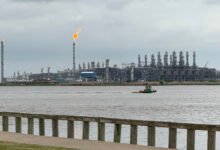

Republicans promise to slash regulatory hurdles and boost fossil fuel production if they capture the House on November 8. Their message also includes streamlining pipelines and liquefied natural gas (LNG) export facilities, an approach they believe will carry significant weight in key industrial and energy-producing swing states like Pennsylvania, Ohio, and Texas as the midterm campaign enters its final stretch.
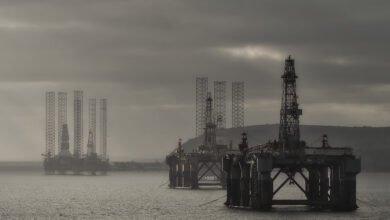
In the Senate, Republican Leader Mitch McConnell, R-Ky., has directed criticism at the administration’s environmental policies. He has specifically cited the cancellation of the Keystone XL pipeline permit and the temporary pause on new federal onshore and offshore oil leases. Senate Republicans have introduced companion measures intended to accelerate federal permitting under the National Environmental Policy Act (NEPA) and fast-track domestic energy infrastructure.
A central House proposal is the “Strategic Production Response Act,” sponsored by Representative Cathy McMorris Rodgers, R-Wash., the ranking member of the House Energy and Commerce Committee. The bill would prohibit the Department of Energy from carrying out non-emergency drawdowns of the Strategic Petroleum Reserve (SPR) unless the administration develops a concurrent plan to increase the percentage of federal lands leased for oil and gas development.
Republicans have repeatedly criticized the Biden administration’s management of the emergency reserve. President Biden authorized the release of 180 million barrels of oil from the SPR over a six-month period in March 2022, the largest drawdown in the reserve’s history, in an effort to stabilize global markets following Russia’s invasion of Ukraine.
The releases have reduced the SPR to approximately 416 million barrels, its lowest level since July 1984, according to the U.S. Energy Information Administration. Established under the Energy Policy and Conservation Act of 1975 following the Arab oil embargo, the emergency reserve has a total capacity of 714 million barrels. It was historically reserved for severe, unanticipated physical supply disruptions, including those caused by the Gulf War in 1991, Hurricane Katrina in 2005, and the Libyan civil war in 2011.
“Using the emergency oil reserve to cover up bad policies is dangerous for our national security,” House Minority Whip Steve Scalise, R-La., said, arguing that the administration’s actions have left the nation vulnerable to future supply shocks.
Democrats have defended the administration’s record, countering that its swift deployment of the SPR helped drive gasoline prices down by more than $1.30 per gallon from their summer peak and offered tangible relief to American families. Congressional Democrats point to the passage of the Inflation Reduction Act in August 2022 as the sustainable solution to high utility and fuel bills; the law features $369 billion in investments for clean energy and climate initiatives.
Democratic lawmakers have also blamed corporate oil producers for high prices, accusing them of “price gouging” and of prioritizing record-breaking quarterly profits and stock buybacks over capital investment to expand refining capacity. With overall inflation still at 8.3% as of August, the cost of living remains the premier issue for the electorate.



One Comment