Fort Trump Revival: Poland Seeks Permanent U.S. Base Amid Russian Airspace Violations
Warsaw seeks permanent U.S. presence after Russian Mi-8 violates Polish airspace
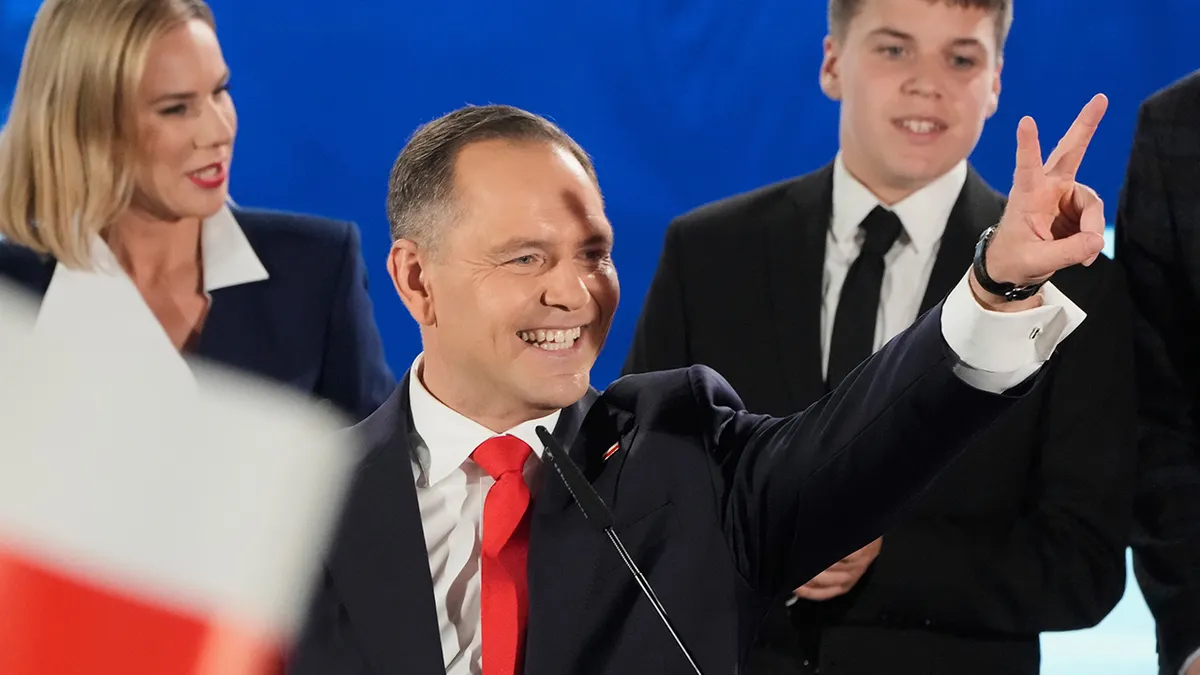
Polish President Karol Nawrocki has formally reinvigorated the concept of “Fort Trump,” a proposed permanent United States military installation on Polish soil, positioning it as a critical deterrent against escalating Russian aggression in Eastern Europe. Speaking in New York on September 22, 2026, Nawrocki expressed confidence that Washington and Warsaw would finalize an agreement for the base, which aims to solidify NATO’s eastern flank amid a series of recent aerial incursions by Moscow.
The push for a fixed American footprint gained immediate urgency just hours after Nawrocki’s remarks, when a Russian Mi-8 helicopter breached Polish airspace from the Kaliningrad exclave. According to the Polish Army Operational Command, the aircraft penetrated approximately 300 meters into Polish territory north of Braniewo at 11:08 a.m., remaining inside national borders for 42 seconds before exiting. Polish radar systems tracked the intrusion continuously, triggering fighter scrambles and placing ground-based air defense units on high alert. Military officials characterized the event not as an accident, but as a deliberate probe of NATO response times and readiness protocols.
Nawrocki, a conservative historian supported by the Law and Justice party, framed the base as a logical extension of existing security cooperation rather than a new diplomatic initiative. The proposal originally surfaced in 2018 under his predecessor, Andrzej Duda, seeking to institutionalize the roughly 10,000 U.S. troops currently deployed in Poland on a rotational basis. Deputy Defense Minister Stanisław Wziątek indicated that the initial phase of Fort Trump would host between 3,000 and 5,000 personnel, with long-term goals expanding that number to nearly 15,000. This buildup aligns with broader efforts to counterbalance Russian conventional superiority in the region.


While Nawrocki acknowledged that specific construction deadlines remain undefined due to unresolved administrative and financial logistics, he emphasized momentum. Infrastructure selection is reportedly underway, and the president suggested completion could occur before Donald Trump’s current term concludes in 2029. “It’s hard for me to give specific dates, but I think this matter has been definitively confirmed, because President Trump is known for keeping his word,” Nawrocki told Bloomberg. His optimism reflects a strategic calculation that personal rapport between leaders can bypass traditional bureaucratic delays in alliance commitments.
U.S. President Donald Trump echoed this sentiment earlier in September, describing progress toward the base as a “historic step” for the bilateral alliance. In a Truth Social post dated September 17, Trump credited Nawrocki’s leadership for advancing the project, signaling potential announcements regarding further details. This public endorsement contrasts with previous administrations’ preferences for temporary rotations, marking a shift toward permanent forward-deployed forces in Central Europe.
The security environment driving these decisions remains volatile. On September 18, Polish Prime Minister Donald Tusk warned that intelligence assessments pointed to planned Russian drone and missile strikes targeting eastern NATO members, potentially disguised as accidental violations. Such incidents have become frequent; Russian unmanned aerial vehicles have previously crashed on alliance territory in both Poland and Romania, prompting repeated fighter jet responses. Foreign Minister Radosław Sikorski reinforced the gravity of the situation during a briefing following his address to the U.N. Security Council, linking the airspace breaches directly to the necessity for enhanced static defenses.
Critics note that establishing a permanent base requires significant capital investment and political will from Congress, particularly given ongoing debates over defense spending priorities. However, proponents argue that the cost of deterrence pales in comparison to the economic and security risks posed by unchecked Russian expansionism. The integration of U.S. armored brigades—previously rotated out due to budget constraints—remains a key component of the strategy, though Pentagon decisions on force structure continue to evolve in response to global threats.