

Forced Out of the S&P 100: Inside Nike’s $200 Billion Collapse and Strategic Misstep
Nike’s index removal exposes a failed retail strategy and Wall Street’s accelerating shift toward AI infrastructure
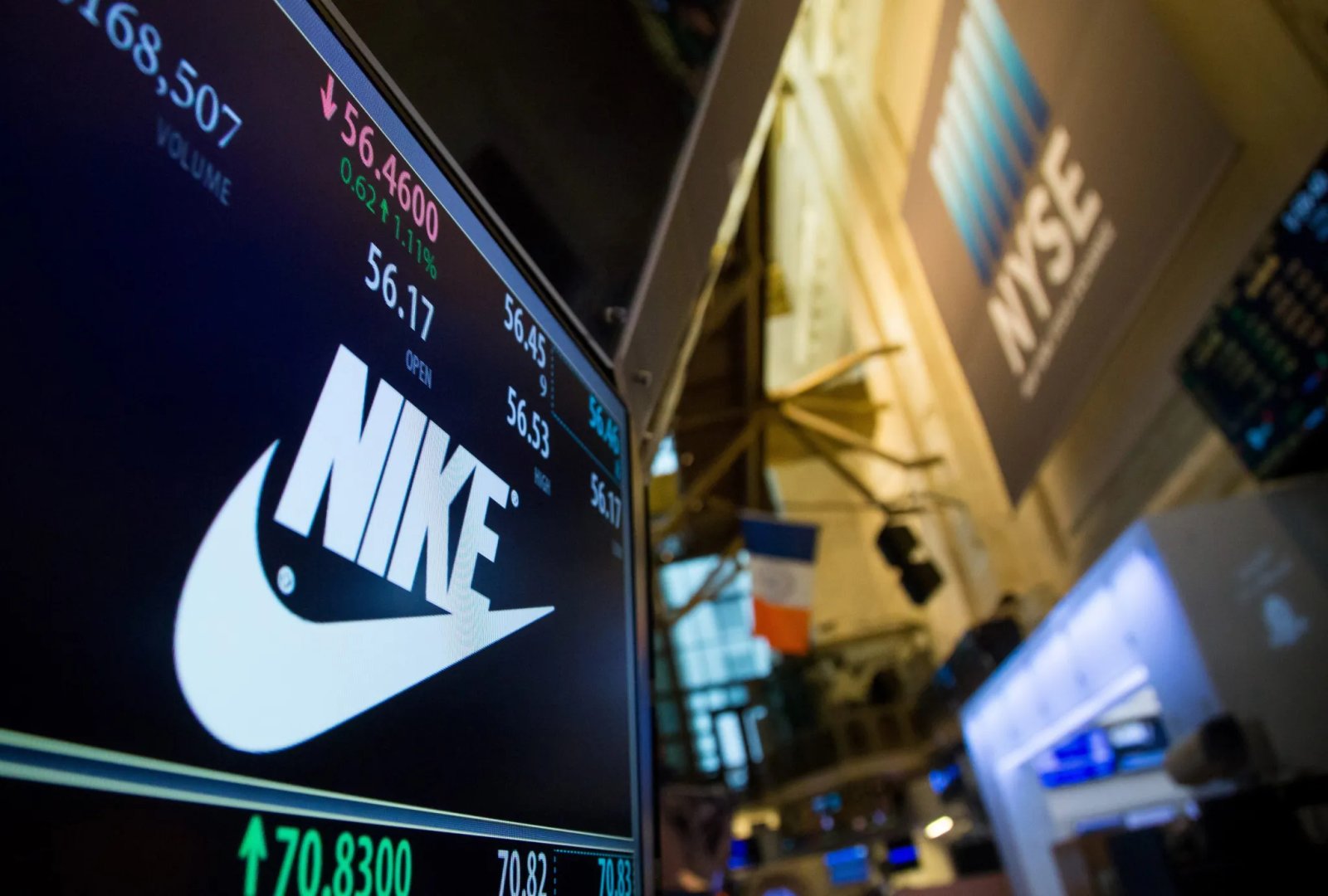
On Sept. 21, Nike will leave the S&P 100 after almost 18 years in the benchmark. The Nike S&P 100 removal follows a 36% decline in market capitalization during 2026 and a loss of more than $200 billion since the company’s November 2021 peak. Nike was worth about $264 billion then. Its market value is now roughly $57 billion, and its shares are trading near $38.
The departure will also create direct market pressure. Index-tracking institutional funds and ETFs that mirror blue-chip benchmarks must sell shares when Nike is removed, adding mandatory selling to the broader Nike stock drop 2026 has already produced. Nike will remain in the S&P 500.
The company’s direct-to-consumer strategy has weakened alongside the stock. Fiscal 2026 direct-to-consumer revenue fell 6% to $17.7 billion. Wholesale revenue rose 6% to $27.5 billion. Those figures form the financial backdrop for Nike’s Nike DTC strategy failure, but the operational response came later.


In Greater China, sales fell 17% on a constant-currency basis in the fourth quarter, which ended May 31. Eight consecutive quarters of declining sales have made the region a central problem for the business.
Nike is taking greater control over online distribution in China, including pulling online sales rights from major retail partners. The move comes as local brands Anta and Li Ning compete for consumers alongside international running and athletic brands Hoka and On. The China sales decline has developed alongside that competitive squeeze rather than in isolation.
Fiscal 2026 revenue came to $46.4 billion, down 2% on a currency-neutral basis. Nike warned that revenue would continue declining into the first half of fiscal 2027.
On Sept. 21, Honeywell Aerospace, Simon Property Group and Colgate-Palmolive will also leave the benchmark. Dell Technologies, Palo Alto Networks, Arista Networks and Sandisk will take their places.
The S&P 100 index rebalancing reflects more than a change in membership. It shows capital moving away from consumer discretionary goods and toward AI, cloud computing, servers and hardware infrastructure. The incoming companies represent the infrastructure priorities that now carry greater weight in the blue-chip index.
Rebuilding damaged wholesale channels is a central part of the Elliott Hill Nike turnaround. Hill came out of retirement to replace former CEO John Donahoe, whose tenure emphasized an aggressive direct-to-consumer expansion that severed long-standing relationships with retail partners. Hill’s Nike wholesale pivot is aimed at restoring those relationships, reducing excess inventory and putting greater emphasis on performance products.
Reuters reported in June that Nike shares were already down about 35% for 2026 after the company’s latest results. Investors had also pushed the stock lower over the preceding years as they questioned whether the turnaround would produce a meaningful recovery. That skepticism has contributed to Nike market cap loss alongside the company’s operating problems.
“We made meaningful structural improvements to lay the groundwork for our Sport Offense across our team culture, innovative product, brand strength, and how we serve consumers in our countries and cities,” Hill said in the company’s report. “While we continue to face top-line headwinds, we’re encouraged by progress in performance product and are focused on consistent execution, improved profitability and scaling our wins to realize our full potential.”
Nike did not immediately respond to a request for comment from Fortune. Its own forecast still calls for revenue to decline into the first half of fiscal 2027.