
Russia and North Korea open a road corridor satellites will struggle to track
The bridge bypasses North Korea’s rail bottleneck as military shipments to Russia expand
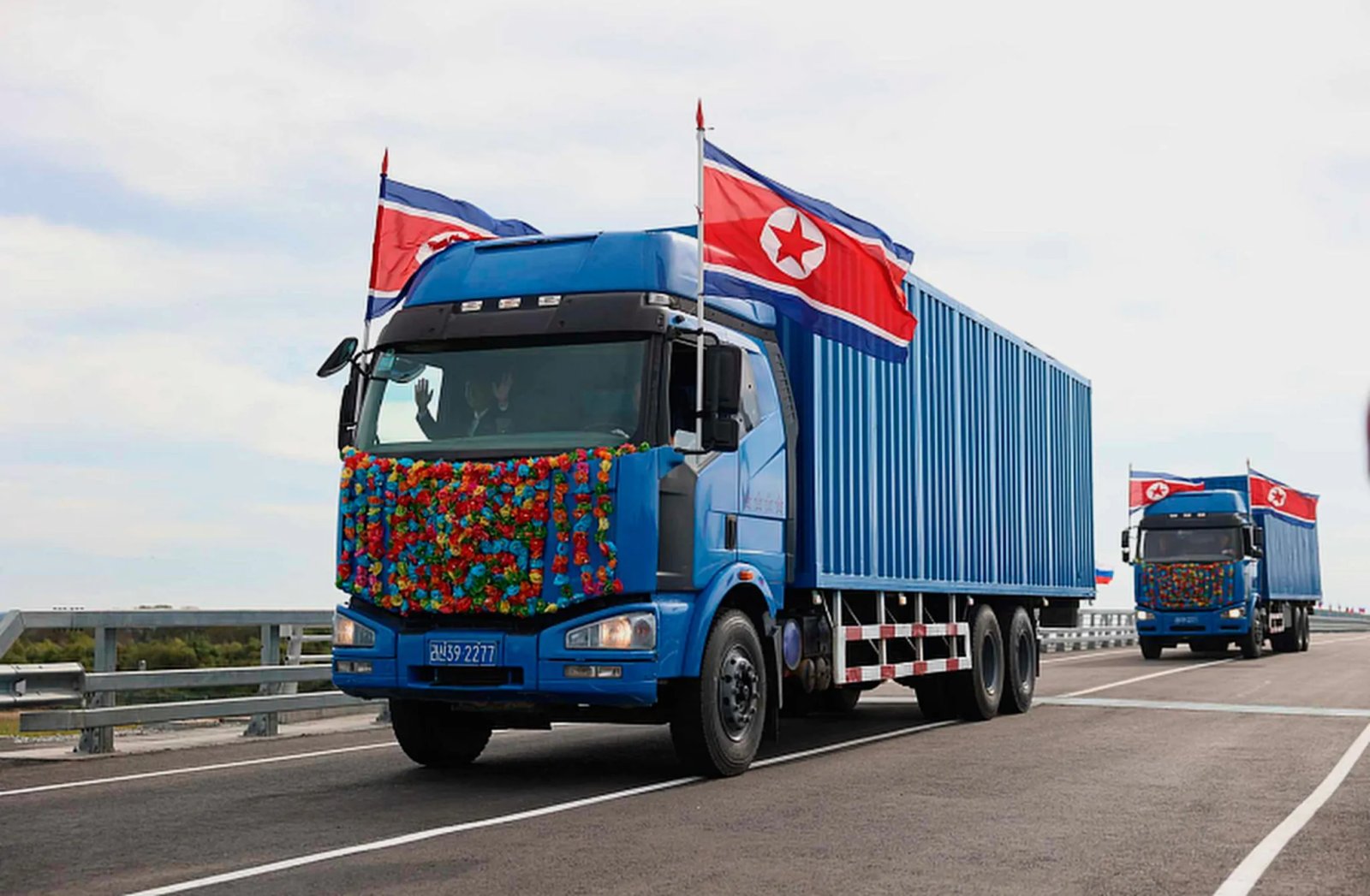
At the Tumen River border, Western spy satellites will have a harder time tracing individual tarpaulin-covered trucks than they did following the long, exposed rail cars that carried cargo between Russia and North Korea. The new road crossing allows vehicles to move through a two-lane corridor instead of waiting for cargo to be handled at the railway border station.
The Yakov Novichenko Bridge is 1 kilometer (0.6 miles) long and can carry 300 vehicles a day through a newly built border crossing. It links North Korea’s Rason with Russia’s Khasan, creating the physical route for a supply chain that can be dispersed among trucks and monitored less easily than a train.
Russia uses a broad rail gauge of 1,520 millimeters, while North Korea uses the standard 1,435-millimeter gauge. At the Tumangang-Khasan border station, cargo must be manually unloaded and reloaded, or railcars must undergo a time-consuming wheel-swapping process. The 67-year-old railway route has therefore been described by Russia’s state-run Tass news agency as insufficient for growing transportation needs. Road vehicles bypass that mechanical delay and can operate year-round.


The bridge is named after Yakov Novichenko, the Soviet officer credited with stopping a grenade from killing North Korean founder Kim Il Sung in Pyongyang in 1946. Kim Il Sung’s grandson, Kim Jong Un, is now sending troops to support Russia’s war in Ukraine.
North Korea and Russia agreed to build the bridge in 2024, and construction began last year. While North Korean soldiers were arriving in Kursk, Russian engineers were pouring concrete across the Tumen River.
South Korean and U.S. intelligence reports say North Korea has shipped more than 13,000 cargo containers of munitions to Russia, estimated to contain more than 8 million artillery shells, and has deployed more than 10,000 troops to assist Russia’s war effort. The road project was planned as part of a broader integration between the two countries, while Russia’s depleted ammunition reserves made the corridor more urgent.
At the simultaneous inauguration ceremonies in Rason and Khasan, Russian Prime Minister Mikhail Mishustin and North Korean Premier Pak Thae Song appeared by video link. “I am convinced that the expansion of transport infrastructure near the border will give a powerful boost to the further development of trade, economic, technological, scientific and cultural cooperation between the Russian Federation and the Democratic People’s Republic of Korea,” Mishustin said.
The public language presented a military supply corridor as a platform for scientific and cultural exchange. Trucks moving through the Rason Khasan transport corridor can carry people or small-scale freight, although experts say it remains unclear how much traffic the new crossing will generate.
Rason is the North Korean endpoint of the bridge. Later, its location matters beyond the movement of ordinary cargo.
North Korea’s official Korean Central News Agency quoted Pak as calling the bridge’s completion “a significant event adding a new dynamic movement to the overall bilateral cooperation.”
Rason is a warm-water port and the site of the Rason Special Economic Zone, which has historically served as a node for illicit maritime trade and ship-to-ship transfers designed to bypass UN sanctions. A direct road connection to Russia creates an overland supply route that can reduce reliance on sea transfers and remove some vulnerabilities associated with maritime monitoring.
There are concerns that the crossing could facilitate military equipment transfers or other trade prohibited by U.N. resolutions imposed over North Korea’s nuclear program. Vehicle traffic can be more difficult for satellites and other intelligence services to monitor than the aging rail route, where cargo is transferred between railcars at the border.
The existing railway and air service already connect the two countries. The new bridge adds a road route through the Tumen River border crossing, while China remains North Korea’s dominant commercial partner.
About 98% of North Korea’s external trade in 2025 was with China. South Korean officials said last year that at least 17 active road and rail links cross the North Korea-China border.