US to Resume Mexican Cattle Imports as Screwworm Protocol Reached
Shipments will restart at the Arizona border following a year-long trade pause triggered by the parasitic fly outbreak.
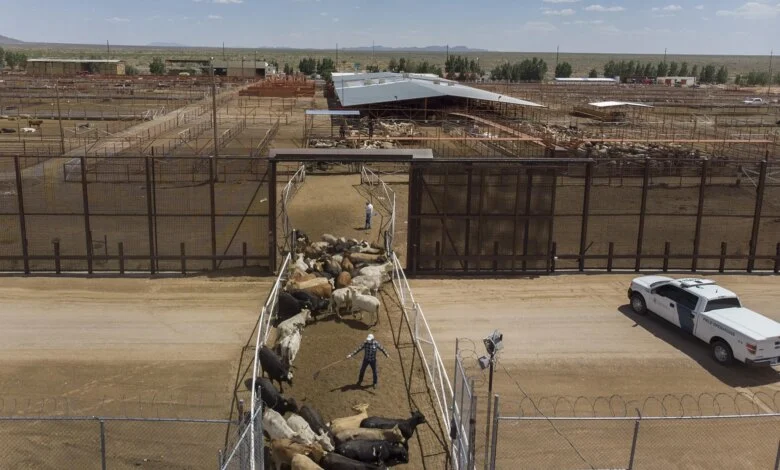
Cross-border livestock trade between the United States and Mexico is set to resume on August 24, ending a ban that lasted more than a year due to an outbreak of the flesh-eating New World screwworm.
The initial phase of the reopening will take place at the border port in Douglas, Arizona, opposite Agua Prieta in Mexico’s northern state of Sonora, according to the U.S. Department of Agriculture. Federal authorities plan to follow with subsequent openings at the Santa Teresa and Columbus crossings in New Mexico, though concrete dates for those locations have not been released.
Under a newly negotiated joint action plan, all incoming cattle will undergo physical examinations at American entry points to confirm animals are free of the larvae of Cochliomyia hominivorax, a parasitic fly whose maggots feed on the living tissue of warm-blooded animals, including humans.
Mexican President Claudia Sheinbaum confirmed the policy shift following a formal letter from U.S. Secretary of Agriculture Brooke Rollins, who noted that safety conditions at the Arizona port now permit the resumption of shipments. Claudia Sheinbaum emphasized that Mexican authorities are accelerating preparations to move herds through Sonora before extending operations into Chihuahua, a border state that recently recorded five screwworm cases.
The resumption comes as livestock producers in Mexico contend with significant financial damage. The country’s cattle industry estimates that the monthslong export halt generated multimillion-dollar losses, disrupting trade routes that traditionally ship hundreds of thousands of feeder cattle into Southwestern U.S. feedlots each year.
The screwworm resurgence presents a severe biological challenge for North America, where the parasite was largely eradicated decades ago through joint sterile-insect release programs. Since the current outbreak was first identified in Mexico in November 2024, the parasite has spread across 29 of the country’s 32 states, accumulating 1,792 active cases.
Despite the year-long import restrictions, the pest managed to breach U.S. territory last month. More than 30 screwworm cases have been confirmed across Texas and southeastern New Mexico, prompting heightened surveillance along major transit corridors.