Bitcoin Resilience Tested as Derivatives Signal Hedging Bias Amid Tech Sector Volatility
Professional traders remain cautious as Bitcoin decouples from the AI-driven Nasdaq slump.
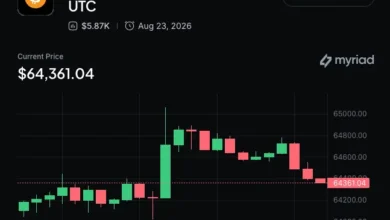
Bitcoin has demonstrated significant price stability near the $65,000 mark, effectively decoupling from a broader sell-off in the technology sector that has rattled traditional markets. While the digital asset has managed to avoid the sharp declines seen in high-valuation artificial intelligence and semiconductor stocks, professional traders are maintaining a cautious stance, according to recent derivatives data.
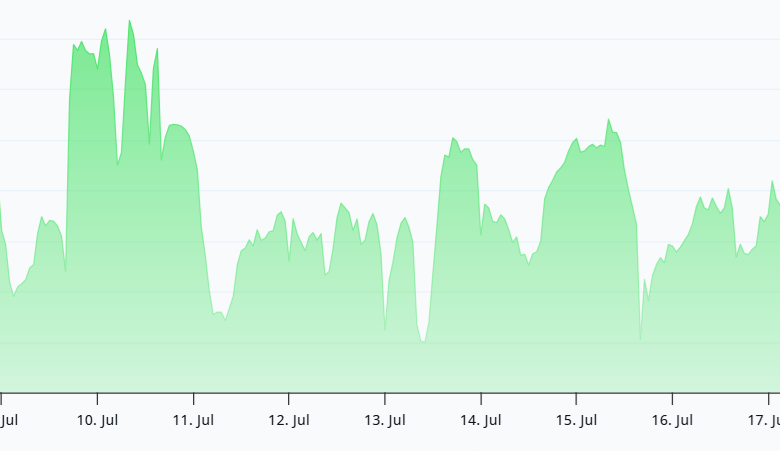
Market sentiment among institutional and large-scale traders remains tempered. The annualized funding rate for Bitcoin perpetual futures—a mechanism that balances the cost of holding long versus short positions—held steady at approximately 8% this week. This neutral reading suggests a lack of aggressive bullish leverage, contrasting with the double-digit rates typically observed during periods of high-conviction rallies. Historically, funding rates above 12% indicate a market leaning heavily toward long positions, a level not sustained since early July.
The divergence between crypto and equity markets became more pronounced as the Nasdaq-100 Index slipped below the 28,800 level. This retreat was driven largely by profit-taking in the AI sector, affecting major players like Intel, ARM, and Nvidia. Despite the downward pressure on tech-heavy indices, Bitcoin climbed above $65,000 on Monday, bolstered in part by news that major corporate holders are shoring up their balance sheets.
MicroStrategy, the largest corporate owner of Bitcoin, recently disclosed a successful $263 million capital raise through common stock sales. This move has increased the firm’s cash reserves to roughly $3.22 billion, providing a buffer against its significant debt obligations, including billions in convertible debt maturing in 2028 and 2029. By strengthening its liquidity, the company has eased market concerns regarding potential forced liquidations of its Bitcoin holdings to cover dividend payments or debt servicing.
However, the options market tells a more defensive story. The 30-day options delta skew—a metric that compares the cost of bearish put options to bullish call options—stood at 13% on Monday. In a balanced market, this figure typically fluctuates between -6% and +6%. The current premium on put options indicates that “whales” and market makers are actively paying more to hedge against potential downside risks rather than betting on an immediate breakout toward the $70,000 psychological barrier.
The broader macroeconomic environment continues to exert pressure on all risk assets. U.S. five-year Treasury yields climbed to 4.33% this week, up from 4.22% in mid-month. Rising yields often signal that investors are demanding higher returns to hold government debt, reflecting concerns over fiscal expansion and persistent inflation. This shift has coincided with a downward trend in gold prices, suggesting that traditional safe havens are also grappling with a shifting global economic outlook.
Geopolitical instability in the Middle East has further complicated the risk landscape. Tensions involving Iran and recent military strikes in the region have kept investors on high alert, often triggering a flight to liquidity. While Bitcoin’s recent strength suggests it may be viewed by some as a hedge against monetary base expansion, the lack of bullish momentum in derivatives markets indicates that the path to higher valuations remains fraught with institutional skepticism. Analysts suggest that a sustained rally may depend on upcoming corporate earnings reports, particularly if the AI sector fails to meet high growth expectations, potentially driving further capital toward decentralized assets.