Why Modern Smart TVs Still Rely on Decades-Old Infrared Remotes
Despite the rise of Bluetooth and voice controls, legacy infrared technology remains an essential fallback for modern home entertainment.
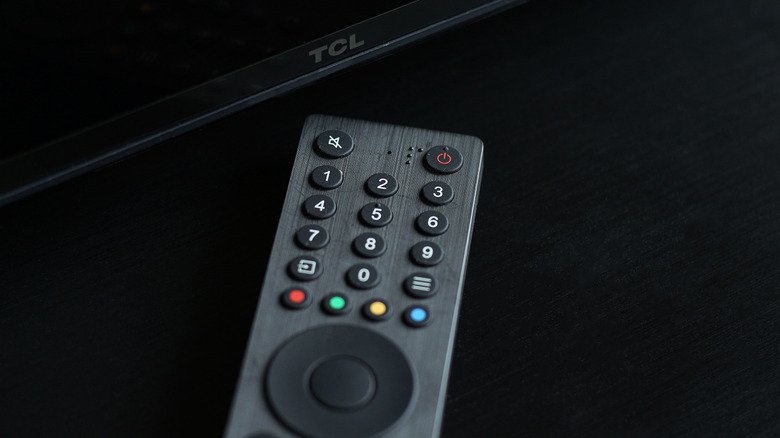
Modern smart televisions are packed with advanced wireless capabilities, yet one of the most persistent technologies in living rooms is also one of the oldest: infrared (IR). Despite the widespread adoption of Bluetooth-enabled remotes that support voice commands and motion controls, manufacturers continue to equip devices with decades-old IR transmitters. This dual-system approach is not an oversight, but a deliberate engineering choice driven by power management, initial setup requirements, and universal compatibility.
The evolution of television control began long before wireless signals became standard. In 1950, the Zenith Radio Corporation introduced “Lazy Bones,” the first television remote, which was physically tethered to the receiver by a long cable. Five years later, the “Flash-Matic” debuted as the first wireless remote, utilizing a beam of visible light directed at photo cells on the television cabinet. By the 1980s, infrared technology emerged as the industry standard, utilizing light-emitting diodes (LEDs) to transmit pulses of invisible light decoded by a receiver on the television.
Today, even the most sophisticated smart TVs rely on this legacy technology for critical operations. When a television is in standby mode, it must comply with strict energy-efficiency regulations, such as those established by the U.S. Department of Energy, which limit standby power consumption. Keeping a Bluetooth receiver active and searching for signals in standby mode consumes significantly more energy than keeping a passive IR receiver alert. Consequently, many modern remotes use infrared exclusively to transmit the initial power-on command, switching to Bluetooth only after the television has fully booted up.
Furthermore, Bluetooth devices require a pairing process to establish a secure connection. During the initial setup of a new television, or if a remote loses its wireless connection, Bluetooth functionality is unavailable. In these scenarios, the remote control seamlessly defaults back to infrared signals, allowing users to navigate menus and complete the pairing process. Without this built-in fallback, users would have no way to interact with their screens out of the box.
From a manufacturing standpoint, infrared technology is incredibly cost-effective. Decades of mass production have reduced the cost of IR transmitters and receivers to mere pennies. Additionally, the legacy standard ensures backward compatibility with a vast ecosystem of home theater equipment, including older soundbars, AV receivers, and media players.

While Bluetooth offers clear advantages—such as eliminating the need for a direct line of sight and enabling advanced features managed by the Bluetooth Special Interest Group (SIG)—it has not entirely replaced its predecessor. Instead, the two technologies coexist. While Bluetooth handles high-bandwidth tasks like voice search and navigation, infrared remains the silent, reliable backbone of home entertainment control, ensuring that the television can always be turned on, regardless of software status or pairing issues.