2026 Hyundai Palisade Calligraphy Review: A Flagship That Punches Far Above Its Weight
The range-topping Calligraphy trim offers Range Rover levels of luxury with a much more accessible price tag.

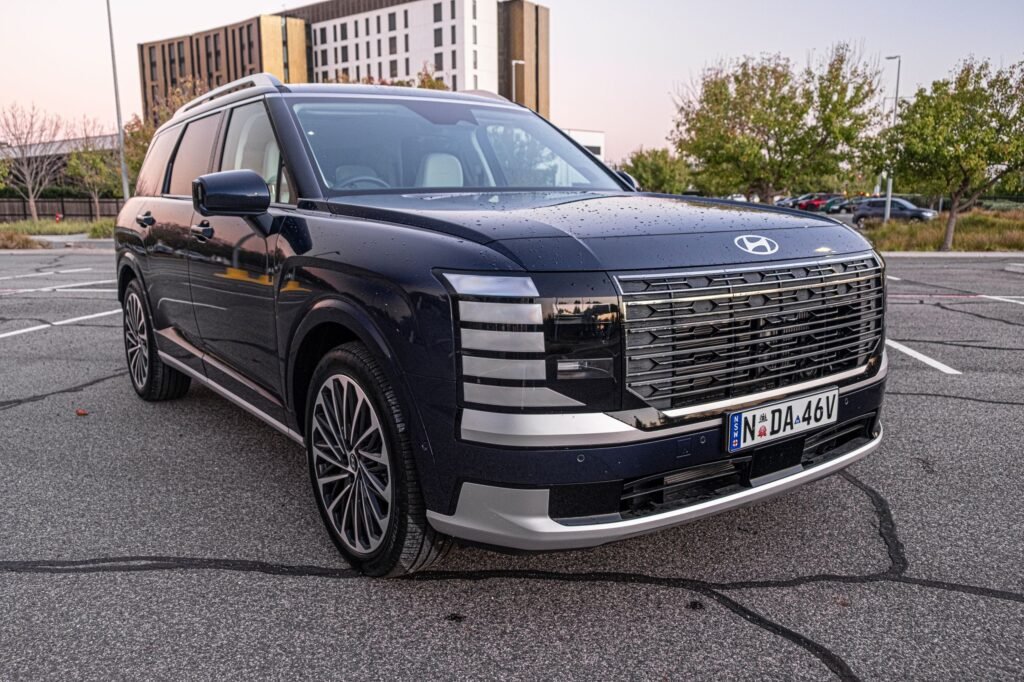
Hyundai has spent the better part of the last decade executing a masterclass in brand elevation. What was once a budget-focused marque has evolved into a design-led powerhouse, consistently delivering vehicles that challenge the established hierarchy. When the fifth-generation Santa Fe debuted, the automotive world immediately drew parallels to the Range Rover. Now, with the arrival of the fifth-generation 2026 Hyundai Palisade, the Korean automaker is moving even closer to that flagship ideal. In its range-topping Calligraphy trim, the Palisade doesn’t just feel like a well-appointed family hauler; it feels like a legitimate alternative to luxury icons like the Range Rover Autobiography, but at a fraction of the cost.
In the Australian market, the new Palisade is offered in three distinct configurations: the Elite eight-seater, the Calligraphy eight-seater, and the Calligraphy seven-seater. Our time was spent in the latter, which represents the pinnacle of the lineup. In Australia, Calligraphy pricing starts at AU$98,338 (approximately US$70,180) for the eight-seat version and nudges up to AU$99,390 (US$70,900) for the seven-seat model. For American buyers, the Palisade Calligraphy starts at a more accessible $54,560. To put that into perspective, a Range Rover Autobiography in Australia starts north of AU$313,000 (US$225,000). While this flagship Hyundai is certainly pricey for the brand, it remains a relative bargain compared to the European elite, and it isn’t even the most expensive SUV in the showroom—that honor belongs to the all-electric Ioniq 9 Calligraphy, which starts at AU$128,513.

Under the hood, Australian models benefit from a sophisticated hybrid all-wheel-drive powertrain. This system pairs an all-new 2.5-liter turbocharged four-cylinder engine with an electric motor to produce a combined output of 245 kW (328 hp) and 460 Nm (339 lb-ft) of torque. The engine itself contributes 192 kW (257 hp) and 353 Nm (260 lb-ft). Interestingly, while U.S. shoppers can opt for a 3.5-liter naturally-aspirated V6, that engine actually offers less grunt, peaking at 214 kW (287 hp) and 353 Nm (260 lb-ft). The hybrid setup is the clear winner here, providing the low-end torque necessary to move this 2,294 kg (5,057 lbs) SUV with surprising urgency, clocking a 0-100 km/h (62 mph) sprint in just under 7 seconds.
The interior is where the Palisade Calligraphy truly earns its flagship status. While the Santa Fe and Ioniq 9 feature similar twin 12.3-inch screens, the Palisade integrates them into a high, thick dashboard rather than perching them on top. This architectural choice creates a more cohesive, high-end aesthetic. Below the central infotainment display, Hyundai has retained physical shortcut buttons and toggles—a welcome relief from the industry’s trend toward screen-only interfaces. However, the buttons for Hill Descent Control and the parking cameras are tucked away to the left of the vents, making them a bit of a reach for the driver while in motion.
Practicality and luxury coexist seamlessly in the cabin. The massive center console houses a wireless charging pad and three 100-watt USB-C ports. It also features a UV-C sterilization system, a clever carryover from the Santa Fe that can sanitize small personal items in about 10 minutes. The materials are equally impressive, featuring a two-tone Nappa leather steering wheel and seats that offer heating, ventilation, and massage functions for the driver. A 14-speaker Bose audio system and twin sunroofs further enhance the premium atmosphere.
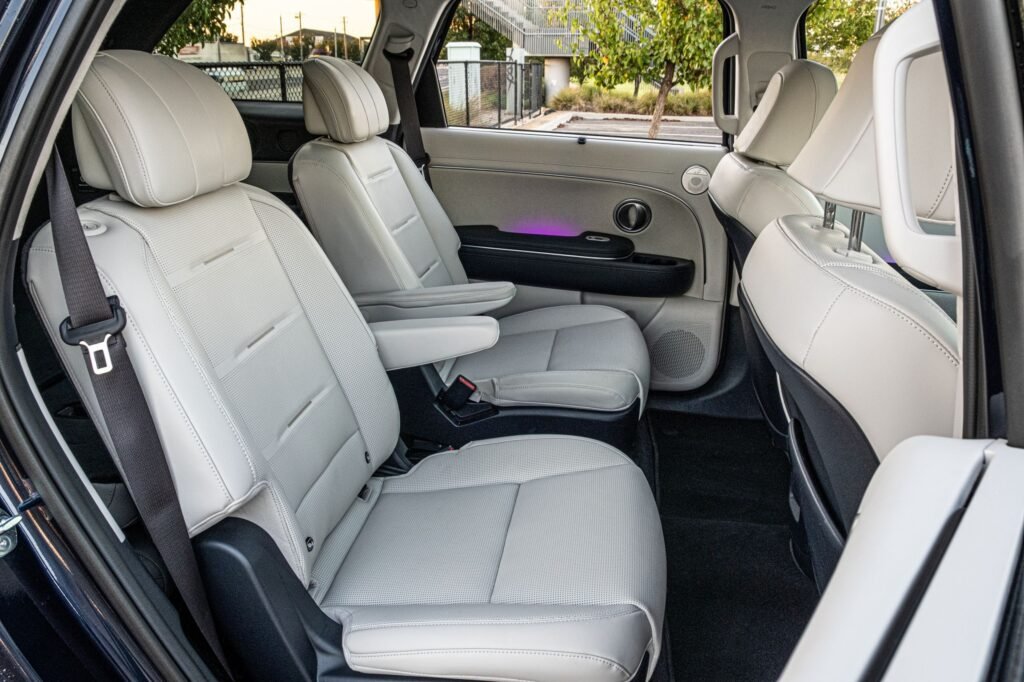
In the seven-seat configuration, the second row is replaced by two electrically adjustable captain’s chairs. These seats are heated, ventilated, and equipped with manual sunshades, making them ideal for long-distance travel. Access to the third row is effortless thanks to a single-button mechanism that slides the second-row seats forward. Remarkably, the third row is genuinely adult-friendly, offering heated outboard seats and additional 100-watt chargers. Cargo capacity remains competitive, offering 300 liters (10.5 cubic feet) with all seats up, expanding to 2,081 liters (73.4 cubic feet) when both rear rows are stowed.
On the road, the Palisade Calligraphy prioritizes comfort. Hyundai’s Australian team spent significant time tuning the passive suspension for local conditions, and the result is a ride that soaks up imperfections beautifully. Unlike the Mazda CX-90, which can sometimes feel floaty, the Palisade settles quickly after hitting bumps, providing a reassuring sense of stability. While the soft setup does result in noticeable body roll through tight corners, it’s a fair trade-off for the vehicle’s primary mission as a long-distance cruiser. The 2.5-liter turbocharged four-cylinder hybrid powertrain is generally excellent, though it lacks the absolute silence of the smaller 1.6-liter hybrid found in the Santa Fe. Under heavy load, the engine can be vocal, and we noted a slight amount of throttle hang, but these are minor quibbles in an otherwise refined package.
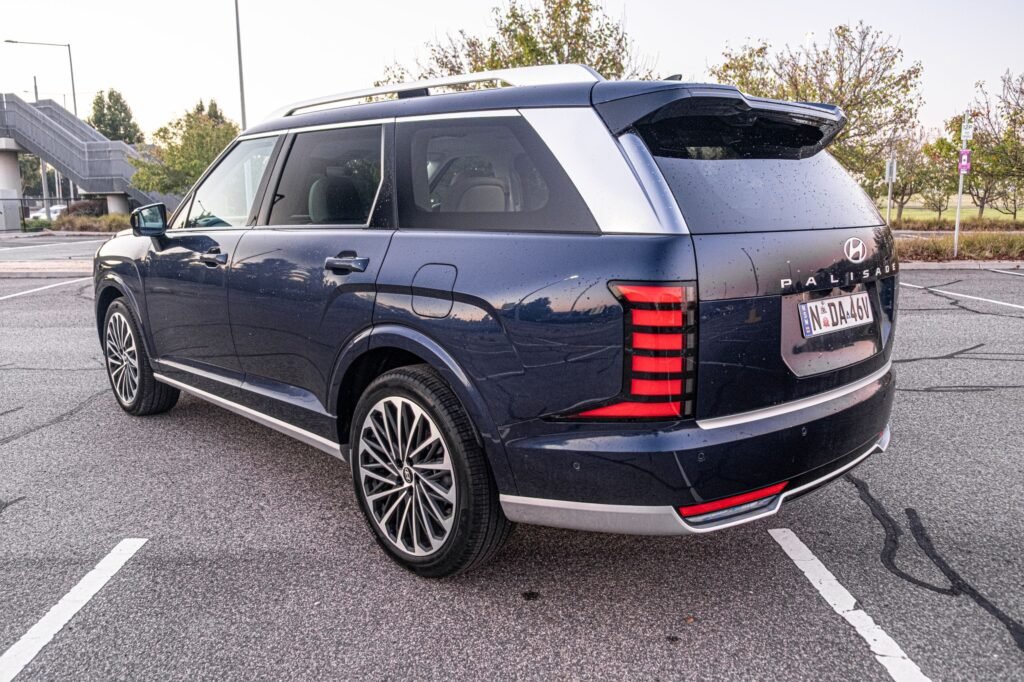
Efficiency is another strong suit. Despite its size, the Palisade averaged 8.0 l/100 km (29.4 US mpg) in a mix of suburban and highway driving. While this is slightly higher than the official 6.8 l/100 km (34.5 US mpg) rating, it is impressive for a vehicle of this stature. Maneuverability is aided by an 11.94-meter (39.1-foot) turning circle, though the sheer scale of the Palisade is always apparent in tight urban environments. Double-laminated windows do an excellent job of suppressing wind and tire noise, ensuring the cabin remains a sanctuary at highway speeds.
Ultimately, the 2026 Hyundai Palisade Calligraphy is a triumph of engineering and market positioning. It offers a level of interior opulence and powertrain sophistication that makes it a compelling alternative to more expensive luxury SUVs. While it faces stiff competition from the Toyota Grand Highlander and the Mazda CX-90, the Palisade’s blend of technology, comfort, and sheer presence makes it one of the few vehicles in its class that truly feels special. For large families who want the luxury experience without the luxury badge tax, the Palisade Calligraphy is the new benchmark.