Tech Billionaires Spend Millions to Defeat California Proposition 40 Wealth Tax
Campaign records reveal heavy tech funding against a proposed 5% tax expected to raise $100 billion.
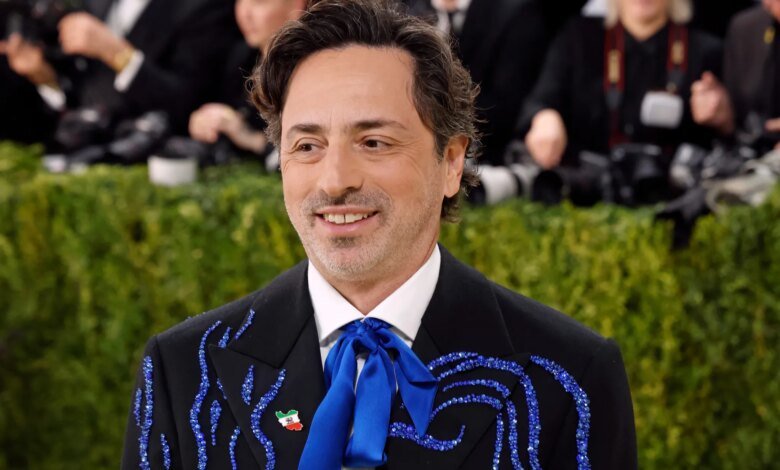
Prominent Silicon Valley founders and venture capitalists are pouring millions of dollars into political committees aimed at defeating Proposition 40, a November ballot measure that would impose a one-time 5% wealth tax on California’s billionaires.
Campaign finance filings reveal that crypto billionaire Chris Larsen personally donated $5 million to Golden State Promise, an anti-Proposition 40 political action committee. Ripple Labs, the company Larsen cofounded, contributed an additional $5 million to the committee.
Another committee opposing the measure, representing doctors, teachers, and small businesses, received $5 million from Building a Better California. Campaign records identify Google cofounder Sergey Brin and longtime venture capitalist John Doerr as the top financial backers of Building a Better California. Brin has recently reduced his official and financial ties to the state.
Palantir cofounder Peter Thiel contributed $3 million to the California Business Roundtable Issues PAC, which in turn directed $450,000 to Golden State Promise. Thiel officially severed ties with California in 2025 in advance of the wealth tax proposal.
An analysis by Wealth Management indicates that a resident with a net worth of $1.1 billion would face a $55 million tax liability under the proposed law. If passed, the ballot measure is projected to raise $100 billion over five years from approximately 250 billionaires. State plans call for earmarking 90% of those funds for health care, with the remainder supporting food assistance and education.
The ballot measure has triggered intense debate over whether taxing extreme wealth threatens the state’s startup ecosystem. Entrepreneur Mark Cuban warned on X that the policy misinterprets paper wealth, writing that “if this passes, only idiot startup founders stay in Cali” because many founders lack liquid cash to pay massive upfront bills.
Rep. Ro Khanna (D-Calif.), a prominent defender of the measure, pushed back against Cuban’s argument, noting that truly illiquid paper billionaires represent only a fraction of the targeted population. Khanna suggested a framework allowing cash-poor founders to transfer startup shares to the state as collateral for a loan to satisfy the tax obligation, asserting that the government would still collect from the vast majority of billionaires who hold liquid assets.
Addressing liquidity concerns, Emmanuel Saez, director of UC Berkeley’s James M. and Cathleen D. Stone Center on Wealth and Income Inequality and co-author of an expert report on Proposition 40, noted that founders without immediate cash can utilize a deferral option. Under that mechanism, individuals pay 5% on future business proceeds, such as dividends or stock sales. “If the business fails, they won’t have to pay anything,” Saez said. “If the business succeeds, they’ll have to pay 5% of that success eventually.”
The debate extends beyond state lines. In March, Khanna and Sen. Bernie Sanders (I-Vt.) introduced federal legislation proposing an annual 5% wealth tax on Americans worth more than $1 billion, designed in part to fund $3,000 payments to lower- and middle-income households.