Midtown Structural Failure Signals Growing Pains in New York’s Record Office-to-Residential Conversion Push
Buckling columns at the former Pfizer HQ highlight the engineering hurdles of NYC’s residential redevelopment surge.
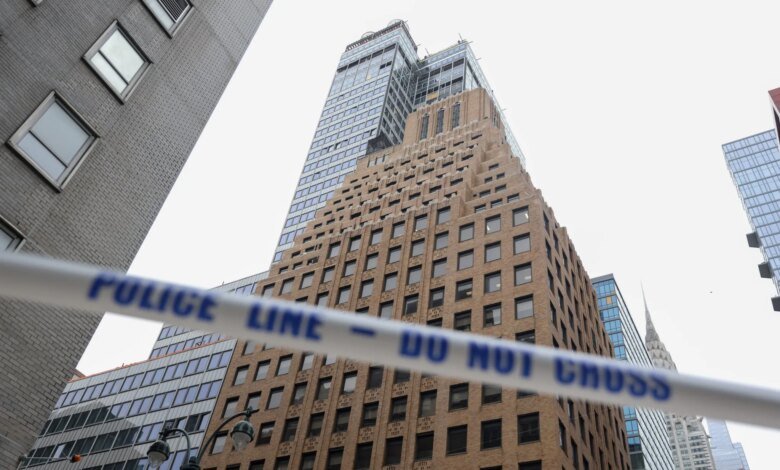
The structural failure at the former Pfizer world headquarters this week has cast a spotlight on the engineering complexities of New York City’s aggressive pivot toward residential redevelopment. The 33-story tower at 235 East 42nd Street, a 1960s-era landmark, is currently the centerpiece of the largest office-to-residential conversion in U.S. history, a project slated to deliver approximately 1,600 apartments to the Midtown market.
Emergency crews were dispatched Tuesday morning following reports of falling masonry, leading to the discovery of two buckling support columns on the 21st floor. According to the FDNY, the structural instability caused floors to sag as high as the 26th story, prompting the evacuation of nine surrounding buildings and the establishment of a multi-block “frozen zone.” While the FDNY initially suggested steel quality as a contributing factor, forensic and structural engineer Joseph Di Pompeo argued that the visual evidence points toward a loading error rather than material deficiency.
Di Pompeo, who has provided expert testimony before New York City Department of Buildings review boards, noted that buckling is typically governed by the load a column carries and the distance between its braces. He suggested that either the engineering failed to account for the weight of the conversion or the construction sequencing overloaded specific structural elements.
Metro Loft founder Nathan Berman, whose firm is partnering with David Werner Real Estate Investments on the project, characterized the incident as a “typical construction mishap” caused by the added weight of new floors. Berman told reporters the project remains well-engineered despite the “freak accident” involving two specific columns that could not sustain the load. The site had already recorded seven Department of Buildings violations and $15,000 in fines over the previous year, primarily for falling debris.
The incident occurs as New York leads all U.S. metropolitan areas in adaptive reuse, with more than 16,000 units currently in the conversion pipeline. Developers are projected to begin 9.5 million square feet of new office-to-residential conversions in 2026 alone, a pace that doubles the activity seen in 2023 and nearly twice the city’s previous peak in 2008. This surge is driven by a commercial real estate market where, according to Goldman Sachs estimates, office prices may need to retract by 50% to make large-scale conversions financially viable.
While Di Pompeo noted that minor structural issues are frequent during major construction and often go unreported, the scale of the Pfizer project and its location in a high-density corridor amplified the public impact. The installation of emergency shoring began Tuesday night to stabilize the affected 21st-floor section.