Why Sports Tech Failures Offer a Warning for Corporate AI Adoption
Video review technology highlights the crucial boundary between data measurement and human judgment in high-stakes decisions.
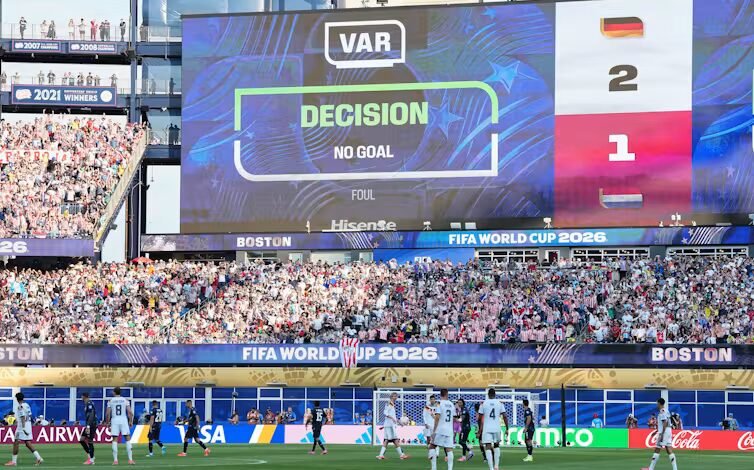
The widespread integration of artificial intelligence into corporate management, legal evaluations, and hiring processes is running into a surprisingly familiar obstacle: the unexpected side effects of video assistant referee technology in professional sports. According to analysis by Pooya Tabesh, an associate professor of management at California State University, Los Angeles, the public friction surrounding sports replay systems provides a direct model for why automated decision systems often fail to build organizational trust.
When sports federations adopted technology like Video Assistant Referee (VAR) in soccer, Hawk-Eye in tennis, and replay reviews in Major League Baseball, executive boards anticipated that higher camera density and tracking sensors would eliminate controversial calls. Instead, the implementation revealed a stark line between pure measurement tasks and qualitative interpretation.
Spatial tracking and optical sensors can resolve clear binary questions, such as whether a tennis ball landed outside a boundary line or whether a player crossed an offside line. However, technology cannot independently define subjective standards, such as whether physical contact was forceful enough to warrant a penalty or if a tackle was executed recklessly. In corporate settings, algorithmic systems handle data classification and anomaly detection efficiently, but human oversight remains essential to interpret the operational consequences of those outputs.
Rather than eliminating human discretion, automated review mechanisms simply relocate where subjectivity exists within a system. In professional sports leagues, debates moved from evaluating a referee’s real-time eyesight to disputing review protocols, intervention thresholds, and the definition of what constitutes a clear and obvious error.
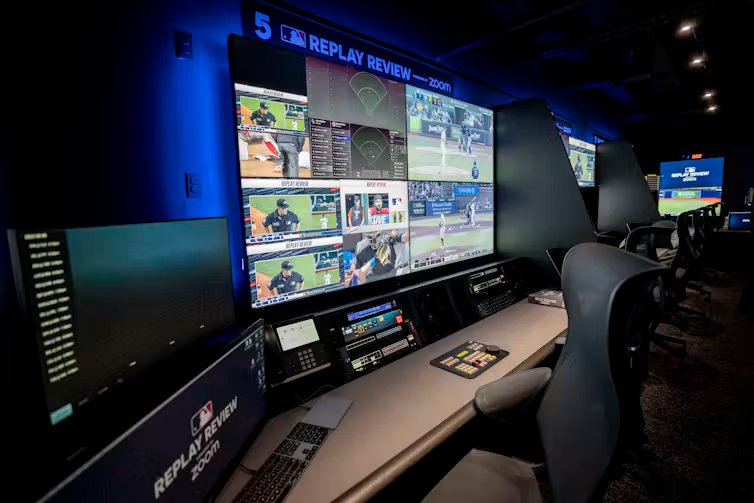
In corporate environments, executives often deploy machine learning models under the premise of removing human bias from evaluations. Yet, discretion re-emerges during system design, specifically when choosing training datasets, setting acceptable error thresholds, and establishing operational governance. When stakeholders perceive an algorithm as inconsistent, trust deteriorates rapidly. Academic research on algorithm aversion demonstrates that individuals lose confidence in automated systems far faster after witnessing a single visible error than they do when evaluating human error rates.

Sub-centimeter technical precision can paradoxically erode overall system legitimacy. When sports fans or job applicants are promised absolute objectivity through high-tech tools, their expectations rise faster than the technology’s ability to resolve ambiguous scenarios. A millimeter-accurate offside tracking metric creates an expectation of perfection that crumbles whenever subjective foul calls remain disputed, heightening public skepticism.
Management frameworks increasingly categorize institutional decisions into three distinct tiers: tasks suitable for complete automation, complex scenarios requiring human-AI collaboration, and high-stakes choices that must remain strictly human. Routine data scanning and pattern recognition align with automated processing, whereas decisions involving ethical accountability, contextual fairness, and organizational values require human judgment. Organizations attempting AI integration must determine which components of a workflow benefit from computational processing and which aspects must preserve human discretion.