Russian Missile Crash in Poland Escalates Regional Alarm as Air Strikes Devastate Ukraine
A massive Russian aerial attack kills civilians across Ukraine and leaves a missile crater in Poland, exposing serious air defense gaps.
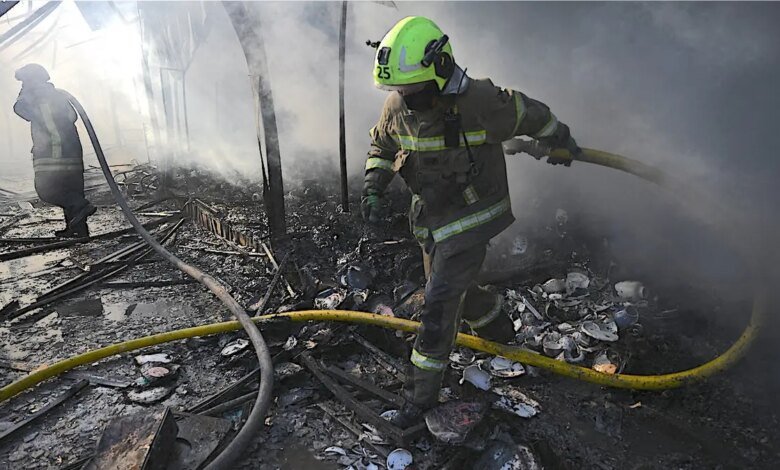
A massive aerial assault involving over 350 Russian missiles and attack drones ripped through Ukrainian cities early Thursday, causing fatal destruction in residential areas and triggering an immediate military response along NATO‘s eastern frontier.
Fighter jets from the Polish Air Force were scrambled after radar units detected an unidentified aerial object crossing into western airspace shortly before 4 a.m. The projectile disappeared from radar minutes later, leaving a 33-foot crater and scattered debris across farmland in Tarnawa-Kolonia, roughly one mile from the nearest residential structures.
Polish Prime Minister Donald Tusk confirmed that preliminary physical evidence points to a Russian Kh-101 cruise missile. Tusk stated that Polish armed forces were prepared to shoot down the projectile had it tracked toward populated areas, adding that United States officials are assisting in the on-site investigation. Tusk remarked to reporters that the trajectory of the broader conflict could reach a decisive juncture within the next 100 days.
The intrusion highlights growing security concerns along the NATO collective defense framework boundaries. The Kh-101 is an air-launched, low-observable cruise missile designed for low-altitude flight to evade radar detection, making cross-border navigational errors or detours particularly hazardous along allied territory.
Across Ukraine, the overnight bombardment resulted in at least eight deaths and left dozens injured. Near Kryvyi Rih, six members of a single family, including two young girls aged 5 and 12, were killed when a Russian Iskander-M ballistic missile smashed into a private residence. Additional fatalities and casualties were recorded across Kyiv, Dnipropetrovsk, Poltava, and Lviv.
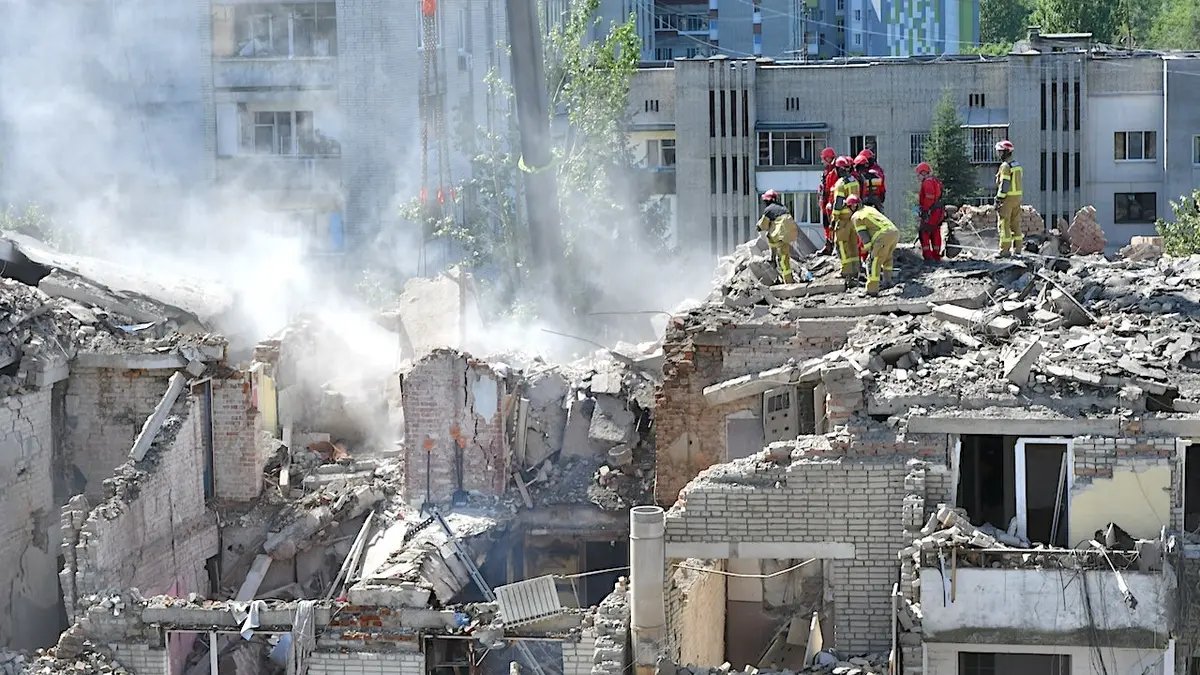
In Lviv, located roughly 40 miles from the Polish border, emergency teams extracted residents from collapsed multi-story apartment buildings. Local authorities reported 30 casualties alongside severe structural damage to more than 20 residential buildings, an educational institution, and two kindergartens. In Kyiv, falling debris and direct impacts damaged storage facilities, residential units, and commercial markets during an air alert that kept thousands sheltered in underground subway stations for over five hours.
Ukrainian air defense forces reported intercepting 55 cruise missiles and 265 attack drones out of the approximately 350 incoming aerial weapons. However, military command emphasized a critical vulnerability against ballistic vectors: defenders intercepted only one of nine incoming ballistic missiles. Eleven missiles and 17 drones struck 20 separate locations nationwide.
Ukrainian President Volodymyr Zelenskyy renewed urgent calls to Western partners for immediate supplies of air defense interceptors. The U.S.-manufactured Patriot system remains the principal defense asset capable of intercepting high-velocity ballistic weapons like the Iskander-M.
<img src="https://nile1.com/en/wp-content/uploads/2026/07/1785414002_644_gettyimages-2287371602-scaled.jpg" alt="Volodymyr Zelenskyy visited the Oval Office and President Donald Trump this week.” width=”1200″ height=”675″ />
Zelenskyy recently returned to Kyiv following a visit to Washington, where he met with President Donald Trump and defense executives at Lockheed Martin to explore licensing agreements for co-producing Patriot interceptors inside Ukraine. While domestic manufacturing offers a long-term strategic objective, officials acknowledge it cannot resolve immediate tactical shortages.
Hours after the attack, the European Union transferred $4 billion to Kyiv to fund the acquisition of air defense systems, missiles, drones, and fighter jets. The funding represents the latest tranche of an EU credit line exceeding $100 billion, following disbursements of $3.5 billion and $4.5 billion in late June.
Simultaneously, the U.S. Senate advanced the Lindsey O. Graham Sanctioning Russia and Iran Act of 2026 through procedural votes of 86-12 and 84-12. Named after the late South Carolina senator following his recent passing, the proposed legislation includes measures imposing up to 100% tariffs on primary purchasers of Russian energy and tightening financial restrictions on entities facilitating sanctions evasion.