Elon Musk Net Worth Drops $750 Billion as SpaceX Stock Slumps and Tesla Margins Contract
Plunging SpaceX shares and narrowing Tesla profit margins wipe out hundreds of billions as X Money launches.
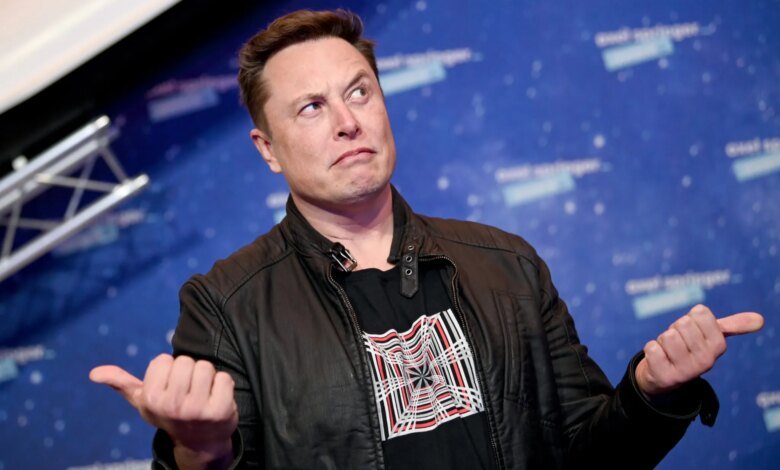
A dramatic valuation reset across his flagship ventures has wiped out roughly $750 billion of Elon Musk’s wealth in just six weeks, dragging his net worth below the $700 billion mark and ending his brief reign as history’s first trillionaire. According to data tracked by Forbes, Musk’s personal fortune currently stands at approximately $695.7 billion, down precipitously from a peak of $1.45 trillion following Space Exploration Technologies Corp.’s initial public offering in June.
The swift drawdown—representing paper losses nearly equal to the combined fortunes of Alphabet co-founders Larry Page and Sergey Brin, alongside Amazon founder Jeff Bezos—has been fueled by heavy selling in both SpaceX and Tesla. SpaceX shares extended their downward path this week, dropping another 4.8% on Monday to roughly $109.50. The rocket manufacturer has seen its equity value plunge by nearly 50% from its June 16 peak, weighed down by delayed Starship test flights, an impending August 6 post-IPO lockup expiration, and a massive $60 billion all-stock acquisition of AI coding platform Cursor that significantly diluted existing shareholders.
Concurrently, Tesla suffered its sharpest single-day stock decline in over a year on July 23, falling 14.5% following its second-quarter earnings presentation. Although the electric vehicle maker recorded record top-line revenue, operating margins eroded sharply to 1.4% from 4.1% a year earlier. Adjusted earnings arrived at $0.33 per share, significantly missing Wall Street expectations of $0.51 to $0.54. The profit squeeze stemmed from persistent vehicle price reductions aimed at defending market share, alongside a 142% surge in capital expenditure allocated toward autonomous robotaxis, the Optimus humanoid robot project, and artificial intelligence infrastructure. The quarterly disappointment prompted major investment banks, including JPMorgan and Mizuho, to cut their price targets for the EV manufacturer.
Addressing the drawdown on his social network X on July 24, Musk acknowledged the shift simply by posting “(Former) Trillionaire.” Yet the retreat in personal holdings coincides with a major commercial step for his social media platform. On July 27, X began rolling out X Money to Premium and Premium+ subscribers. Designed as an integrated financial ecosystem, the tool offers a digital wallet featuring deposit accounts, fee-free peer-to-peer money transfers, and a physical metal Visa debit card linked directly to a user’s account handle. The initiative fulfills a core component of a plan Musk outlined in a 2022 investor pitch deck to transform X into a multi-service “everything app” akin to Tencent Holdings Ltd.’s WeChat in China, following a strategic partnership signed with Visa in early 2025.
The simultaneous rollout of a consumer banking tool and the loss of hundreds of billions in personal paper wealth stand in stark contrast to Musk’s recent philosophical assertions regarding the long-term utility of capital. In a recent interview at Tesla’s Austin Gigafactory with The Economist editor-in-chief Zanny Minton Beddoes, Musk projected that money will lose its systemic function by 2036. He reiterated similar predictions during discussions with XPRIZE founder Peter Diamandis and on the People by WTF podcast, arguing that advanced robotics and artificial intelligence will eventually generate an unprecedented level of material abundance. Under this theoretical framework, automated production will surpass human labor allocation needs, effectively rendering wage structures, retirement savings, and monetary systems obsolete in favor of universal resource availability.
However, industry analysts and venture capitalists have voiced skepticism regarding the economic timeline. Venture capitalist Vinod Khosla noted in Fortune that such post-scarcity projections rely heavily on political frameworks willingness to distribute AI-driven productivity gains equitably across society, pointing out that technological capacity alone does not resolve systemic distribution challenges. Meanwhile, investors in Musk’s enterprise portfolio remain focused on near-term operational milestones, with SpaceX set to report its inaugural quarterly earnings as a public entity on August 4 following the successful 13th test flight of its Starship vehicle on July 25.