Satellite Telecom Startup Northwood Targets Ground Bottlenecks as Commercial Space Market Scales
With $136 million raised and initial defense contracts, Northwood Space targets technical execution and satellite unit economics.
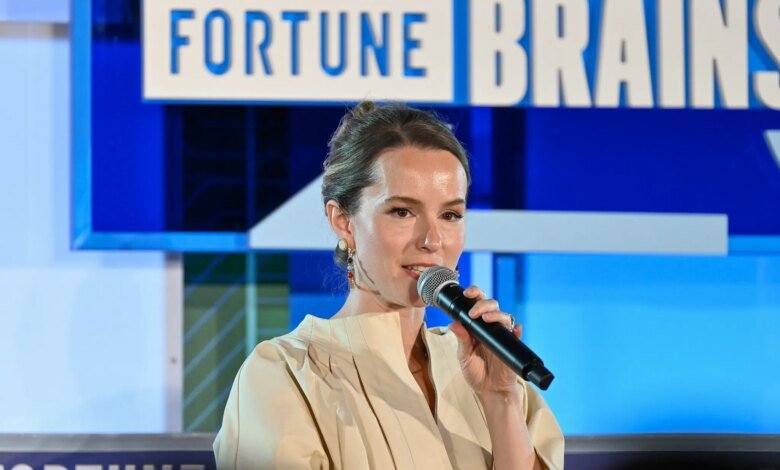
Ground infrastructure startup Northwood Space Inc., backed by $136 million in funding, is executing on contracts with the Space Development Agency and a division of the U.S. Space Force as commercial satellite operators face growing pressure to achieve cost parity with terrestrial communications networks.
The company, co-founded in 2022 by chief executive Bridgit Mendler, is targeting high-capacity orbital data transport—a segment emerging as a critical bottleneck for expanding low-Earth orbit constellations. The shift comes as commercial space ventures transition from establishing basic flight feasibility to proving unit economics, operational reliability, and scale.
Growth across military, enterprise, and consumer satellite markets has validated demand, particularly as SpaceX’s Starlink network expanded past 12 million subscribers. However, venture-backed space entrants face severe operational limits where single hardware failures can eliminate capital equipment.
“The best case scenario is that folks are able to execute and deliver,” said Mendler. “Everything a space operator says they can do, they can do. If companies can technically execute, we know the budgets on the government side are growing, market demand on the commercial side is growing, and you only need to look at Starlink to know demand is there on the consumer side.”
Technical complexity remains the primary hurdle for space infrastructure startups seeking long-term commercial sustainability in a capital-intensive sector with limited margin for error.
“Space is just hard, and executing against missions is really technically complex,” said Mendler. “You can only build a certain amount of product and launch them into space. If they burn up in the atmosphere, what are you going to do the next time? You may not get a second chance. The market is there, there are good demand signals. And there’s a certain number of viable businesses, but there aren’t a million viable businesses in space either.”
Uncontrolled craft rotation presents a major operational risk for ground network integration, directly impacting antenna alignment and signal lock with terrestrial stations during downlink windows.
“Once a spacecraft starts spinning or moving, it’s really hard to recover,” said Mendler. “It’s harder to connect with the antenna that might be pointing away from Earth. You can’t just reach up and move an antenna on a satellite. So, you have to figure out a way to communicate with it even under those conditions.”
The commercial feasibility of low-Earth orbit satellite architectures has altered historical cost structures, forcing new space entrants to compete directly against terrestrial fiber and data center infrastructure.
“What SpaceX and Starlink have represented to me is that the economics of space have just changed,” said Mendler. “There were so many markets that weren’t available to space because you could not meet or beat terrestrial economics, and what SpaceX has really demonstrated is that they can be competitive with terrestrial economics for a bunch of different use cases [like internet and data centers].”
To maintain cost efficiency, space technology companies are increasingly opting for shared ground network resources rather than building proprietary, fully redundant end-to-end ground architectures.
“If you have to cover every edge case 100% of the time, that’s wasteful and expensive,” said Mendler. “If you can do something shared, that offers a lot of peace of mind.”
“If you can accomplish how hard it is, it’s like there’s this pot of gold at the end of some rainbow,” said Mendler.
The capital demands across specialized technology sectors were reflected in recent private financing activity, where San Francisco-based Expedition Therapeutics raised $115 million in Series B funding led by General Atlantic. In SaaS security, Palo Alto-based Obsidian Security closed an $85 million Series D led by Crescent Cove Advisors, while Faye raised $50 million in Series C financing led by Madrona. Meanwhile, White Star Capital closed its fourth fund at $250 million to target technology investments from seed through Series B.