NASA Rescue Mission in Jeopardy as Target Spacecraft LINK Spins Out of Control
Engineers attempt to stabilize the autonomous tug before the decaying Swift satellite re-enters Earth's atmosphere.
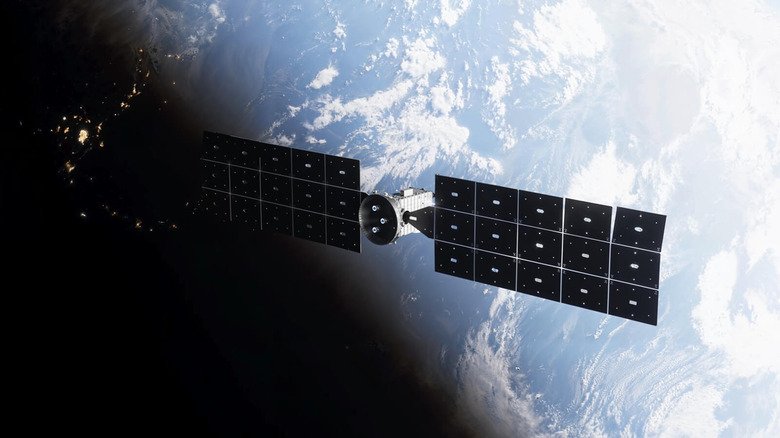
A critical in-orbit intervention to save one of NASA‘s premier astrophysics satellites is hanging by a thread after the rescue craft encountered severe operational anomalies over the weekend. Ground controllers are scrambling to regain full attitude control of LINK, an autonomous robotic tug launched earlier this month by Arizona-based aerospace startup Katalyst Space.
According to mission updates published on the official Neil Gehrels Swift Observatory blog, the LINK spacecraft lost its fixed orientation in space, entering an uncommanded spin that has caused sporadic blackout periods in ground communications. An initial diagnostic confirmed that two of the vehicle’s three mechanical reaction wheels—critical internal flywheels used to control satellite pointing without consuming propellant—are currently inoperable. The craft has also suffered a partial loss of functionality within its cold gas thruster system.
Engineers are preparing a recovery procedure that leverages LINK’s secondary electric propulsion system to damp the rotation and stabilize the craft over the coming days. Once the spin is stopped, mission teams must recalibrate the probe’s guidance, navigation, and control architecture before determining whether it can safely maneuver to rendezvous and dock with its target.
The stakes for the mission are high. LINK was deployed to intercept NASA’s Neil Gehrels Swift Observatory, a space telescope designed to capture transient high-energy cosmic phenomena such as gamma-ray bursts. Swift’s orbital trajectory has degraded much faster than original flight models anticipated, driven by intense solar activity associated with Solar Cycle 25. High solar flare output heats Earth’s upper thermosphere, causing it to expand and exert increased aerodynamic drag on spacecraft in low Earth orbit. Without a mechanical boost into a higher, safer orbit, telemetry indicates Swift will undergo atmospheric re-entry later this year.
The effort represents a major practical test for the burgeoning In-Space Servicing, Assembly, and Manufacturing sector, which aims to extend the operational lifetime of valuable space assets rather than allowing them to burn up or turn into orbital debris. Katalyst Space designed LINK specifically for rendezvous and proximity operations, intending to clamp onto Swift and utilize its propulsion to elevate the observatory’s altitude by several kilometers.
Despite the cascade of hardware failures on LINK, company representatives stated that mission personnel remain optimistic about achieving a recovery. Katalyst Space confirmed that the mission remains active, maintaining that adjusted operational protocols present a viable path forward for the spacecraft to meet its rendezvous objectives with Swift.