Billionaire Midterm Spending Reaches $433 Million as Republican Groups Secure Major Advantage
Federal election filings reveal that nearly 80 percent of early billionaire contributions are backing conservative candidates and super PACs.
Deep-pocketed mega-donors are unleashing unprecedented early capital into the 2026 midterms, with elite American billionaire families channeling more than $433 million into political committees—roughly four out of every five dollars backing Republican campaigns.
An analysis of Federal Election Commission filings by watchdog group Americans for Tax Fairness reveals that the top 50 billionaire families contributed $344.3 million, or approximately 79 percent, to conservative-aligned entities through early March. That financial disparity expanded significantly across the first half of 2026, with overall Republican-leaning donors generating $880 million compared to $290 million raised by Democratic counterparts, according to data reported by the Washington Post.
Conservative super PACs—empowered by the 2010 Supreme Court ruling in Citizens United that permitted unlimited independent political expenditures—have absorbed the overwhelming majority of early billionaire contributions. MAGA Inc., the primary pro-Trump super PAC, secured $89 million to lead all political action committees, followed by America PAC at $45.3 million, the Senate Leadership Fund at $36.3 million, and the Congressional Leadership Fund at $30 million.
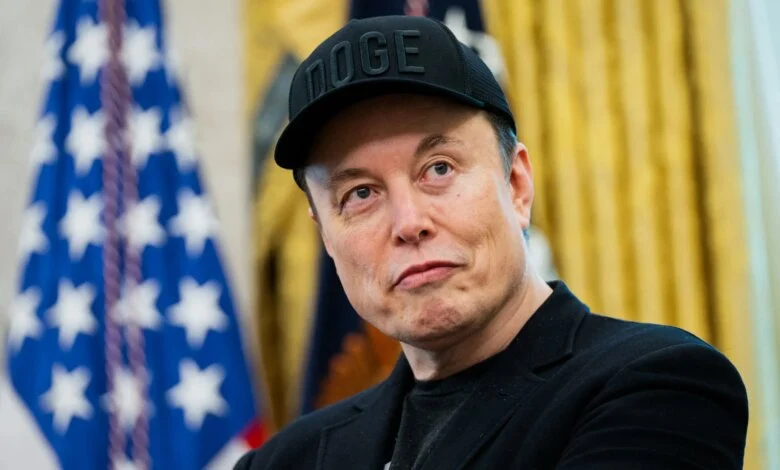
Tesla Chief Executive Elon Musk stood as the cycle’s largest individual financial contributor through early spring, committing nearly $71 million to Republican political efforts. His giving surged past $90 million by mid-year, incorporating multi-million-dollar contributions to Vivek Ramaswamy’s campaign for governor in Ohio and Texas Governor Greg Abbott’s reelection initiative. Wall Street financier Jeff Yass, co-founder of Susquehanna International Group and a prominent investor in TikTok parent company ByteDance, recorded the second-highest contribution total at over $55 million.
The current financial landscape expands upon patterns established during the 2024 election cycle, when the top 100 billionaire families directed 70 percent of their $1.84 billion in political giving toward Republican-aligned committees. Modern campaign finance has also seen new sector-specific spending emerge, with AI-focused super PACs committing over $50 million to 2026 contests, including a $27 million spending contest between groups aligned with Anthropic and OpenAI over a single congressional seat in Manhattan.
Democratic institutions continue to rely on a core cluster of major contributors to anchor their operations. Financier George Soros and his son Alex have injected approximately $102.8 million into the current election cycle, primarily through Democracy PAC. LinkedIn co-founder Reid Hoffman and former New York City Mayor Michael Bloomberg remain among the most steady major financial supporters for Democratic candidates.
Electoral research compiled by campaign finance organization OpenSecrets demonstrates that the higher-spending candidate historically wins more than 90 percent of U.S. House races and roughly 80 percent of Senate contests. However, political strategists note that candidate funding frequently acts as a barometer of underlying viability rather than a direct guarantee of success.
Former DNC staffer Caroline Welles, who now heads state legislative candidate group The First Ask, described money as an amplifier rather than an antidote, noting that high fundraising totals reflect donor preference for candidates already leading in polling and grassroots organization. Former DCCC regional political director Christopher Lee similarly observed that party committees allocate resources to races that are already competitive rather than using funds to create momentum from scratch. That dynamic was echoed by Republican strategist Maggie Paulin of Campaign Solutions, who highlighted that GOP candidates secured victories in marquee 2020, 2022, and 2024 contests despite being outspent by Democratic rivals.