Microsoft Launches Original Xbox Emulation Program on Windows 11
Classic console titles make their PC debut via a new pilot program, though organizational restructuring raises questions about its future scale.
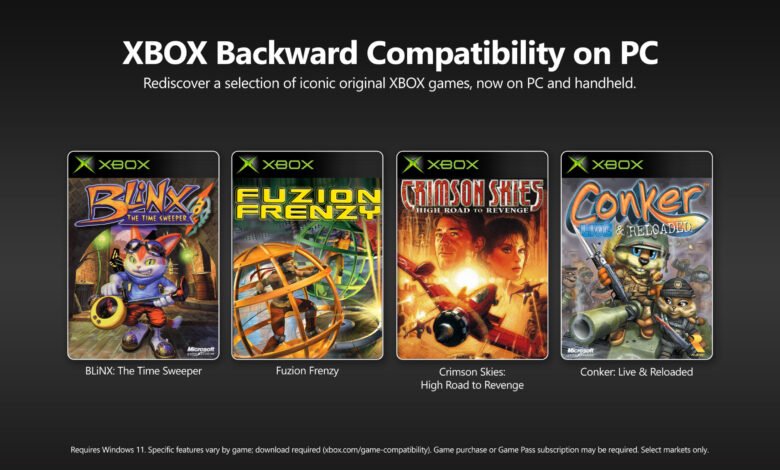
Microsoft has officially launched a pilot program to bring original Xbox games to Windows 11, marking a major milestone in the tech giant’s long-running backward compatibility initiative. The move represents the first time the company has officially emulated its debut console’s library directly on PC hardware, bridging a decades-old gap between its console and desktop ecosystems.
The program is debuting with a modest selection of four classic titles: BliNX: The Time Sweeper, Conker: Live and Reloaded, Crimson Skies: High Road to Revenge, and Fusion Frenzy. All four games were previously optimized for newer consoles under Microsoft’s Xbox One and Xbox Series X/S backward compatibility program. PC players can now access these titles through the Xbox app on Windows 11, either via an active Xbox Game Pass Essential subscription or as individual purchases priced at $10 each. In a consumer-friendly move, players who already own digital copies of these games on Xbox consoles will receive the PC versions at no additional cost.
According to technical analysis by Digital Foundry, the emulation layer allows the games to run at up to four times their original rendering resolution, topping out at 2,560 x 1,920 pixels. While the titles remain locked to their original 4:3 aspect ratios and target framerates—60 frames per second for Fusion Frenzy and 30 frames per second for the remaining three—players can adjust modern graphical settings such as anisotropic filtering, anti-aliasing, and vertical sync. Microsoft has also confirmed that Xbox achievements will be integrated into the PC versions later this year.
The system requirements for the emulation software are notably low, making the games highly accessible for portable gaming setups. Minimum specifications require only an Nvidia GTX 950, AMD Radeon RX 550, or integrated Intel UHD 770 graphics, alongside a quad-core processor. This low barrier to entry ensures seamless compatibility with popular Windows-based handheld consoles, such as the Asus ROG Ally and Lenovo Legion Go, which have seen a surge in popularity as PC gaming increasingly goes mobile. For optimal performance, Microsoft recommends a more robust setup featuring an Nvidia GTX 1070 Ti or AMD Radeon RX 6800, paired with 8GB of VRAM and a 6-core, 12-thread CPU.
While the launch of the pilot program demonstrates Microsoft’s ongoing commitment to unifying its gaming platforms, the future scale of the project remains uncertain. The initiative arrives during a turbulent period for Microsoft’s gaming division. Earlier this month, the company laid off 1,600 employees as part of a sweeping corporate restructuring, with another 1,600 job cuts projected over the next year. Among those affected by the initial wave of layoffs was Kevin LaChapelle, the lead engineer who spearheaded the Xbox backward compatibility program. The loss of key leadership raises questions about how rapidly Microsoft can expand the catalog of emulated games on PC.
Microsoft first launched its backward compatibility program for the Xbox One in 2015, eventually expanding the library to include hundreds of original Xbox and Xbox 360 titles. The program was officially halted for consoles in late 2021, with the company citing licensing, legal, and technical constraints. By shifting the focus to Windows 11, Microsoft appears to be leveraging its existing emulation technology to bolster its PC gaming ecosystem, even as organizational changes pose potential hurdles to its development timeline.