Kevin Keegan, Legendary England Forward and Double Ballon d’Or Winner, Dies at 75
The double Ballon d'Or winner and legendary Newcastle manager has died following a battle with cancer.
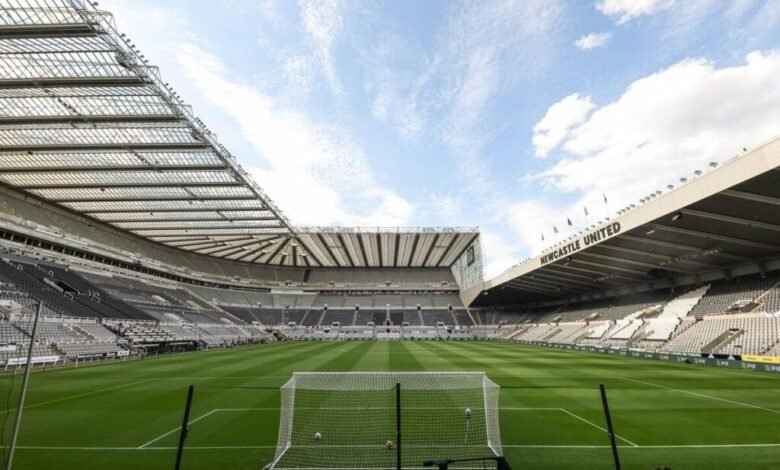
English football is mourning the loss of one of its most iconic and charismatic figures after the family of Kevin Keegan announced his passing at the age of 75.
The former England captain and manager, who remains one of only a select few English players to win the Ballon d’Or, died on Monday surrounded by his wife, Jean, and his daughters. The announcement follows a private battle with stage four cancer, a diagnosis his family first shared publicly in January.
Tributes have poured in from across the sporting world for a man whose career spanned over five decades, leaving an indelible mark on clubs like Liverpool, Newcastle United, Southampton, and Manchester City.
A Golden Era on the Pitch
Keegan’s journey to the pinnacle of world football began in the lower leagues with Scunthorpe United before he was scouted by the legendary Bill Shankly to join Liverpool in 1971. At Anfield, Keegan became the energetic focal point of a dominant side, helping the club secure three First Division titles, an FA Cup, two UEFA Cup trophies, and the European Cup in 1977.
His relentless work rate and technical ability earned him a high-profile transfer to German side Hamburg in 1977. It was in Germany where Keegan truly cemented his status as a global superstar, winning the prestigious Ballon d’Or in consecutive years in 1978 and 1979, while also guiding Hamburg to a Bundesliga title.
Returning to England, Keegan enjoyed a highly successful spell at Southampton before moving to Newcastle United in 1982, where he played for two seasons and helped the club secure promotion to the top flight. On the international stage, he represented England 63 times, scoring 21 goals, and captained his country from 1976 until his retirement after the 1982 World Cup.
The ‘Entertainers’ and Managerial Legacy
Seven years after hanging up his boots, Keegan returned to Newcastle United in February 1992 for his first managerial role. He inherited a struggling second-tier side, saved them from relegation, and subsequently built one of the most beloved teams in Premier League history.
Dubbed “The Entertainers,” Keegan’s Newcastle side captured the neutral’s imagination with an uncompromising, attack-minded philosophy. Under his guidance, the Magpies pushed Manchester United to the limit in a classic 1995/96 title race, ultimately finishing as runners-up.
In a statement, Newcastle United paid tribute to his profound impact on the club and the city: “Kevin was more than a legendary footballer and manager. He was the beating heart of Newcastle United for generations of supporters. As a player, he brought world-class talent, ambition and belief to St. James’ Park, helping to transform perceptions of what Newcastle United could be.”
Following his departure from Tyneside, Keegan took over at Fulham, guiding them to promotion to the second tier before accepting the England manager’s job in 1999. His tenure with the national team included leading them to Euro 2000, but his reign came to an abrupt end in October 2000 when he resigned in the tunnel of Wembley Stadium after a World Cup qualifying defeat to Germany—the final match played at the historic old stadium.
Keegan quickly returned to club management with Manchester City in 2001, instilling his trademark attacking style to guide the club back to the Premier League as second-tier champions in his first season. He remained at the helm until 2005, establishing the club as a top-flight mainstay. A brief, emotional return to Newcastle followed in 2008, though it was cut short after eight months due to differences with the club’s board.
The Football World Pays Tribute
News of Keegan’s passing has triggered a wave of emotion across the game. Former Newcastle and England striker Alan Shearer, whom Keegan signed for a then-world-record fee in 1996, expressed his grief on social media, calling him “my hero, my manager, my friend.”
Former Liverpool and England defender Jamie Carragher also paid tribute, describing Keegan as “one of the greatest players this country has ever produced” and “an absolute giant of the English game.”
Liverpool released a statement expressing deep sadness, noting that Keegan’s “indomitable spirit and remarkable contribution will be forever etched in our history.” Manchester City also expressed devastation, calling him a “transformative manager who brought optimism and vibrancy” to the club.