The 500-Parameter Puzzle: The Brutal Complexity of Modern ECU Tuning
Why aftermarket tuners are facing an exponential rise in software parameters.
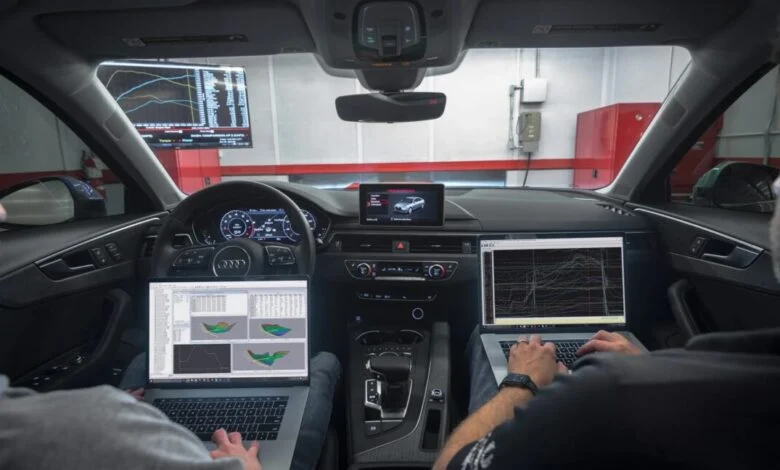
The era of simple mechanical modifications has been replaced by a high-stakes digital chess match. For aftermarket tuners like APR, the transition from hardware to software has turned the pursuit of horsepower into a battle against exponential complexity.
What used to require a dozen adjustments now demands hundreds. According to APR’s Gorton, the B5 Audi S4 required only 10 to 15 adjustments to its Engine Control Unit (ECU). By contrast, the current Porsche 911 Carrera requires over 400, and the company’s latest projects have surpassed 500 individual parameter changes.
This evolution reflects the rise of software-defined vehicles, where the driving experience is dictated by millions of lines of code rather than just the physical geometry of the engine. The shift is driven by the necessity of balancing performance with increasingly stringent global emissions and safety standards.
The risks of navigating this digital architecture are physical. Harvey, a representative for APR, noted that the process is so tedious it can result in “lawn ornaments”—bricked ECUs worth $1,800 that the company keeps for research and development. Mapping out a safe tune requires preserving factory protections, such as fault codes, which have become more difficult to maintain as technology progresses.
Modern ECU calibrations are no longer isolated to specific markets. Manufacturers now utilize global calibrations, creating a single software file that must account for varying fuel qualities and environmental conditions across the world. Tuners must identify which sections of the code are relevant to their specific region without compromising the integrity of the original software.
The complexity is compounded by the fact that parameters are rarely independent. Harvey explained that adjusting a single “knob” in the software can cause 50 other variables to react. Finding a “sweet spot” requires ensuring all these parameters work in harmony to prevent engine failure or software conflicts.
Even when hardware is identical, the software often is not. APR engineers found that the 8V-generation Audi A3 and the Mk7-generation VW GTI—cars sharing the same engine—feature entirely different software philosophies. Gorton observed that different development teams approach torque management from opposite directions. One team may prioritize efficiency while the other focuses on a more aggressive performance feel. Because these philosophies differ, “nothing lines up” when attempting to apply a universal tune across models.