Ram’s 777-Horsepower TRX: A Six-Figure Defiance of the Electric Era
Ram releases a 777-hp supercharged V8 pickup.
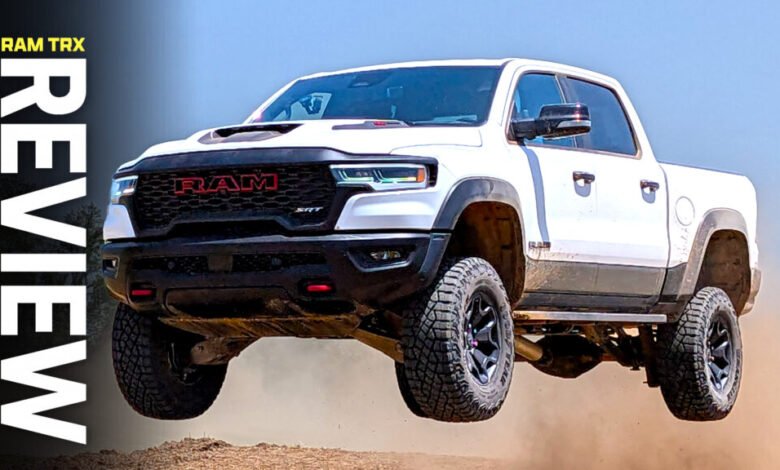
The 2027 Ram SRT TRX enters the market at a base price of $99,995, representing a deliberate pivot away from the automotive industry’s current obsession with electrification and efficiency. While competitors lean into hybridized powertrains and smaller displacements, Ram has doubled down on internal combustion, utilizing a 6.2-liter supercharged V8 that produces a staggering 777-horsepower.
This output is not merely for show. According to Ram, the revised cold-air induction system was a mechanical necessity to sustain that level of power. The truck’s fuel economy—rated at just 12 Combined mpg—stands in stark contrast to the tightening federal standards aimed at reducing fleet emissions. Yet, for the target demographic, the 707 lb-ft of torque and the mechanical scream of the 2.4-liter twin-screw supercharger are the primary selling points.
Testing conducted in South Bend, Indiana, and on the professional-grade jumps at Redbud Motocross revealed a vehicle that prioritizes emotional engagement over practical utility. Despite weighing 6,376 pounds, the truck reached 60 mph in 4.31 seconds during independent testing in high-heat conditions. Ram claims the vehicle is capable of a 3.5-second sprint under optimal circumstances, a figure that places this full-size pickup in the same performance bracket as dedicated supercars from previous decades.
The mechanical hardware is designed for abuse rather than refinement. The chassis features a Dana 60 rear axle and second-generation Bilstein Black Hawk e2 adaptive shocks. These components allowed the truck to endure repeated high-speed drifts and jumps during evaluation without mechanical failure, though a brake-booster heat soak issue did trigger a temporary electronic code after multiple back-to-back launches.
Ram faces an unusual internal challenge with the existence of the RHO, a 540-horsepower alternative that costs roughly $26,200 less. While the RHO is arguably the more rational choice for off-road enthusiasts, the TRX relies on its identity as a “dinosaur” to justify its six-figure cost. This is reflected in the new tailgate badge, which Ram engineers say underwent multiple design iterations to perfect the aggressive look of the prehistoric predator.
Beyond the performance metrics, the TRX maintains its utility as a heavy-duty tool. It is rated to tow 8,100 pounds and offers a payload capacity of 1,220 pounds. The interior attempts to bridge the gap between a rugged workhorse and a luxury flagship, featuring real carbon fiber trim and a 14.5-inch Uconnect 5 display. Notably, Ram has retained physical buttons for climate and drive modes, resisting the industry trend of burying essential functions within touchscreen sub-menus.
The only direct external competition remains the Ford F-150 Raptor. While the standard Raptor competes more closely with the RHO, the Raptor R is the TRX’s true rival. However, the Ford carries a higher starting price of $114,420 while offering 720 horsepower—nearly 60 less than the Ram.
Equipped with 35-inch tires and massive fender flares, the TRX is physically imposing and functionally specialized. Its suspension tuning is optimized for high-speed desert running and significant impacts, which occasionally results in a less composed ride over minor road imperfections like cracked concrete. This trade-off is a hallmark of the platform’s focus on extreme off-road capability over daily-driver comfort.