Mercedes-Benz VLE Signals Shift Toward Dedicated Luxury Electric Van Architecture
New dedicated EV architecture brings S-Class refinement to the luxury van segment.
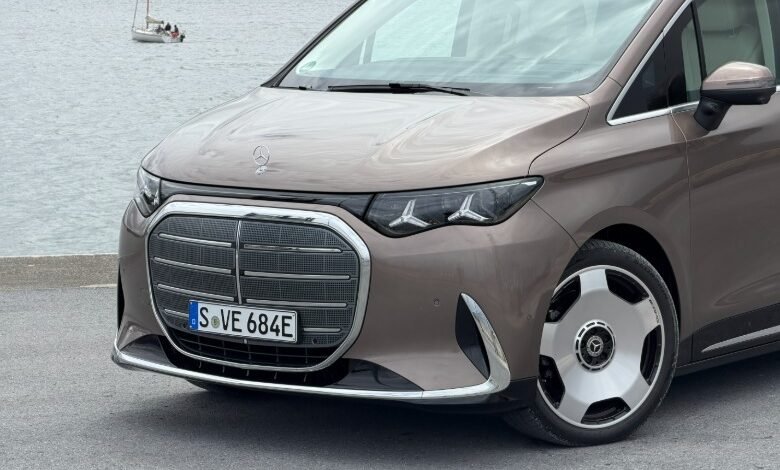
Mercedes-Benz is distancing its passenger van lineup from its commercial roots with the introduction of the VLE, the first model built on the dedicated Van.EA modular platform. By abandoning the traditional practice of adapting commercial vehicle chassis for luxury use, the German automaker is positioning the VLE as a direct electric alternative to its flagship S-Class sedan.
The engineering focus centers on ride quality rather than cargo capacity. The VLE features a standard Airmatic air suspension system equipped with individual adaptive dampers for all four wheels. According to technical specifications, the system automatically adjusts ride height based on speed and driving mode, lowering the vehicle by 1.5 inches above 68 mph to improve aerodynamic efficiency.
To address the inherent maneuverability challenges of a large-format vehicle, Mercedes-Benz has integrated a standard rear-wheel steering system. The rear wheels can pivot up to 7 degrees, allowing the short-wheelbase variant to achieve a turning circle of 37.5 feet. This mechanical agility is paired with a significant sensor suite, including 12 ultrasonic sensors and 10 external cameras, designed to facilitate the MB.Drive Assist Pro system.
The shift toward a dedicated electric architecture allows for a flat interior floor, yet the VLE maintains a car-like driving position. The manufacturer has prioritized acoustic insulation to match the “whisper” levels found in high-end luxury sedans. This refinement is supported by a sophisticated automated parking suite that now includes diagonal parking capabilities and a reverse maneuvering function capable of retracing a forward path for up to 490 feet.
The VLE represents a departure from the previous EQV model, which was constrained by its internal combustion engine origins. By utilizing the Van.EA architecture, Mercedes-Benz is signaling that the future of its high-end passenger transport lies in bespoke electric platforms rather than multi-purpose adaptations.