Do You Need a PC Sound Card in 2026? When to Buy One
Integrated motherboard codecs handle lossless formats for most users, but external interfaces remain critical for studio production and high-impedance headphones.
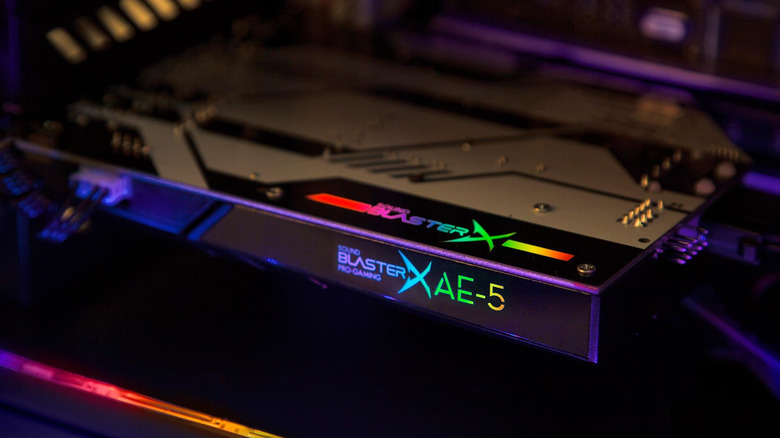
Modern motherboards routinely ship with audio codecs capable of processing 32-bit/384kHz digital signals, effectively eliminating the need for dedicated sound cards in standard desktop and laptop computers. For consumers building a gaming rig or assembling a home office workstation, the integrated audio silicon soldered directly onto the motherboard handles lossless music streaming, spatial audio rendering, and voice communication without requiring additional hardware.
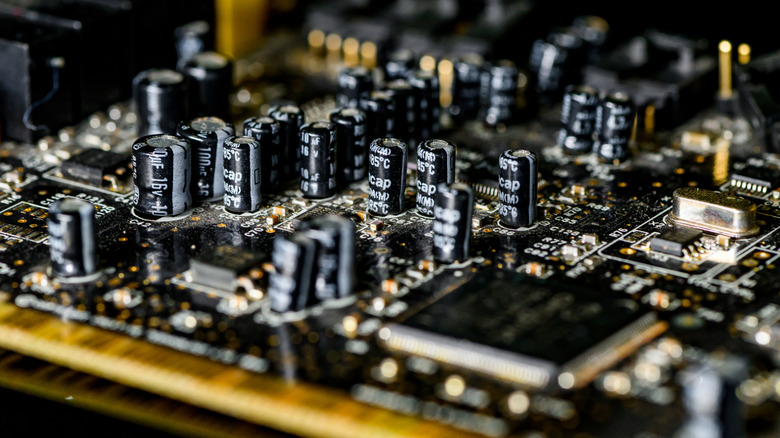
The disappearance of the internal sound card from mainstream PC builds traces back to fundamental shifts in semiconductor manufacturing. Decades ago, early personal computers relied on rudimentary programmable sound generators that produced basic synthesized tones. Dedicated expansion cards became mandatory for anyone wanting multi-channel playback or high-fidelity MIDI synthesis. Today, system-on-chip architectures and advanced printed circuit board layering allow manufacturers to embed high-performance digital-to-analog converters (DACs) directly into the primary board. Realtek remains the dominant supplier of these integrated audio codecs across Windows-compatible motherboards, while Apple utilizes custom silicon for its Mac lineup.


Bandwidth limitations that once justified separate audio processing hardware no longer exist. A full Dolby Atmos object-based audio mix encoded in Dolby TrueHD lossless format consumes roughly 18 megabits per second. Standard USB 3.0 ports deliver 5 gigabits per second, while USB4 and Thunderbolt 4 connections push throughput to 40 Gbps. Wireless protocols have similarly outpaced audio requirements, with Wi-Fi 7 offering multi-gigabit speeds that render audio compression bottlenecks obsolete for local network streaming.
Physical constraints inside modern computer cases further discourage internal audio expansion. High-end graphics cards now frequently occupy three or four PCIe slots and require massive cooling solutions, leaving minimal room for secondary components. Internal sound cards also face severe electromagnetic interference (EMI) generated by adjacent power delivery circuits, high-speed memory modules, and GPU voltage regulators. Shielding can mitigate this noise floor, but routing analog signals away from these interference sources entirely yields superior results.
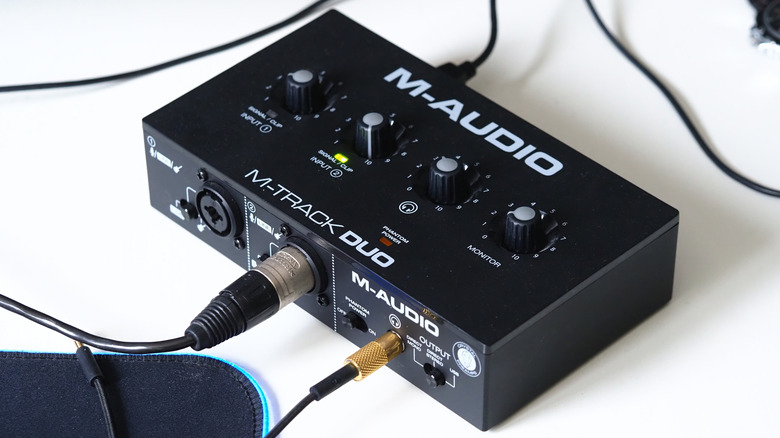
Professional audio production represents the primary use case where dedicated audio hardware remains essential. Musicians, sound designers, and mixing engineers rely on external USB or Thunderbolt audio interfaces rather than internal PCIe cards. These external units provide specialized XLR microphone preamplifiers with phantom power, high-impedance instrument inputs for direct guitar recording, and independent gain staging knobs accessible during live sessions. Manufacturers like Focusrite, Universal Audio, and M-Audio design these interfaces specifically to bypass the electrical noise inherent to a PC chassis.
Audiophiles utilizing high-impedance studio headphones constitute another demographic that benefits from dedicated hardware. Premium planar magnetic or dynamic driver headphones often carry impedance ratings between 250 and 600 ohms. Standard motherboard headphone jacks typically output enough voltage to drive consumer earbuds or low-impedance gaming headsets, but they lack the current required to properly energize professional-grade cans. Without sufficient amplification, high-impedance headphones will sound thin, quiet, and dynamically compressed. External DAC and amplifier combinations solve this deficit while remaining portable enough to move between a desktop tower and a laptop.
Gamers seeking competitive advantages through precise directional audio cues generally do not need aftermarket sound cards. Modern game engines process spatial audio natively, and platforms like Windows Sonic or third-party virtualization software handle positional rendering at the operating system level before passing the signal to any connected output device. Upgrading from a standard headset to higher-quality transducers yields significantly more noticeable improvements in positional accuracy than swapping an integrated codec for a discrete internal card.
Creative Technology, historically the most recognized manufacturer of consumer PC sound cards through its Sound Blaster brand, has largely pivoted its product strategy toward external DACs, portable Bluetooth speakers, and gaming-specific USB audio adapters, reflecting the broader industry migration away from internal audio expansion.